At What Age Does Acne Go Away? Understanding the Timeline of Adult Breakouts
Frustrated by breakouts? Learn at what age does acne go away and why adult skin requires a shift to non-comedogenic care.
For many, acne is expected to be a temporary inconvenience of adolescence, a rite of passage that resolves once the hormonal tides of puberty settle. However, dermatological practice tells a different story. If you find yourself in your late twenties, thirties, or beyond still battling stubborn lesions, you are certainly not alone. The lingering question remains: at what age does acne go away? The clinical answer is nuanced, as skin is an ever-evolving organ influenced by genetics, environment, and internal biological rhythms.
While many individuals see a reduction in inflammatory acne by their early twenties, adult-onset acne is a reality for a significant portion of the population. Managing this requires moving away from the harsh, stripping treatments of our teenage years and toward a more sophisticated approach. Prioritizing non-comedogenic formulations is essential, as mature skin is more susceptible to moisture barrier impairment, which can actually exacerbate the inflammatory cycle of breakouts.
The Biological Shift in Adult Acne
Acne in adulthood rarely follows the same patterns as teenage acne. In adolescents, excess sebum production driven by testosterone and estrogen shifts is the primary culprit. In adults, particularly women, the presentation often involves deeper, cystic lesions focused on the jawline and chin. This is frequently linked to fluctuating cortisol levels, stress, and cyclical hormonal shifts that do not necessarily "age out" according to a specific timeline.
Why Your Skin Doesn't Follow a Schedule
There is no universal expiration date for acne because skin health is multifactorial. Genetics play a massive role; if your parents dealt with adult breakouts, you are statistically more likely to follow the same path. Furthermore, modern lifestyle factors—such as chronic stress and inflammatory dietary choices—keep the sebaceous glands active long after the developmental years have passed. Rather than waiting for a specific age to arrive, success lies in treating the skin as a dynamic system that requires consistent, gentle, and scientifically backed intervention.
The Hidden Culprits in Your Routine
Many patients struggling with persistent breakouts are inadvertently sustaining them through their choice of daily products. Even items labeled as "oil-free" or "gentle" can contain hidden pore-cloggers—ingredients that are structurally prone to trapping debris and bacteria inside the follicle. As we age, our cell turnover slows down, meaning those comedogenic ingredients stay trapped in the pore longer, leading to more frequent and persistent congestion.
Don't Let Your Products Ruin Your Progress
It is common to focus so heavily on the biological timeline of acne that we ignore the external factors within our own medicine cabinets. If you are waiting for your skin to clear, you may be unintentionally stalling that process every time you apply a moisturizer or serum that contains hidden pore-clogging agents. Even a single ingredient with a high comedogenic rating can disrupt your progress, regardless of how effective your active treatments are. Before you assume your acne is purely hormonal or age-related, it is vital to audit your current regimen to ensure every product you use is truly compatible with your unique pore health.
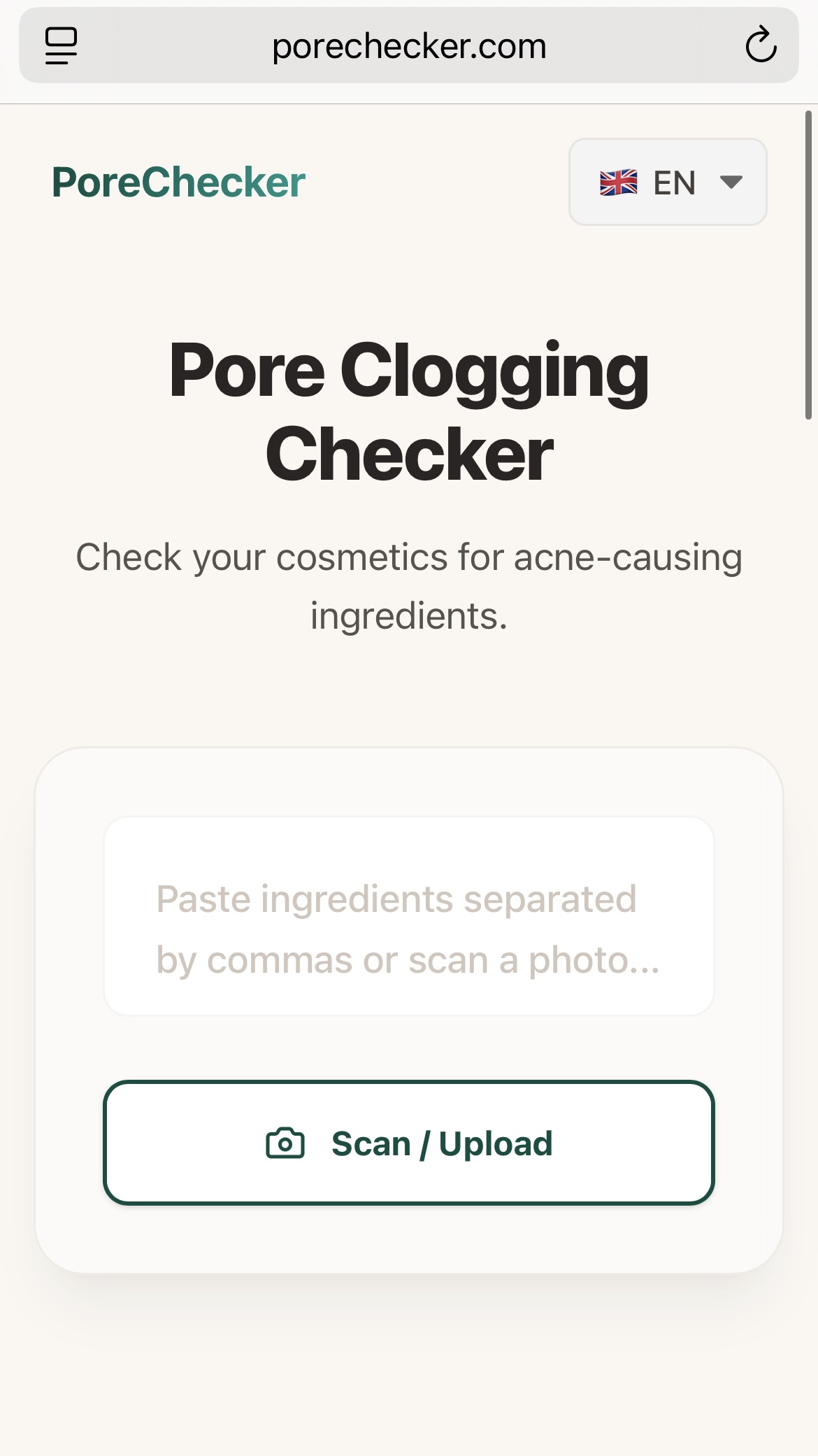
Step 1: Upload Your Product Image
Simply snap a photo of the ingredient list on the back of any bottle, jar, or box. No typing required.
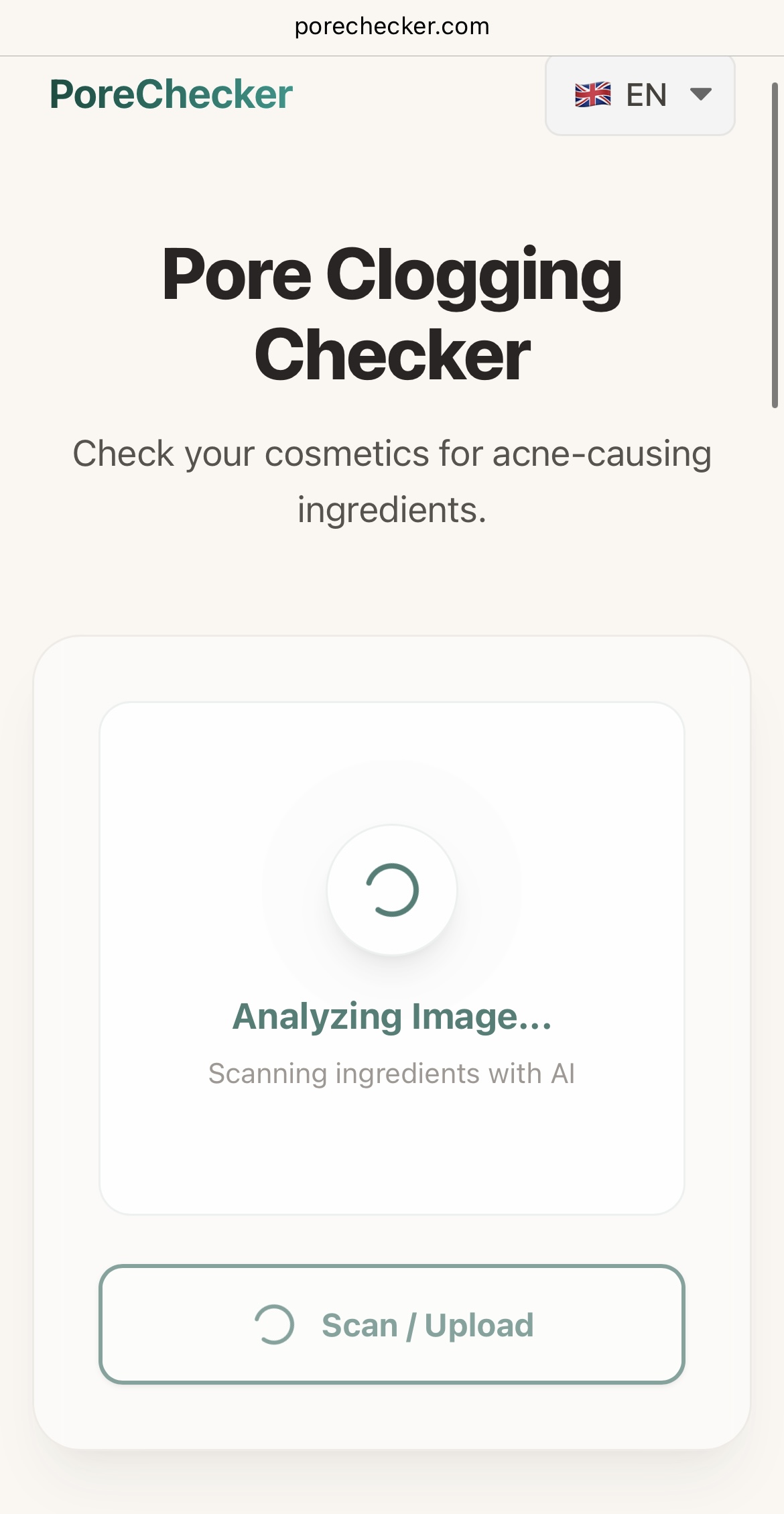
Step 2: Instant AI Ingredient Analysis
Our advanced AI scans the image, performs OCR (Optical Character Recognition), and matches every ingredient against our curated database of comedogenic substances.
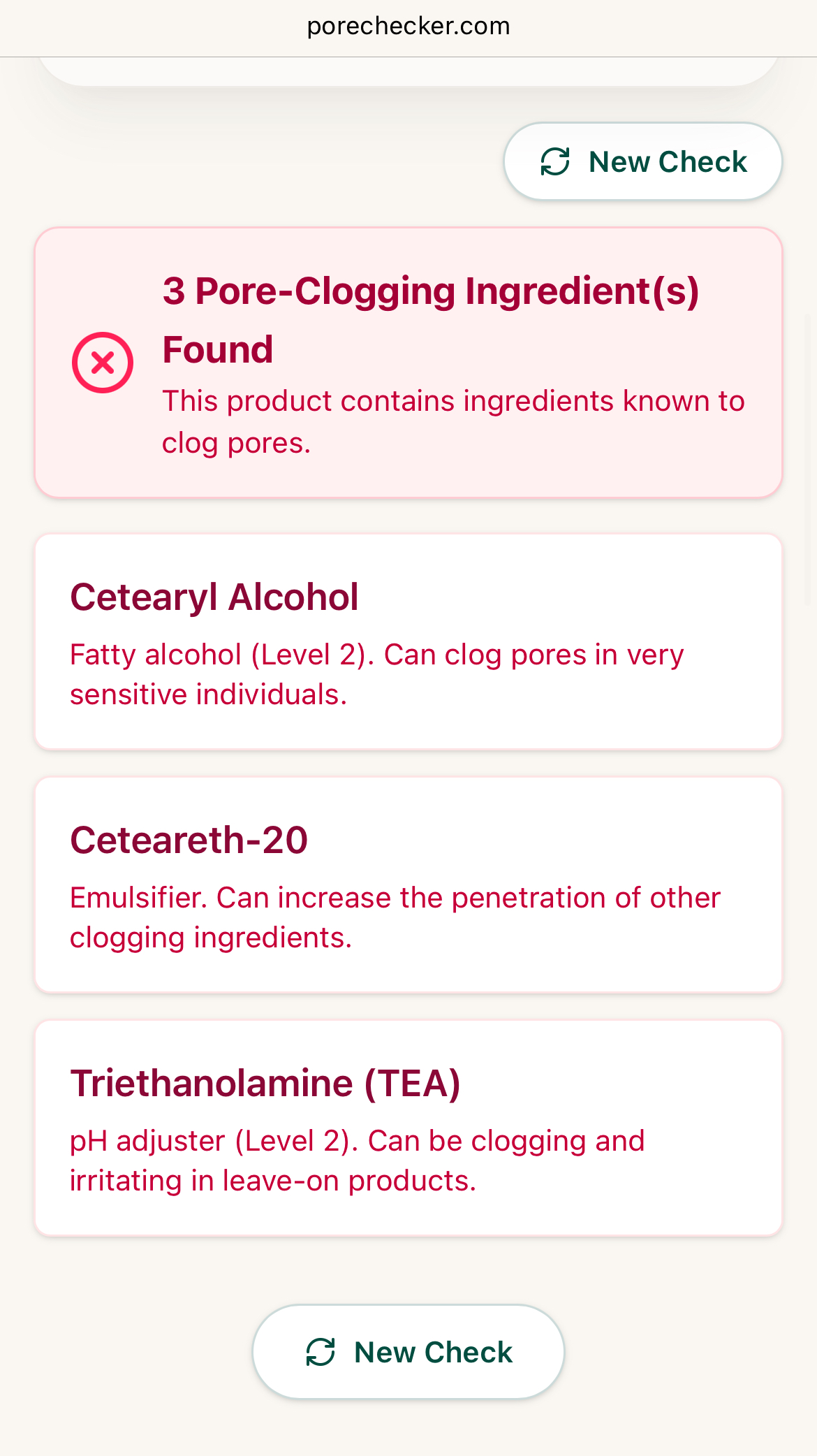
Step 3: Clear Results for Clearer Skin
You get an immediate breakdown. If any red-flag ingredients are found, we highlight them and explain why they might be problematic for your pores.
Does this product fit my skin's needs?
Check Your Products Now