Beyond the Surface: Understanding What Helps Acne and Clear Skin
Frustrated by breakouts? Discover science-backed strategies for what helps acne, from active ingredients to avoiding pore-clogging agents.

Acne is often treated as a singular, surface-level issue, but clinical dermatological practice recognizes it as a complex, multifaceted condition. Whether you are dealing with persistent hormonal fluctuations or occasional inflammatory breakouts, the path to clear skin requires a transition away from aggressive scrubbing toward a more methodical, biological approach. When asking what helps acne, the answer rarely lies in a single "miracle" product, but rather in a consistent regimen that respects your skin’s barrier function.
Prioritizing non-comedogenic formulations is the cornerstone of any effective strategy. Many conventional skincare products contain hidden ingredients that, while marketed as beneficial, can exacerbate micro-comedones—the microscopic precursors to visible acne. By selecting products that are rigorously tested to avoid pore-clogging agents, you provide your skin the stability it needs to heal without the constant interference of external occlusion.
The Science of Targeted Treatment
Effective management hinges on addressing the four primary drivers of acne: excess sebum production, follicular hyperkeratosis (dead skin cells clumping), bacterial proliferation, and inflammation. To combat these, dermatologists look toward evidence-based actives. Salicylic acid, a beta-hydroxy acid, remains a gold standard for its lipophilic nature, allowing it to penetrate deep into the follicle to dissolve the "glue" holding dead cells together. This process unclogs pores from the inside out, providing a preventative measure rather than just a reactive one.
Refining Your Topical Approach
Retinoids are perhaps the most potent tool in the acne-fighting arsenal. By accelerating cellular turnover, they prevent the follicular debris from accumulating in the first place. However, the efficacy of retinoids is often hindered by misuse. Starting with a low-concentration formula and applying it on dry, clean skin serves to mitigate potential irritation while still delivering the necessary long-term structural changes. Pairing these with gentle, hydrating cleansers ensures that you aren't stripping the acid mantle, which only leads to increased oil production as a rebound effect.
Don't Let Your Products Ruin Your Progress
Even when your active treatments are clinically sound, your entire routine can be compromised by a single ingredient that is silently clogging your pores. Many emollients, fragrances, and thickeners found in common moisturizers and sunscreens are highly comedogenic, creating an occlusive film that traps oil and bacteria beneath the surface. It is vital to scrutinize the back of every label before application, as even non-prescription items can contain these hidden disruptors. Taking the time to cross-reference your current product labels against a database of known pore-clogging agents is an essential step in ensuring your skincare efforts are not being sabotaged by your own vanity cabinet.
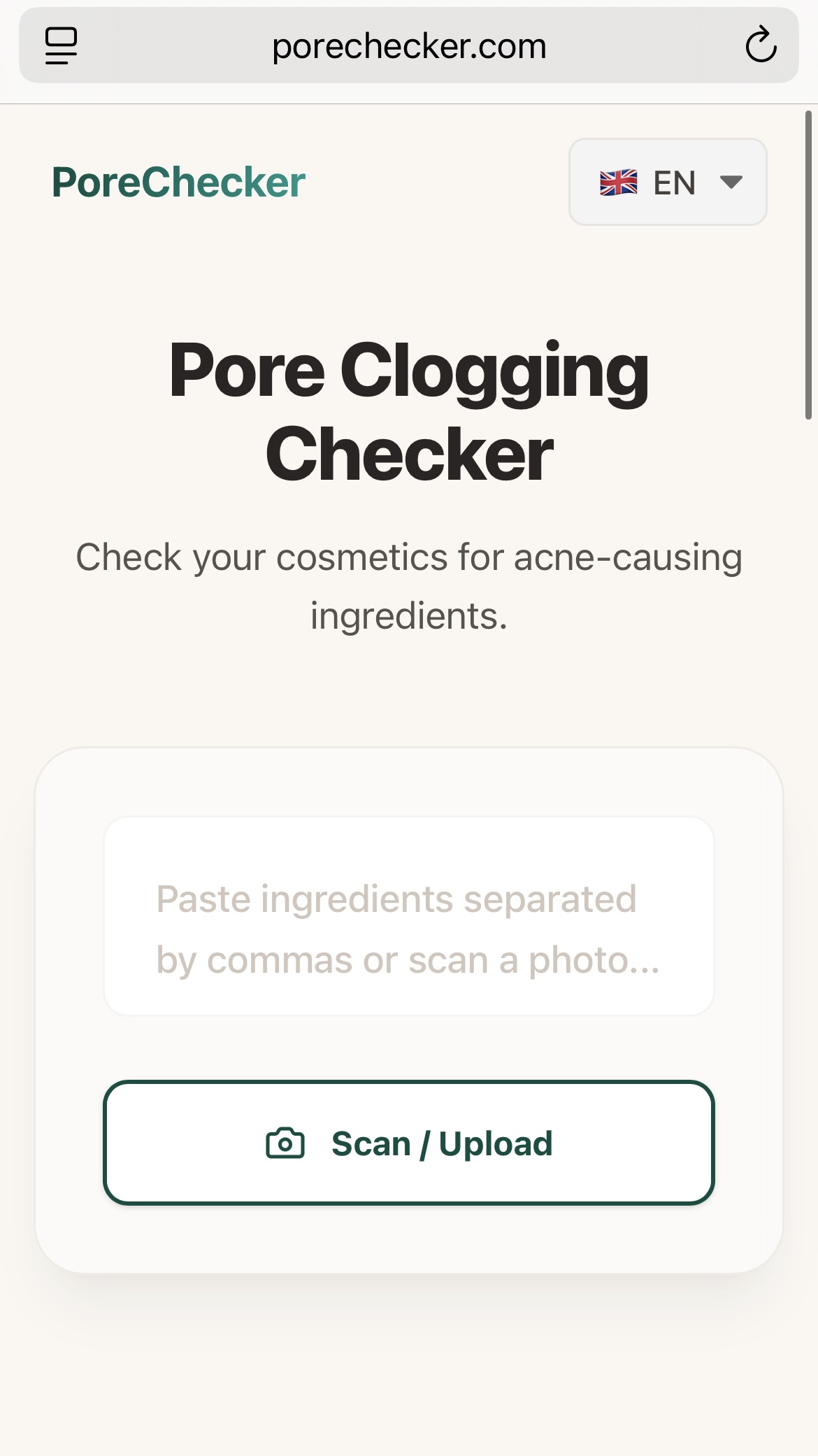
Step 1: Upload Your Product Image
Simply snap a photo of the ingredient list on the back of any bottle, jar, or box. No typing required.
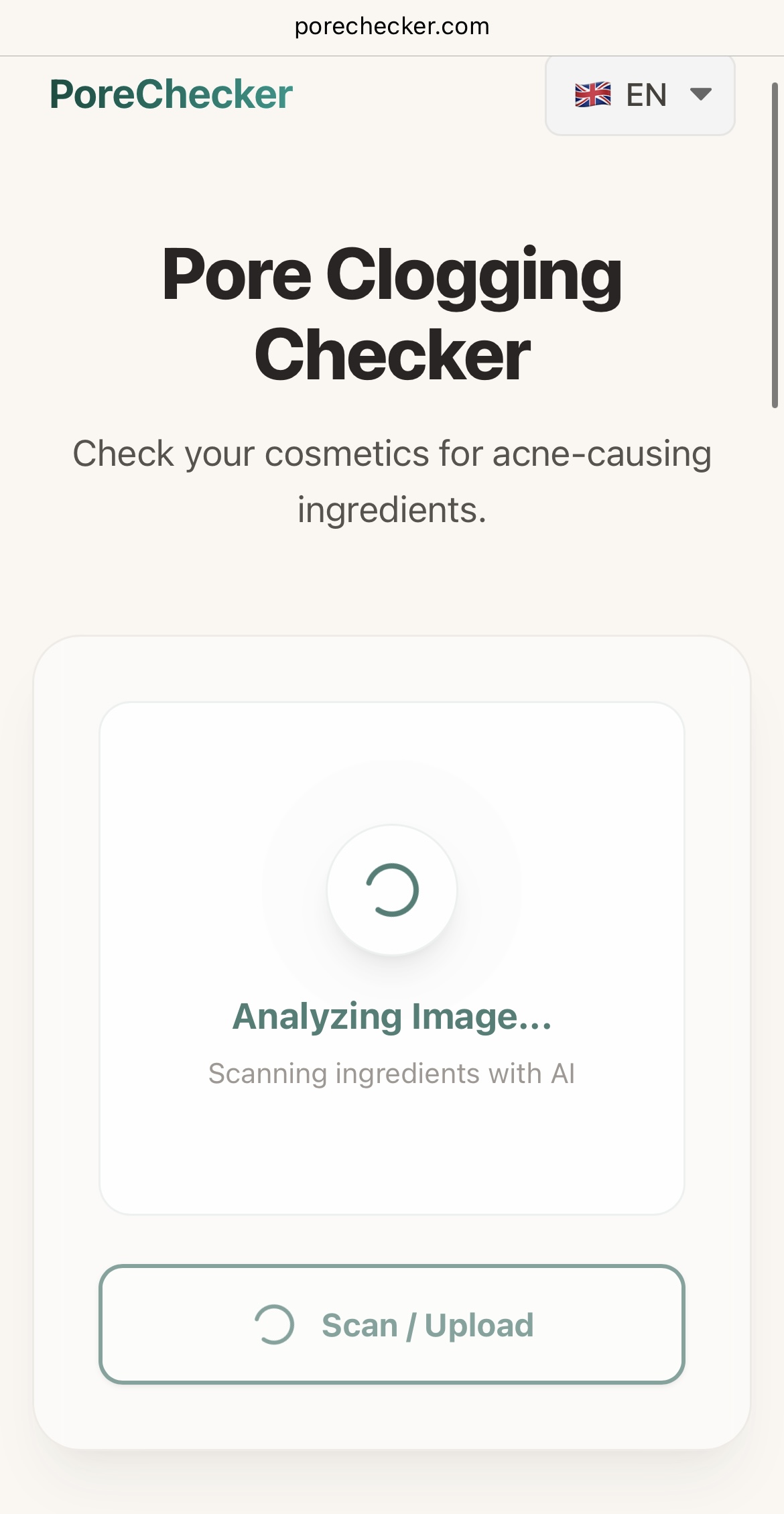
Step 2: Instant AI Ingredient Analysis
Our advanced AI scans the image, performs OCR (Optical Character Recognition), and matches every ingredient against our curated database of comedogenic substances.
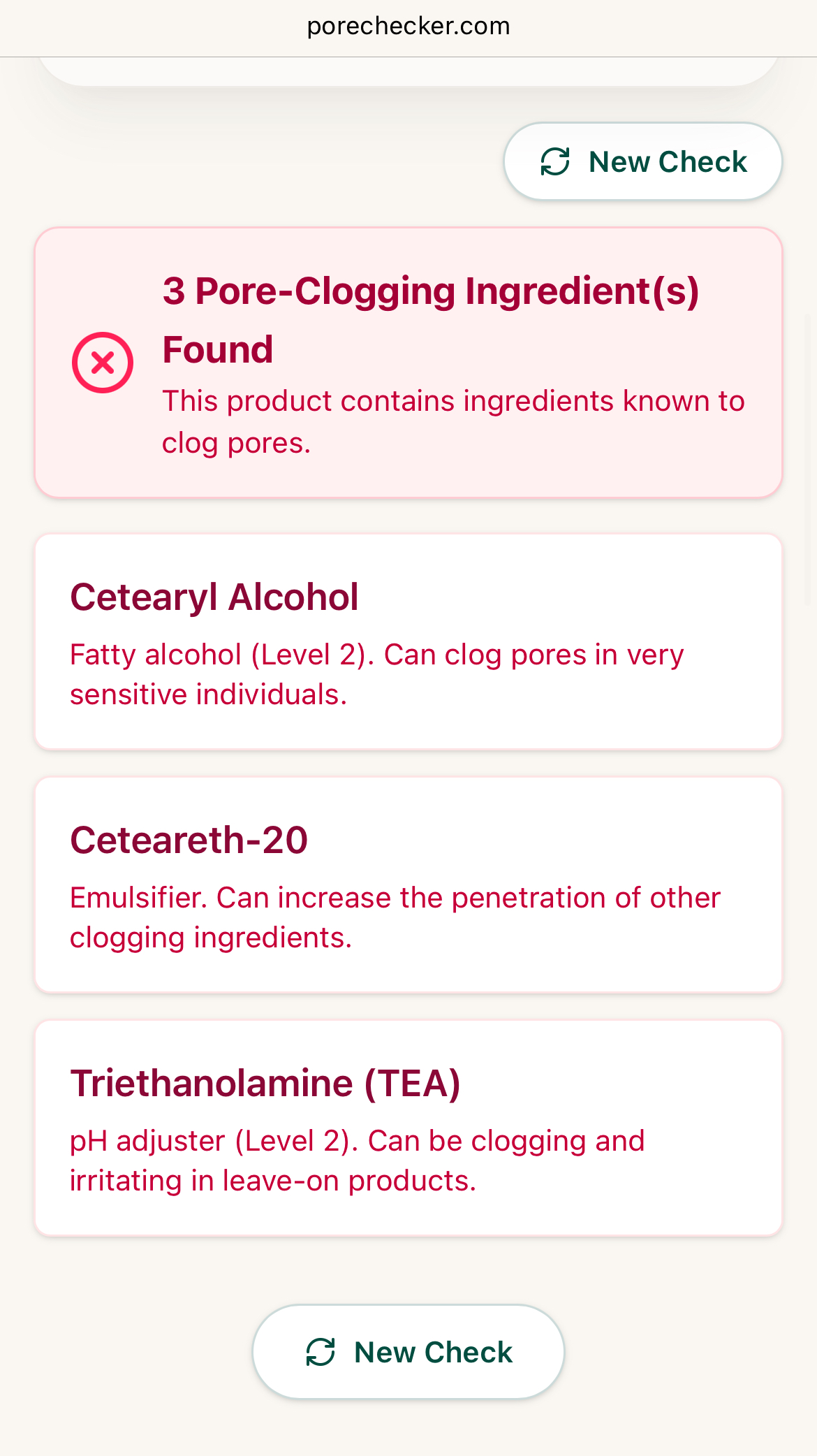
Step 3: Clear Results for Clearer Skin
You get an immediate breakdown. If any red-flag ingredients are found, we highlight them and explain why they might be problematic for your pores.
Does this product fit my skin's needs?
Check Your Products Now