Decoding the Glow: When to Use Vitamin C Serum for Radiant Skin
Discover the optimal timing for vitamin C serum application & unlock its skin-brightening benefits. Learn from a skincare expert & achieve a radiant complexion.

Vitamin C serum has rightfully earned its place as a skincare superstar. Known for its antioxidant properties and ability to brighten and protect the skin, it's a staple in many routines. But with so much information available, knowing exactly when to incorporate this powerful ingredient can be confusing. This article will guide you through the optimal times to use vitamin C serum and how to maximize its effectiveness, keeping in mind that the best skincare routines always prioritize non-comedogenic ingredients to avoid clogged pores and breakouts.
As a dermatologist, I frequently encounter patients who are unsure about the best practices for using vitamin C. The key is to understand how your skin works and how vitamin C interacts with other ingredients in your routine. Remember, skincare is a science, and consistency is crucial. Choosing the right time and application method can significantly impact the results you see, leading to a healthy, glowing complexion.
Before we dive in, let's remember that beautiful skin is a byproduct of careful choices. That means avoiding products that can lead to clogged pores. Always ensure that the other products you use, such as moisturizers and sunscreens, are also non-comedogenic. This is fundamental to prevent breakouts and to allow your vitamin C serum to work its best without unnecessary obstacles.
The Ideal Time: Morning or Night?
The most common question I hear is, "When is the best time to use vitamin C serum?" The answer often surprises people: the morning. Vitamin C is an excellent addition to your morning routine because it provides protection against environmental stressors like UV rays and pollution. Used under sunscreen, it can enhance the sun protection provided by your SPF. However, this isn't a hard and fast rule; let's explore both options.
Morning Application
In the morning, after cleansing and before applying sunscreen, is a great time to incorporate your vitamin C serum. This is where it really shines. Its antioxidant properties help neutralize free radicals generated by sun exposure and other environmental factors throughout the day. The benefits include enhanced sun protection (though it doesn't replace SPF!), reduced hyperpigmentation, and a brighter complexion.
Evening Application
While less common, some prefer using vitamin C in the evening. This approach can be beneficial as well. Vitamin C can work overnight to repair and rejuvenate the skin, as it is a potent antioxidant. If you are using other potent ingredients in the morning, such as retinol or AHAs/BHAs, it might be best to reserve vitamin C for the evening. In the evening, after cleansing and before applying any other treatments, apply the serum.
Maximizing Vitamin C Serum Effectiveness
Regardless of when you use it, there are several factors to consider to ensure your vitamin C serum works effectively. Properly storing your serum is essential to prevent oxidation, which degrades the vitamin C and makes it less effective. Additionally, consider the type of vitamin C you are using; L-ascorbic acid is the most potent but also the most unstable. Other forms, like sodium ascorbyl phosphate, are more stable but might have a slightly lower potency. Choosing the right concentration is crucial, too, especially if you have sensitive skin.
Storage and Shelf Life
Vitamin C serums are susceptible to degradation. Store your serum in a cool, dark place, away from direct sunlight and heat. Look for serums packaged in dark glass bottles or opaque containers. Always tightly close the bottle after each use. Pay attention to the expiration date or the period-after-opening (PAO) symbol on the packaging, which indicates how long the product is good for after opening.
Layering with Other Ingredients
Layering your vitamin C serum with other skincare products can enhance its effectiveness, but it is critical to be mindful of potential interactions. When used in the morning, apply vitamin C serum after cleansing and before applying your moisturizer and sunscreen. Allow the serum to absorb into your skin for a few minutes before moving to the next step. In the evening, vitamin C can be used before other treatments, but be aware of possible irritation if combining with retinoids or strong exfoliants.
Don't Let Your Products Ruin Your Progress
While you've now mastered the "when" of vitamin C application, it's vital not to overlook the "what" of your overall skincare routine. Even the most effective serum can be undermined by pore-clogging ingredients lurking in other products. These sneaky culprits can lead to breakouts and inflammation, canceling out all the good work your vitamin C is doing. Always remember to check product labels, paying close attention to ingredients that commonly cause issues, like certain oils or silicones, to ensure that every step in your routine supports clear, radiant skin.
Step 1: Upload Your Product Image
Simply snap a photo of the ingredient list on the back of any bottle, jar, or box. No typing required.

Step 2: Instant AI Ingredient Analysis
Our advanced AI scans the image, performs OCR (Optical Character Recognition), and matches every ingredient against our curated database of comedogenic substances.

Step 3: Clear Results for Clearer Skin
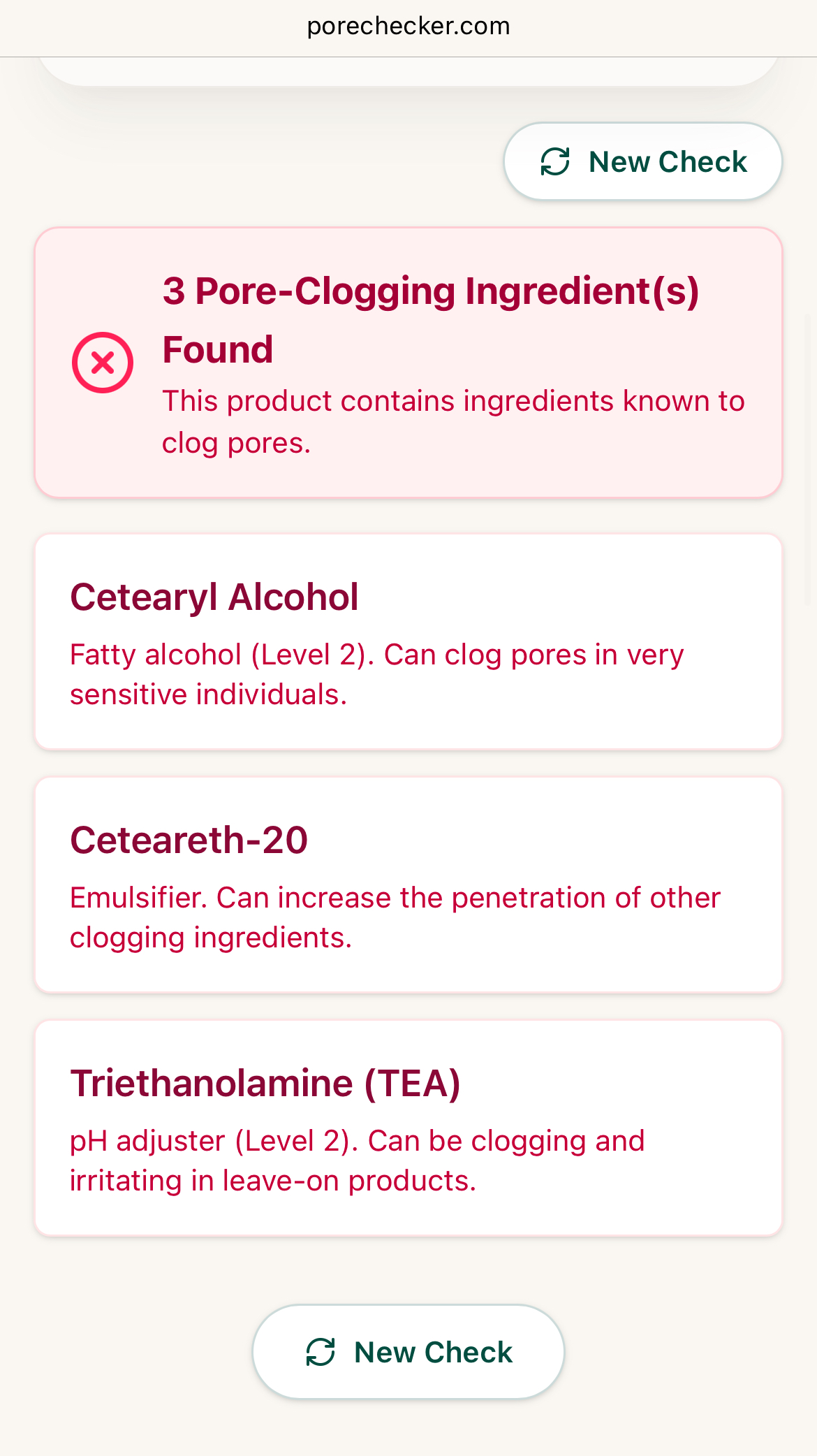
You get an immediate breakdown. If any red-flag ingredients are found, we highlight them and explain why they might be problematic for your pores.
Does this product fit my skin's needs?
Check Your Products Now