Does Aquaphor Clog Pores? The Science Behind Your Skin Barrier
Confused about Aquaphor and acne? We break down the science of mineral oil and petrolatum to see if it really triggers breakouts.
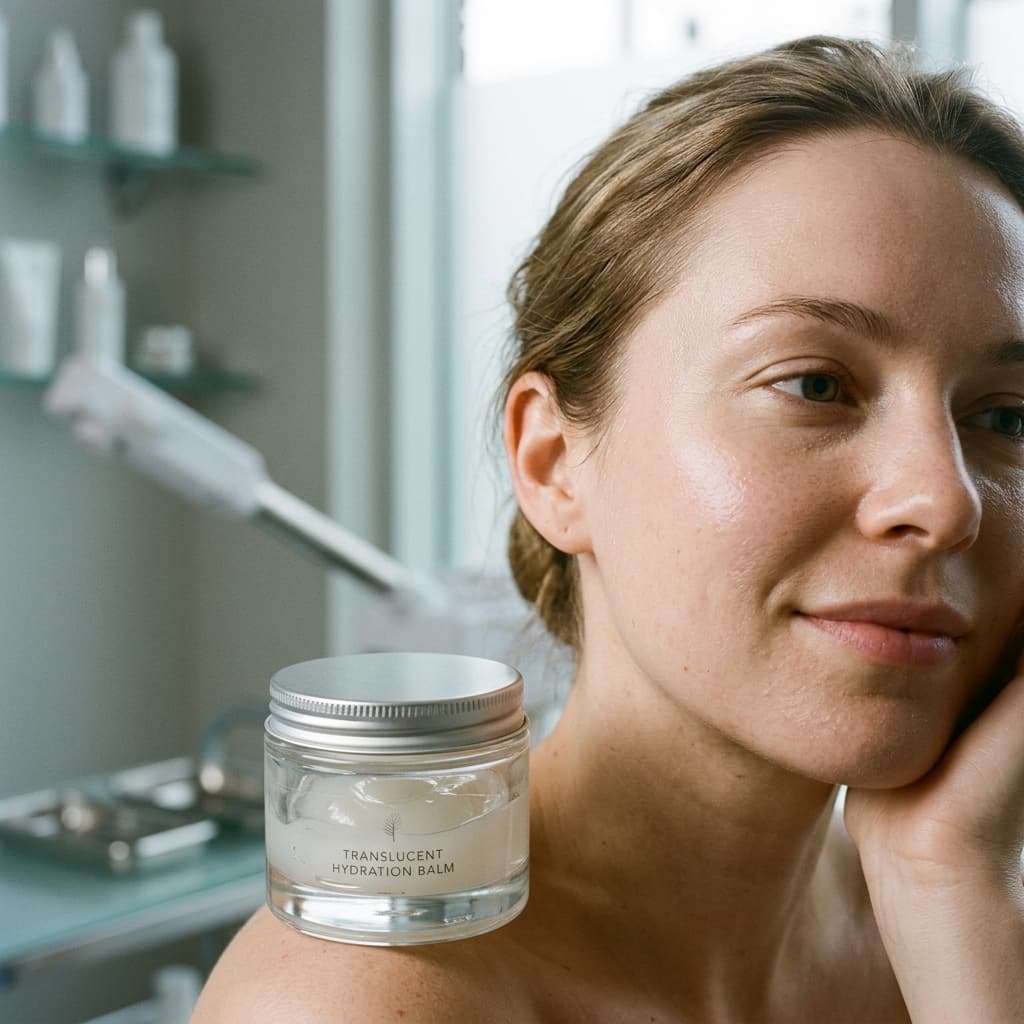
The beauty industry often demonizes occlusives, leading many to fear that any product creating a protective seal on the skin will inevitably result in a breakout. Aquaphor, a staple in many medicine cabinets for its healing properties, frequently lands at the center of this debate. If you have ever hesitated to apply a thick ointment over your moisturizer because you are terrified of waking up to congestion, you are not alone.
At its core, understanding whether Aquaphor triggers acne requires a nuanced look at molecular weight and skin physiology. While the product is designed to lock in moisture and aid in wound healing, its density can certainly influence how your follicles interact with your environment. Let’s look at the science to determine when this classic ointment is a friend to your complexion and when it might be doing more harm than good.
The Truth About Petrolatum and Pore Congestion
Aquaphor’s primary active ingredient is petrolatum. Dermatologically speaking, petrolatum is one of the most effective occlusives available. It works by creating a physical barrier on the stratum corneum, preventing transepidermal water loss. Contrary to popular belief, petrolatum itself has a high molecular weight, which means it is actually too large to penetrate the skin and enter the pore lining to cause a traditional "plug."
When people ask, "does aquaphor clog pores," the answer is rarely black and white. While the petrolatum is generally non-comedogenic, the surrounding environment of your skin matters. If you apply a thick layer of ointment over trapped debris, bacteria, or sweat, you are essentially sealing those irritants against your skin. In this scenario, the product isn't causing the acne through a chemical reaction; rather, it is exacerbating a lack of breathability.
Identifying Hidden Comedogenic Culprits
While pure petrolatum is widely considered safe for acne-prone skin, commercial formulas like Aquaphor contain additional ingredients. These include lanolin alcohol, mineral oil, and panthenol. For most individuals, these ingredients are soothing. However, for those with highly sensitive or reactive skin, lanolin can occasionally trigger contact dermatitis or localized inflammation, which may be mistaken for acne flares.
If your skin is prone to congestion, your application method is just as important as the product itself. Applying a heavy ointment to a face that has not been thoroughly cleansed ensures that you are trapping the day’s pollution, excess sebum, and dead skin cells beneath an impenetrable layer. This is why many clinicians recommend using ointments only on targeted, dry patches rather than as an all-over face mask.
Don't Let Your Products Ruin Your Progress
Navigating the nuances of skincare ingredients can be exhausting, especially when a single product that works for one person triggers a cycle of breakouts in another. The reality is that your skin’s tolerance for occlusives is highly individual and often depends on your current routine, the climate you live in, and your specific skin type. Relying on guesswork can stall your journey toward a clear, resilient complexion. Instead of risking a compromised skin barrier or unexpected acne, take the time to audit your current lineup to ensure no hidden pore-cloggers are undermining your hard work. By cross-referencing your product labels with known irritants, you can stop the cycle of trial and error and build a regimen that truly supports your skin’s long-term health.
Step 1: Upload Your Product Image
Simply snap a photo of the ingredient list on the back of any bottle, jar, or box. No typing required.
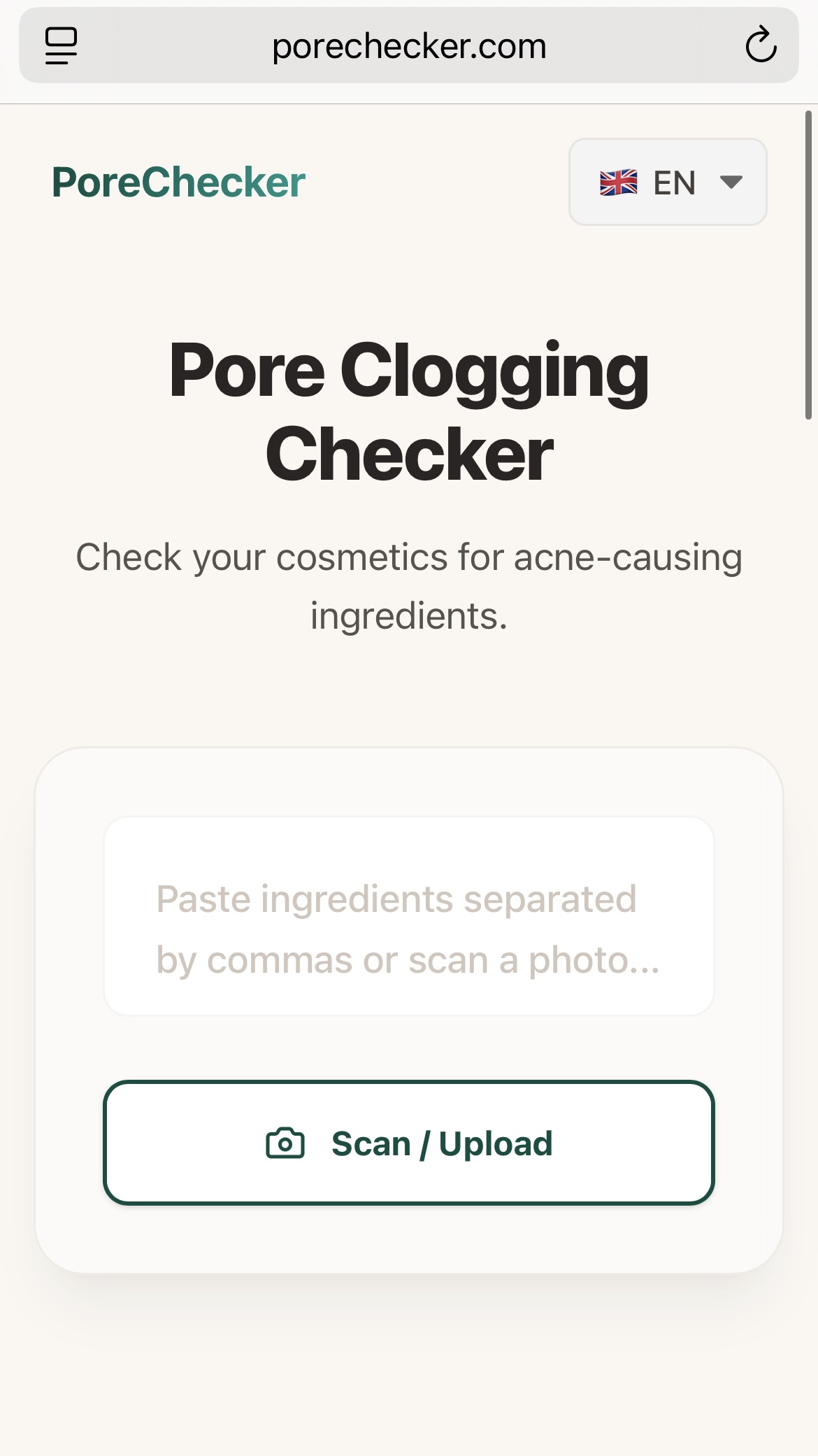
Step 2: Instant AI Ingredient Analysis
Our advanced AI scans the image, performs OCR (Optical Character Recognition), and matches every ingredient against our curated database of comedogenic substances.

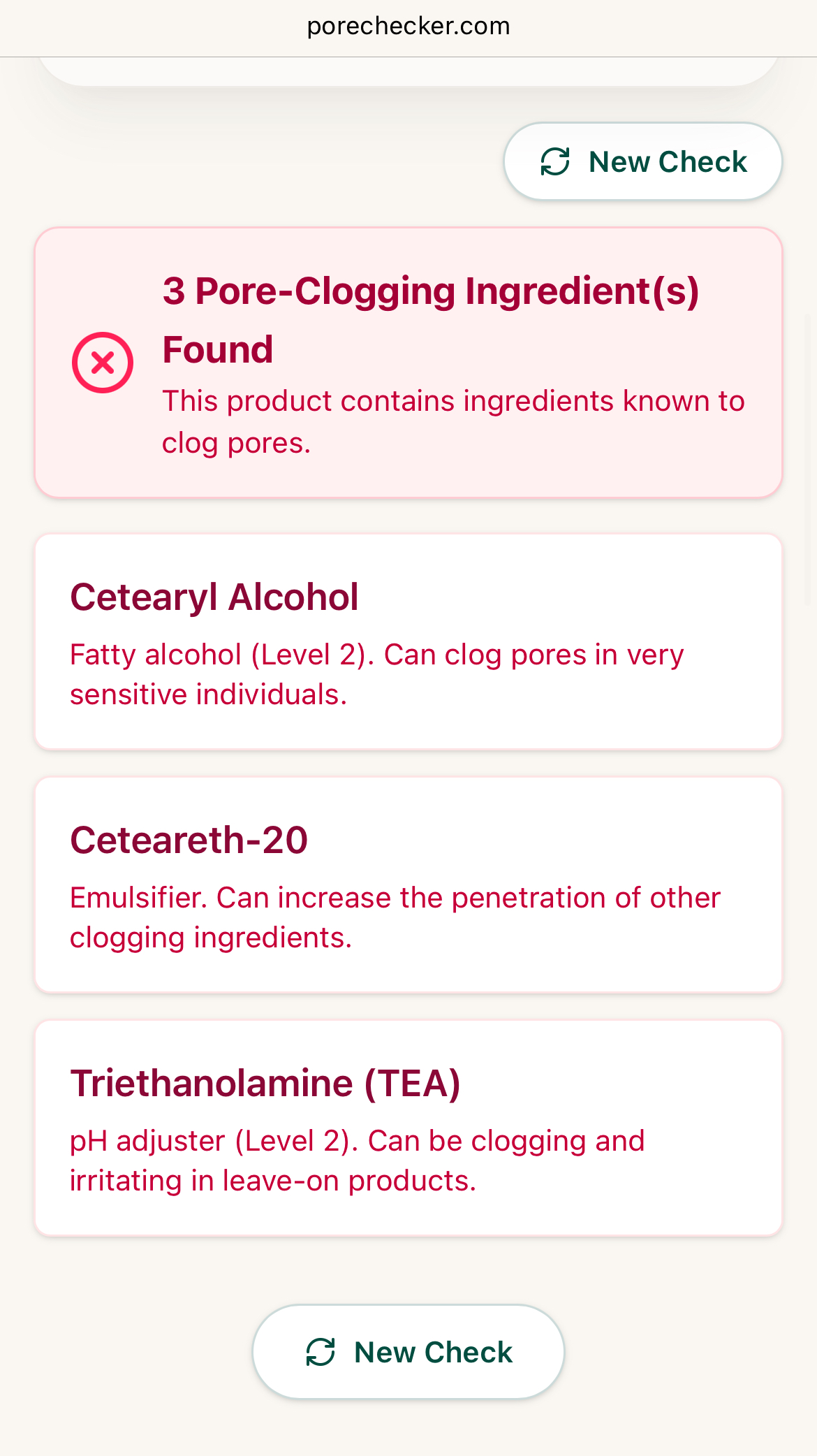
Step 3: Clear Results for Clearer Skin
You get an immediate breakdown. If any red-flag ingredients are found, we highlight them and explain why they might be problematic for your pores.
Does this product fit my skin's needs?
Check Your Products Now