Does Coconut Oil Clog Pores? Decoding the Truth About Your Skincare
Discover if coconut oil clogs pores & learn about comedogenic ingredients. Expert skincare advice to help you achieve clear, healthy skin.

The quest for radiant skin often leads us down winding paths of product experimentation, ingredient analysis, and a relentless pursuit of that coveted "glow." Coconut oil, with its alluring scent and reputation for hydration, frequently enters the picture. But a persistent question lingers: Does coconut oil clog pores, and if so, what does this mean for your skincare routine?
As a dermatologist, I understand the importance of making informed choices. The world of skincare can be overwhelming, especially when navigating the complexities of comedogenicity – the potential of a substance to cause or worsen blackheads and blemishes. This article delves into the science behind coconut oil and its impact on your skin, arming you with the knowledge to make confident decisions about your routine.
The focus here is not only on addressing the central question but also on empowering you to build a skincare regimen that promotes clear, healthy skin. Remember, finding the right products is a journey, and understanding your skin's unique needs is key to success. Let's get started.
The Comedogenicity Conundrum
Comedogenicity refers to the likelihood of an ingredient to clog pores and trigger breakouts. This is graded on a scale, typically from 0 (non-comedogenic, meaning it's highly unlikely to clog pores) to 5 (highly comedogenic, meaning it’s very likely to clog pores). This rating is determined through scientific studies, often involving testing on animals (though ethical considerations and advancements in technology are shifting the landscape of these tests).
The texture and chemical composition of an ingredient play crucial roles in its comedogenic potential. Heavier oils and those with large molecular structures tend to sit on the skin's surface and trap debris, potentially leading to pore blockages. Conversely, lighter oils with smaller molecules are less likely to penetrate pores and contribute to breakouts. This is, however, a very generalized picture, as everyone's skin is unique.
Coconut Oil's Comedogenic Profile
Coconut oil typically receives a comedogenicity rating of 4. This means it has a relatively high potential to clog pores for many individuals. It's rich in saturated fatty acids, which contribute to its thick texture. While this makes it excellent for moisturizing, these same properties can pose a problem for acne-prone skin types.
The comedogenic effect can vary. Some people find coconut oil perfectly fine, even beneficial. Others may experience breakouts, clogged pores, and a worsening of existing acne. Factors such as skin type, the concentration of coconut oil in a product, and the presence of other ingredients all play a role.
Alternatives and Considerations
If you find that coconut oil clogs your pores, there are plenty of alternative moisturizers available. Look for products containing non-comedogenic oils, such as:
- Jojoba Oil: Mimics the skin's natural sebum, making it less likely to clog pores.
- Grapeseed Oil: Lightweight and rich in antioxidants.
- Rosehip Oil: Known for its skin-regenerating properties.
- Squalane Oil: Hydrating and easily absorbed.
Consider the overall formulation of a product. Even if a product contains coconut oil, other ingredients can mitigate its comedogenic effects. Always patch-test new products on a small area of skin before applying them to your entire face.
Beyond Coconut Oil: Hidden Pore-Cloggers
Coconut oil isn't the only ingredient that can lead to clogged pores. Be mindful of:
- Thick Emollients: Certain ingredients used to soften and hydrate the skin can be problematic.
- Certain Alcohols: Some alcohols (like isopropyl myristate or isopropyl palmitate) are known pore-cloggers.
- Heavy Silicones: Often used for a smooth feel, some silicones can trap oil and debris.
- Fragrances: Artificial fragrances can irritate the skin and, indirectly, contribute to breakouts.
Don't Let Your Products Ruin Your Progress
Understanding that coconut oil may be a problem for some is just the beginning. The world of skincare is complex, and many products contain hidden ingredients that could undermine your efforts. To truly achieve clear, healthy skin, you must become a discerning consumer. This means thoroughly reviewing ingredient lists and learning to identify potential pore-cloggers, not just in your moisturizers but in all of the products in your daily routine. Knowing what to look for and actively avoiding these ingredients is crucial to preventing breakouts and promoting a healthy complexion. By learning the language of ingredients, you can make informed choices and take control of your skincare journey. Now, how about we take the next step to becoming ingredient savvy? Use the tool provided to analyze your products and identify potential problematic ingredients.
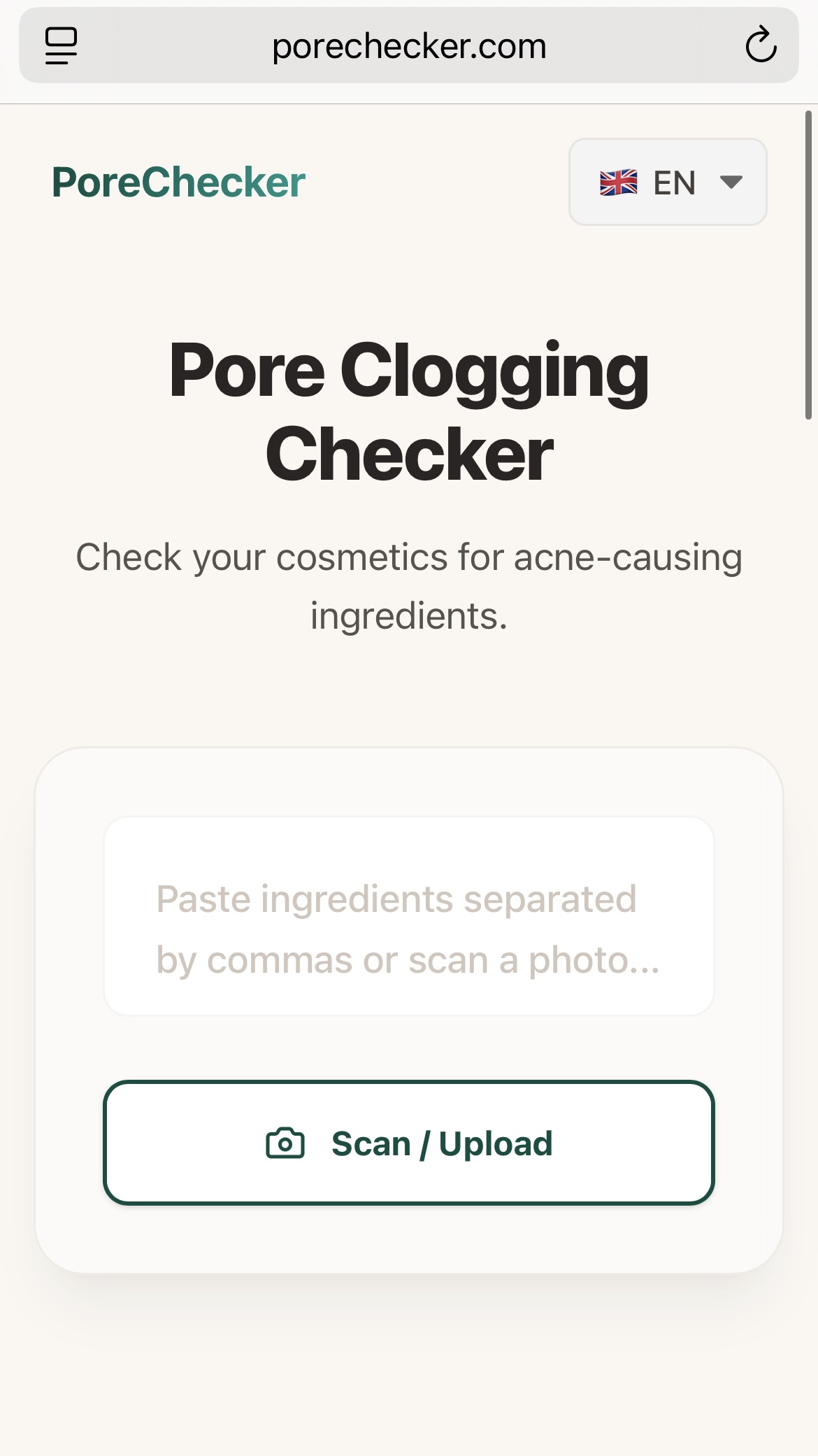
Step 1: Upload Your Product Image
Simply snap a photo of the ingredient list on the back of any bottle, jar, or box. No typing required.
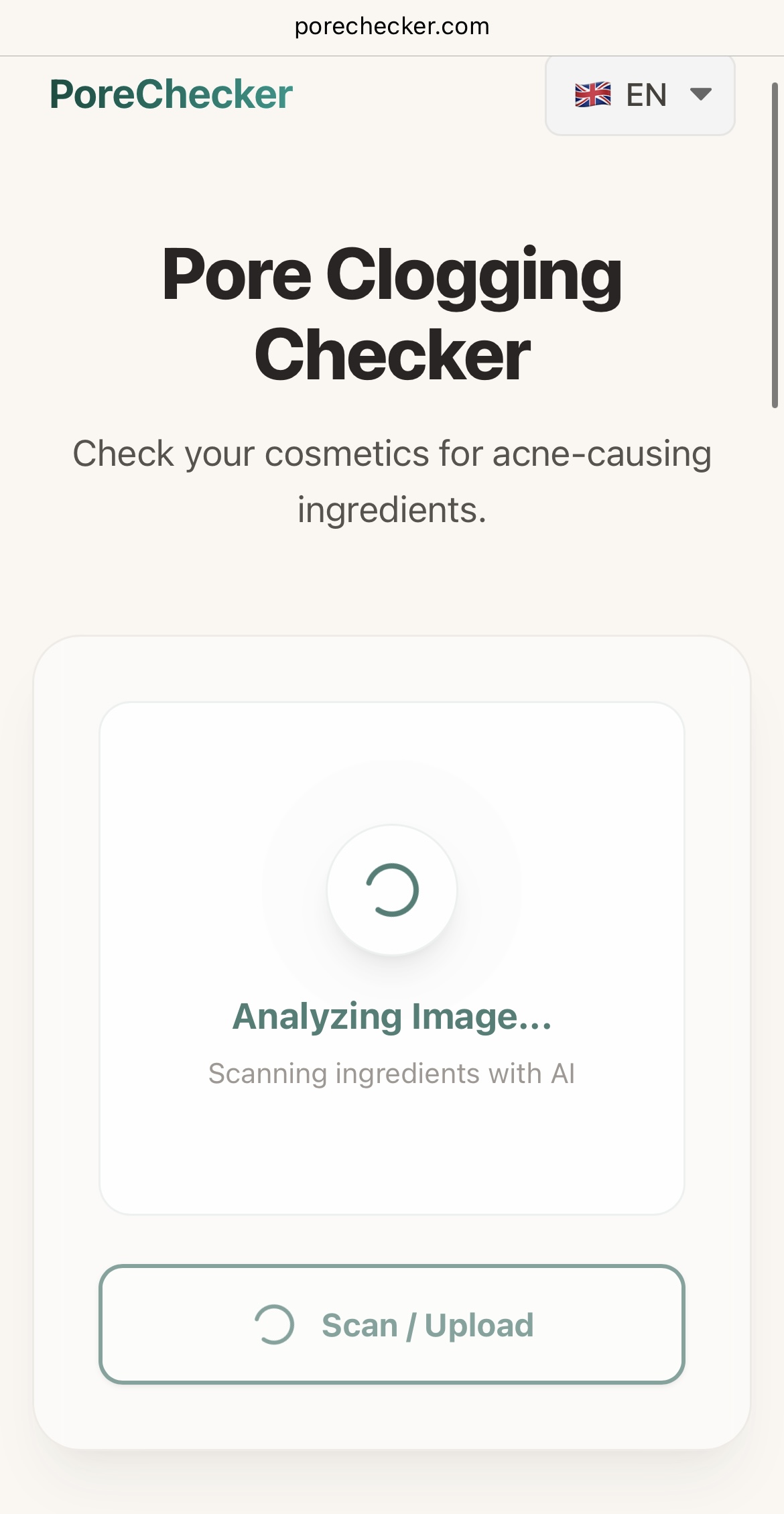
Step 2: Instant AI Ingredient Analysis
Our advanced AI scans the image, performs OCR (Optical Character Recognition), and matches every ingredient against our curated database of comedogenic substances.
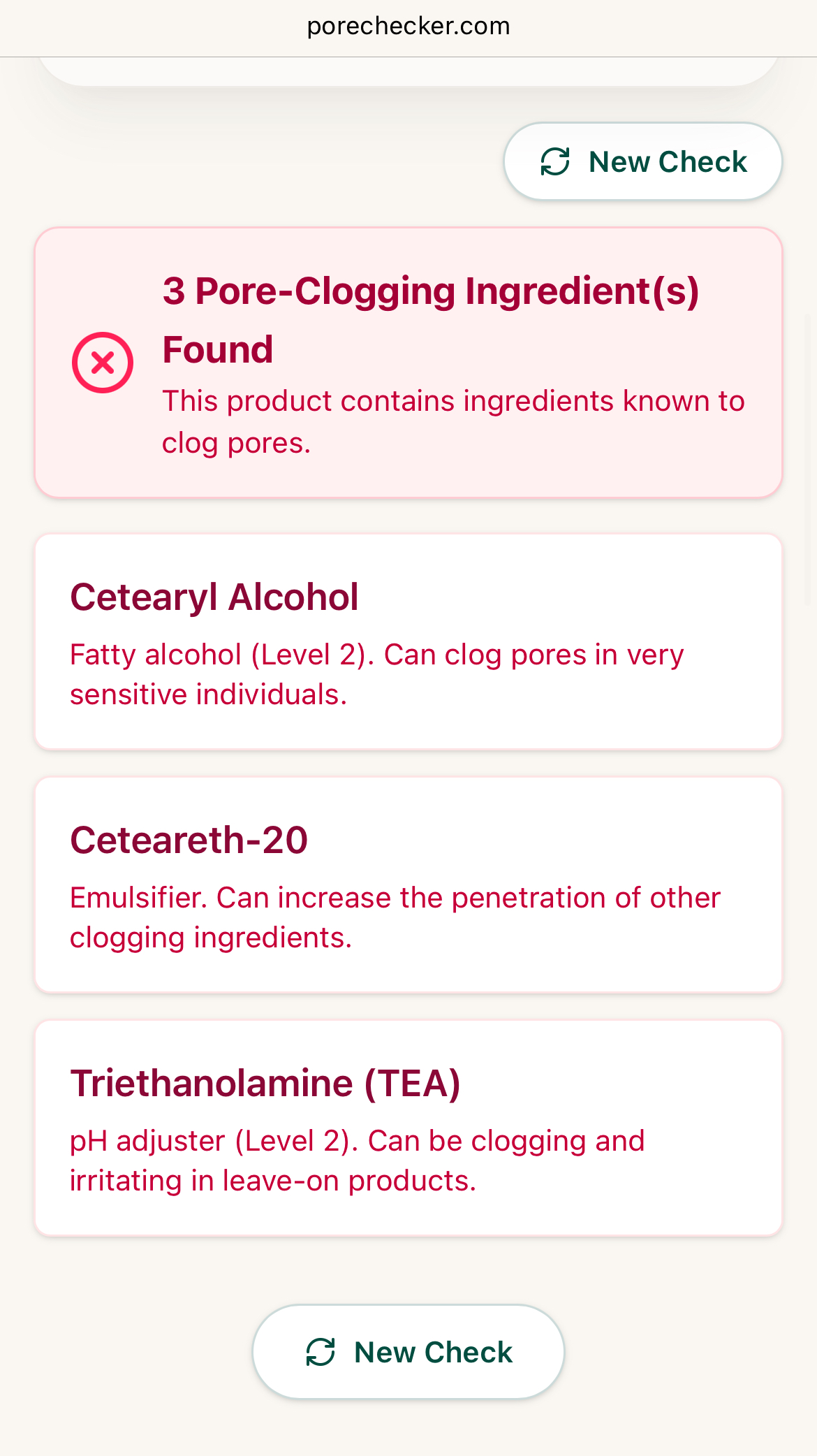
Step 3: Clear Results for Clearer Skin
You get an immediate breakdown. If any red-flag ingredients are found, we highlight them and explain why they might be problematic for your pores.
Does this product fit my skin's needs?
Check Your Products Now