Does Dermaplaning Cause Acne or Is It Actually Helping Your Skin?
Wondering does dermaplaning cause acne? Learn the science behind facial shaving, how it affects pores, and how to avoid breakouts.
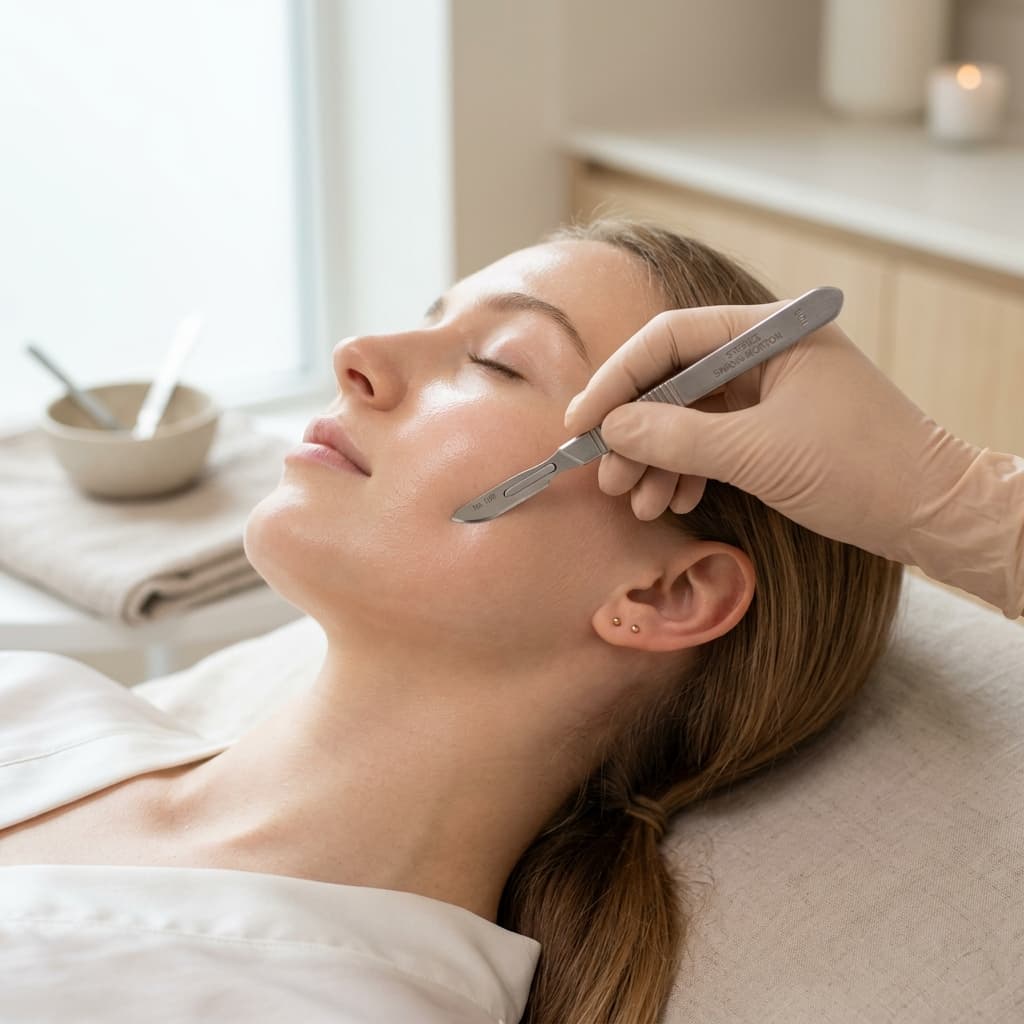
The practice of dermaplaning—using a sterile surgical blade to gently exfoliate the epidermis and remove vellus hair—has become a cornerstone of clinical aesthetics. While it is frequently praised for its ability to deliver an instant "glass skin" glow, many patients arrive at my clinic with a singular apprehension: does dermaplaning cause acne? The short answer is that while the procedure itself is non-comedogenic, the way your skin responds to the sudden removal of its natural protective barrier can dictate whether you experience a post-treatment breakout.
When we perform dermaplaning, we are physically lifting away the layer of dead skin cells and fine "peach fuzz" that can trap sebum and debris. For most, this creates a clearer path for skincare absorption. However, if the skin is already harboring active bacteria or if the post-procedure environment is compromised, the complexion may react defensively. True acne is an inflammatory condition, and while dermaplaning doesn't create acne bacteria, improper technique or the use of contaminated tools can certainly trigger a flare-up in vulnerable skin.
The Science of Barrier Disruption
Dermaplaning is a form of mechanical exfoliation. By removing the stratum corneum, you are essentially accelerating the skin’s turnover cycle. If you have active, inflamed acne—specifically pustules or cysts—the blade can rupture these lesions, spreading bacteria across the face. This is why practitioners strictly avoid dermaplaning over active breakouts. When a blade glides over an active infection, it effectively acts as a spreader, planting bacteria into previously healthy hair follicles.
Post-Procedure Hygiene
Beyond the treatment itself, the aftermath is where most "dermaplaning-induced acne" originates. Immediately following the procedure, your skin is in a state of heightened permeability. This is the optimal window to introduce healing serums, but it is also a window where your pores are highly susceptible to clogging agents. If you apply a heavy, oil-based moisturizer or an occlusive cream immediately after the hair and top layer of skin have been removed, you may inadvertently trap trapped sebum, leading to congestion that mimics a breakout.
Don't Let Your Products Ruin Your Progress
Dermaplaning can provide your skin with a fresh start, but that progress is easily undone if you follow the treatment with heavy, comedogenic formulations. Because your skin barrier is temporarily sensitized and more receptive to topical ingredients, it is vital to ensure that every product you apply is non-comedogenic. Even if a product is labeled "gentle," it may contain hidden ingredients that can cause micro-comedones in a skin type prone to acne. Before reaching for your standard moisturizer post-treatment, take a moment to verify that your current regimen isn't working against your goals by checking the ingredient list for potential pore-cloggers that could sabotage your results.
Step 1: Upload Your Product Image
Simply snap a photo of the ingredient list on the back of any bottle, jar, or box. No typing required.

Step 2: Instant AI Ingredient Analysis
Our advanced AI scans the image, performs OCR (Optical Character Recognition), and matches every ingredient against our curated database of comedogenic substances.

Step 3: Clear Results for Clearer Skin
You get an immediate breakdown. If any red-flag ingredients are found, we highlight them and explain why they might be problematic for your pores.
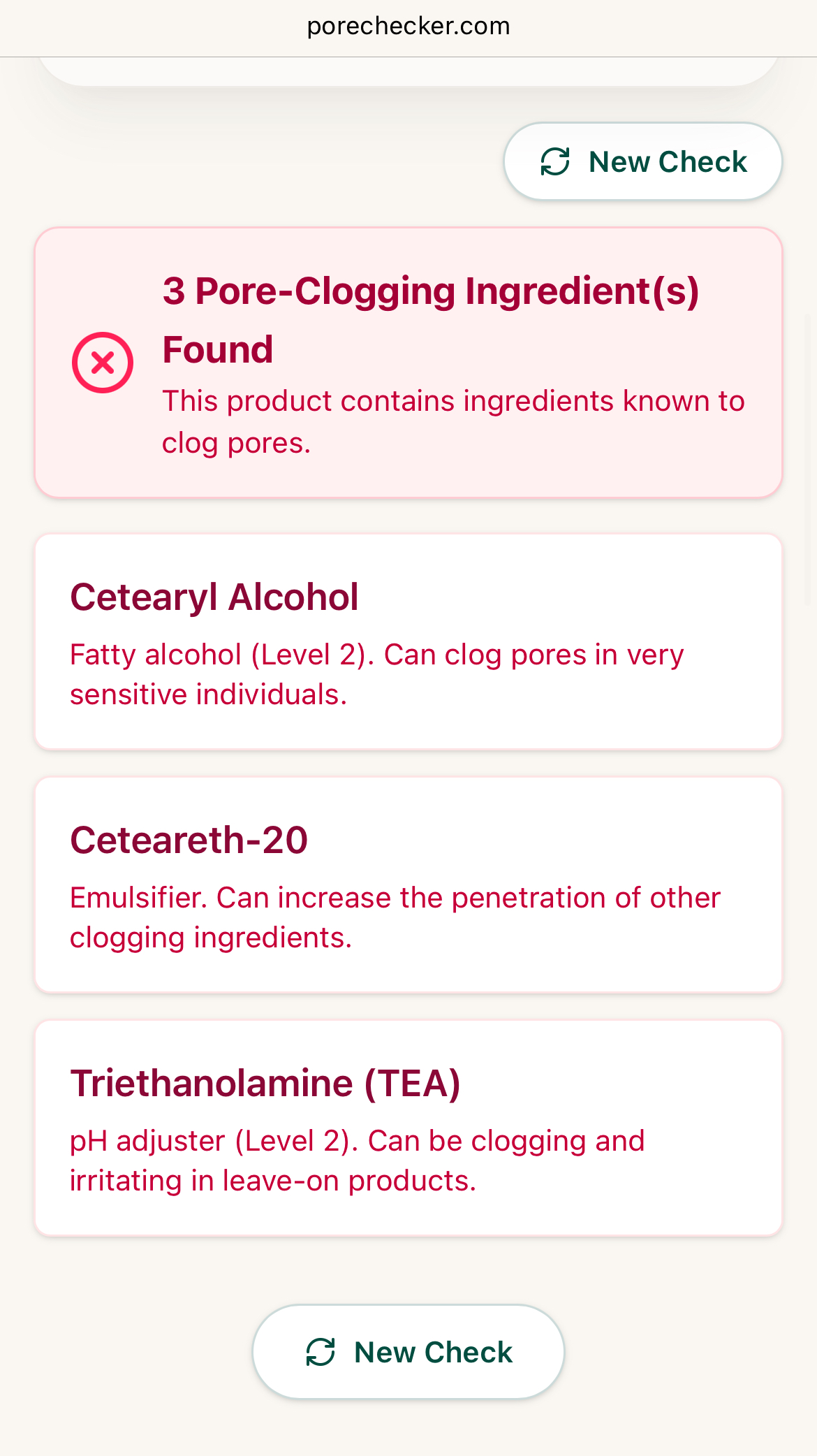
Does this product fit my skin's needs?
Check Your Products Now