Does Hot Water Open Pores? The Truth Behind Common Skincare Myths
Does hot water open pores? We break down the science of skin temperature and how to properly cleanse your face for clear results.
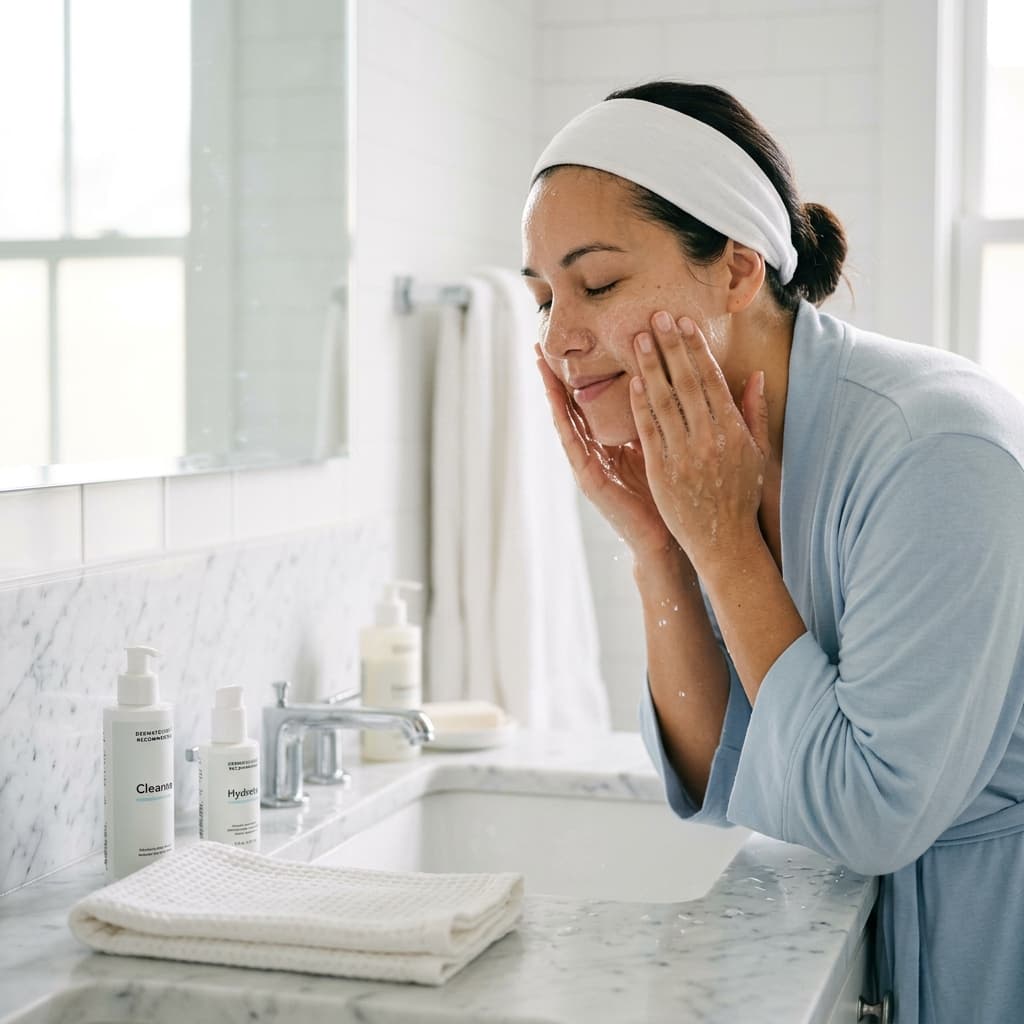
The idea that steam or hot water acts like a key to physically "open" your pores is one of the most persistent myths in skincare. Many of us grew up with the advice that a hot shower or a bowl of steaming water is the first step toward clearing out blackheads. However, from a physiological standpoint, pores are not muscles; they do not have the ability to open and close in response to external heat.
What actually occurs is a temporary softening of the hardened sebum—the oily substance inside your follicles—and the surrounding stratum corneum. While this might make a professional extraction slightly easier for a dermatologist, it does not fundamentally change the size of your pores or "release" debris on its own. In fact, relying on high temperatures can be counterproductive, potentially compromising your skin's moisture barrier and leading to inflammation rather than clarity.
The Science of Temperature and Your Skin
When you expose your skin to excessive heat, you risk stripping away the essential lipids that keep your barrier resilient. Pores look most prominent when the skin surrounding them is dehydrated or inflamed. If you frequently wash your face with scalding water, you likely experience redness and tightness immediately afterward. This reaction can make pores appear larger due to the swelling of the skin tissue, creating the exact opposite effect of what you are trying to achieve.
Why Lukewarm Is the Gold Standard
For daily maintenance, room temperature or lukewarm water is the safest choice. It is effective enough to dissolve the surfactants in your cleanser—allowing them to lift dirt, pollution, and makeup—without disturbing the acidic pH of your acid mantle. Consistency is far more effective for pore health than thermal shock. By keeping your skin calm, you prevent the excess oil production that often occurs when the skin attempts to overcompensate for dryness caused by heat-stripping.
Hidden Factors That Congest Pores
While you may be focused on water temperature, the true culprit behind visible congestion is often found in the products you apply after you wash. Pores are strictly exit points for oil and sweat; they become "clogged" when that sebum is trapped by external occlusives or pore-clogging ingredients. If your routine includes heavy waxes, certain coconut-derived oils, or thick silicones, no amount of careful cleansing will keep those follicles clear.
Don't Let Your Products Ruin Your Progress
It is a frustrating cycle: you focus on the correct water temperature and gentle cleansing techniques, only to apply a moisturizer or serum that quietly congests your skin throughout the day. Often, products marketed as "natural" or "gentle" contain ingredients that are highly comedogenic, meaning they are chemically prone to forming micro-plugs within your pores. If you aren't auditing your ingredient lists, you are essentially undoing the hard work of your cleansing routine by reintroducing pore-cloggers every time you hydrate. Before your next purchase, ensure you are verifying your products against a trusted ingredient database to guarantee that what you are putting on your face is actually supporting your path to clearer, healthier skin.
Step 1: Upload Your Product Image
Simply snap a photo of the ingredient list on the back of any bottle, jar, or box. No typing required.
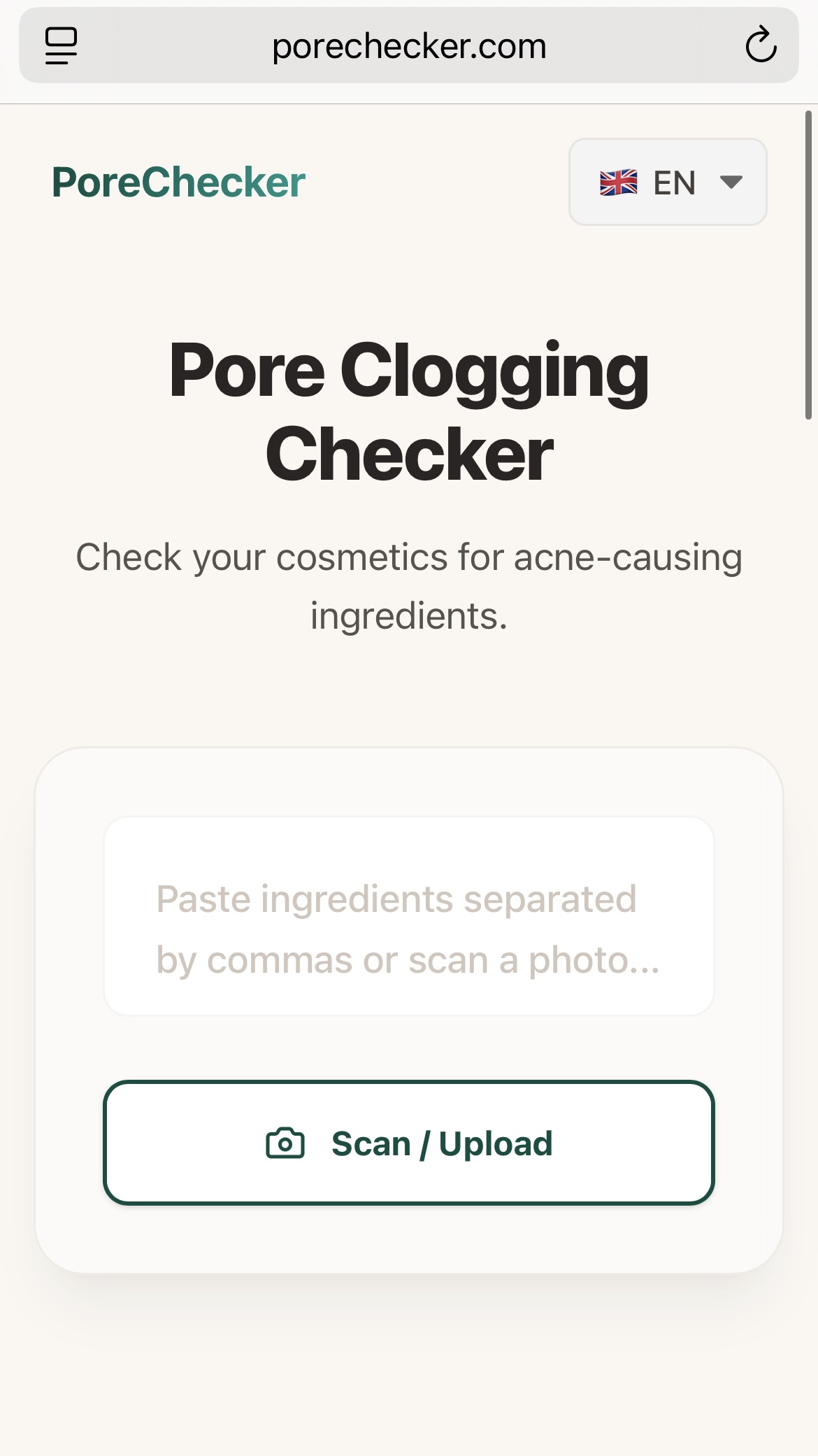
Step 2: Instant AI Ingredient Analysis
Our advanced AI scans the image, performs OCR (Optical Character Recognition), and matches every ingredient against our curated database of comedogenic substances.

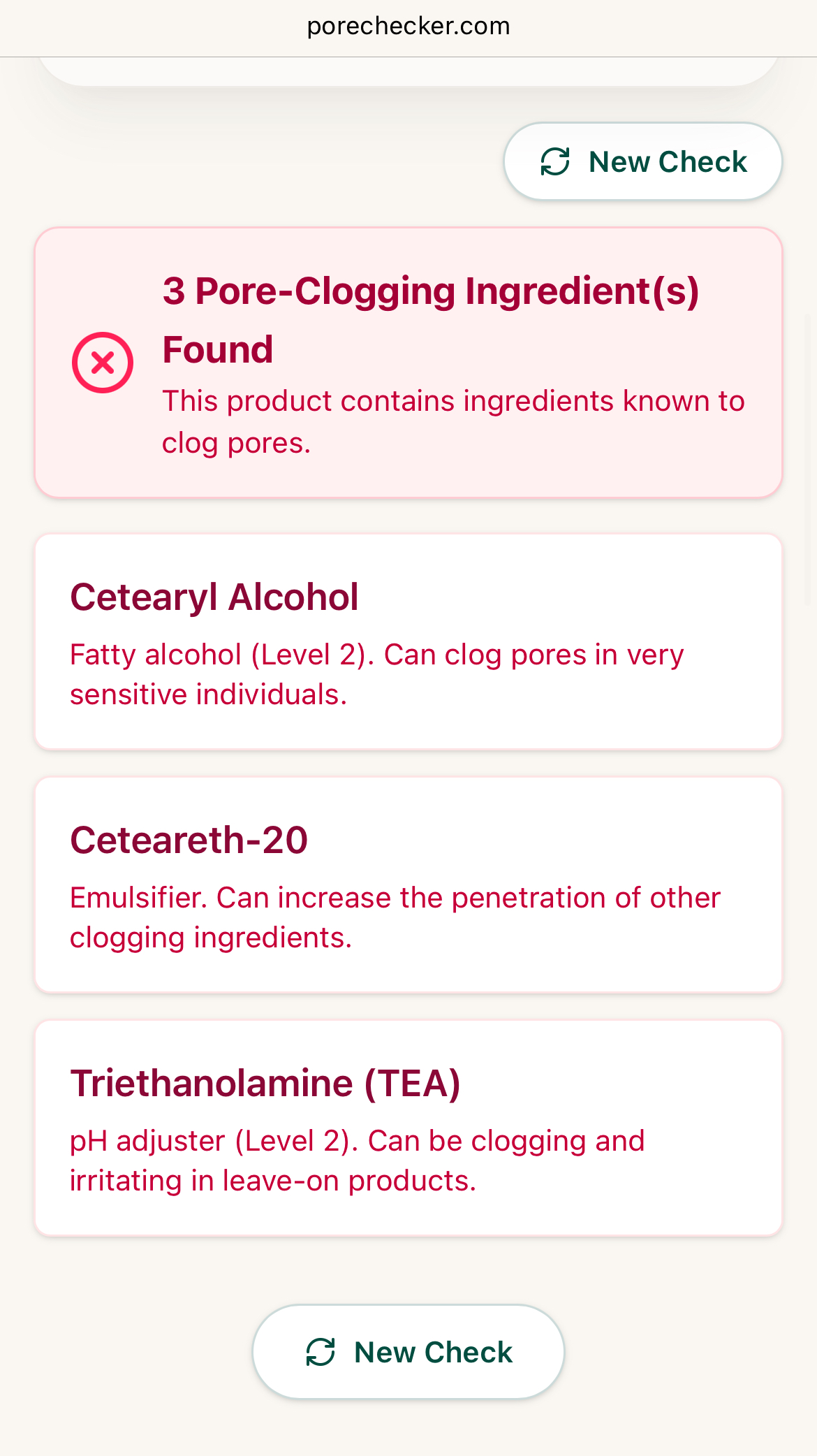
Step 3: Clear Results for Clearer Skin
You get an immediate breakdown. If any red-flag ingredients are found, we highlight them and explain why they might be problematic for your pores.
Does this product fit my skin's needs?
Check Your Products Now