Does Retinol Help With Acne Scars? Unveiling the Science and Sculpting Smoother Skin
Discover the science behind retinol's impact on acne scars. Learn how it works, what to expect, and how to maximize your results for smoother, clearer skin.

The aftermath of acne, those lingering reminders of past breakouts, can be frustrating. Acne scars, in their various forms – ice pick, boxcar, or rolling scars – can significantly impact self-esteem. Many people turn to potent ingredients to diminish their appearance, and retinol often tops the list. But does retinol help with acne scars, and if so, how? As a dermatologist and skincare scientist, I'm here to provide an evidence-based perspective.
This article will break down the science behind retinol, its mechanisms of action on the skin, and its proven efficacy in addressing acne scars. We'll explore practical tips and strategies to incorporate retinol into your routine safely and effectively. Importantly, we will touch on the often-overlooked aspect of choosing products that won't exacerbate the problem, focusing on non-comedogenic formulations that won't clog pores and worsen acne.
Understanding Retinol and Its Power
Retinol, a derivative of vitamin A, is a powerhouse ingredient in skincare. It works at a cellular level, influencing several key processes that contribute to its scar-reducing effects. It accelerates cell turnover, promoting the shedding of old, damaged skin cells and the formation of new, healthy ones. This increased turnover helps to reduce the appearance of scars by smoothing the skin's surface.
Furthermore, retinol boosts collagen production. Collagen is a protein that provides structural support to the skin. Acne scars often involve a disruption of collagen, leading to the indented or uneven texture. By stimulating collagen synthesis, retinol helps to plump up the skin, filling in these scars and creating a smoother complexion. Finally, retinol has anti-inflammatory properties, reducing redness and inflammation associated with acne, which can contribute to scar formation. Its impact is undeniable when it comes to overall skin health.
Types of Acne Scars Retinol Addresses
Retinol is most effective on certain types of acne scars. It works particularly well on rolling scars, which are shallow, undulating depressions in the skin. The increased collagen production helps to fill in these scars, making them less noticeable. It can also improve the appearance of boxcar scars, which are wider, box-like depressions. However, the effects on ice pick scars, which are narrow, deep scars, may be more limited, and may require more intensive treatments like laser resurfacing or chemical peels alongside retinol.
How to Use Retinol Safely and Effectively
Introducing retinol into your skincare routine requires patience and a gradual approach. Start with a low concentration (0.01% to 0.03%) and apply it once or twice a week, gradually increasing the frequency as your skin tolerates it. Always apply retinol to clean, dry skin in the evening, as it can make your skin more sensitive to the sun. Follow with a non-comedogenic moisturizer to hydrate and protect your skin. It's crucial to wear sunscreen with an SPF of 30 or higher every day, as retinol increases sun sensitivity. Don't be discouraged by initial side effects, such as redness, dryness, and peeling, as these typically subside as your skin adjusts.
Be patient; it can take several weeks or even months to see significant results. Consistency is key when it comes to retinol use; you must keep it up to see positive changes in your skin. Avoid using retinol alongside other harsh actives like AHAs/BHAs simultaneously, to prevent irritation.
Products to Consider and What to Avoid
When choosing retinol products, look for formulations that are well-packaged to protect the retinol from air and light, which can degrade its effectiveness. Serums are often a good option, as they are formulated to penetrate the skin easily. Avoid products with irritating ingredients like alcohol, fragrances, or essential oils. These can exacerbate irritation and hinder the healing process. Pay close attention to other ingredients in the product and ensure that the formulation is non-comedogenic and appropriate for sensitive skin. Some examples of ingredients that could be pore-cloggers include coconut oil, cocoa butter, and certain silicones. Be mindful of those ingredients on product labels.
Don't Let Your Products Ruin Your Progress
While retinol is an invaluable tool in the fight against acne scars, the other products you use in your routine can either support or sabotage your efforts. Many seemingly innocuous ingredients, hidden in cleansers, moisturizers, and even sunscreens, can clog pores and trigger new breakouts, potentially leading to more scarring in the future. To prevent this, it's essential to become a vigilant ingredient reader. You need to identify potential pore-clogging offenders. Start educating yourself on which ingredients to avoid, and then you can take the next step.
Step 1: Upload Your Product Image
Simply snap a photo of the ingredient list on the back of any bottle, jar, or box. No typing required.
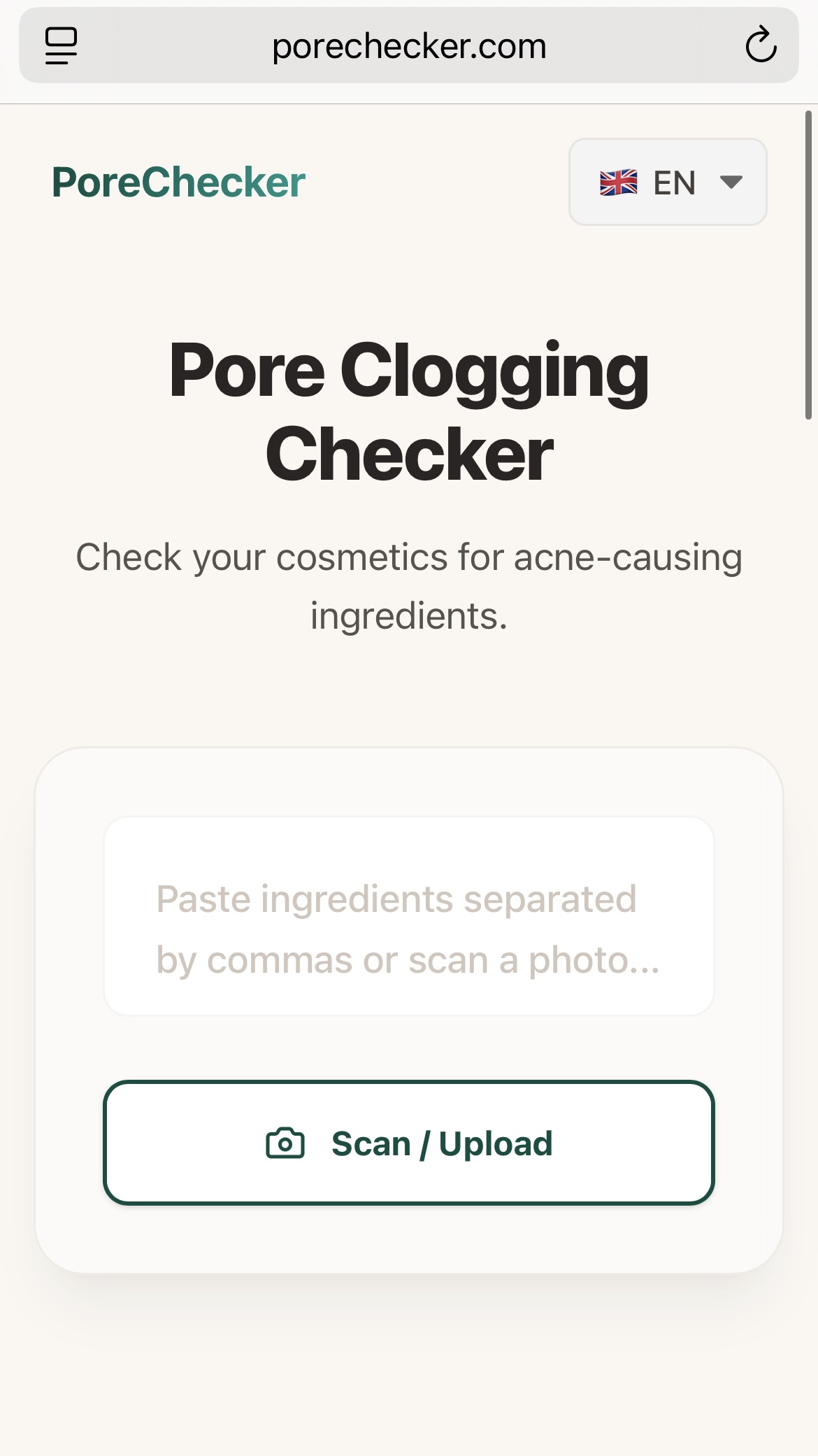
Step 2: Instant AI Ingredient Analysis
Our advanced AI scans the image, performs OCR (Optical Character Recognition), and matches every ingredient against our curated database of comedogenic substances.

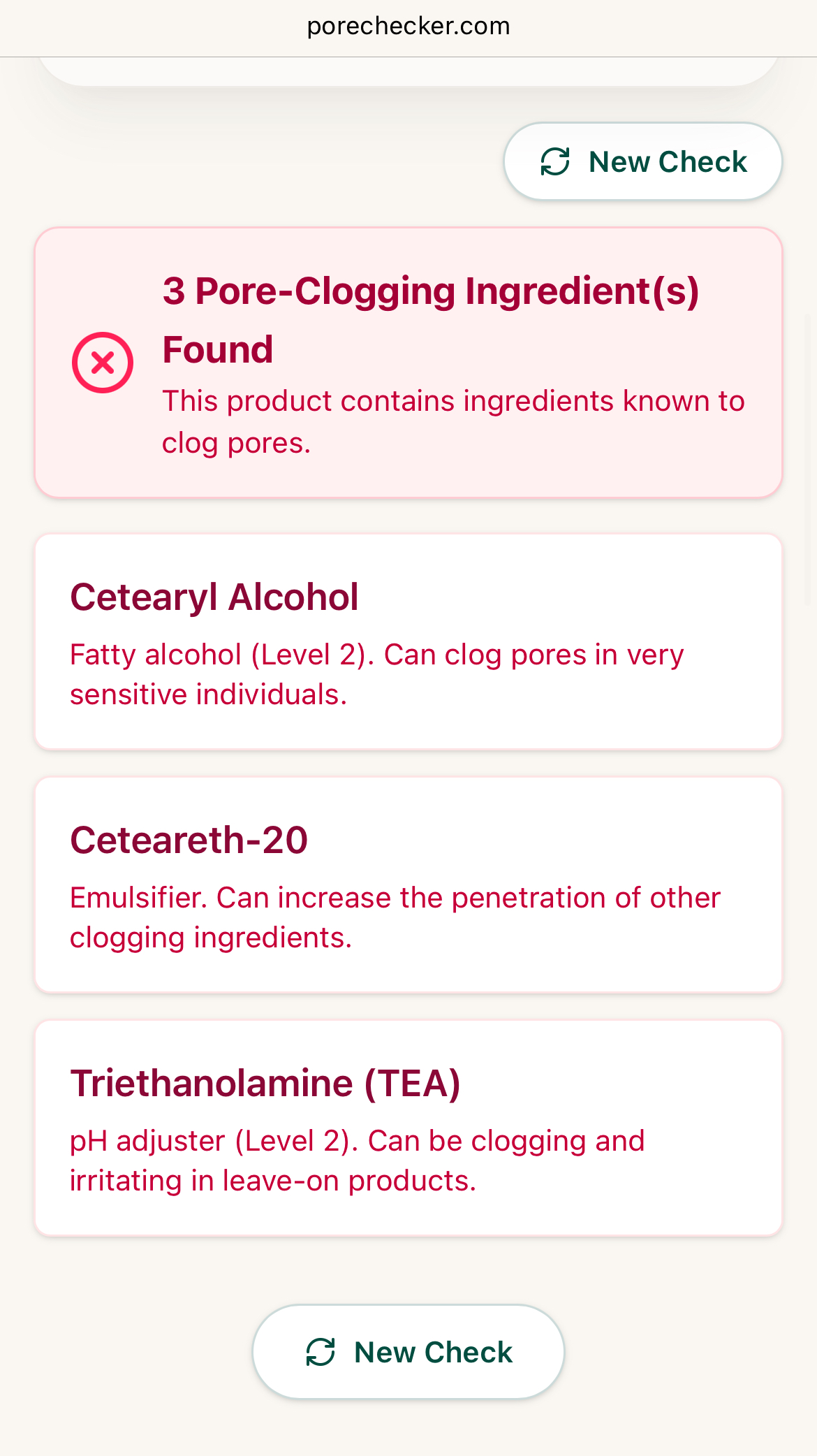
Step 3: Clear Results for Clearer Skin
You get an immediate breakdown. If any red-flag ingredients are found, we highlight them and explain why they might be problematic for your pores.
Does this product fit my skin's needs?
Check Your Products Now