Does Salt Water Help Acne? Separating Fact From Fiction
Discover the truth about salt water and acne! Expert insights on its effects, plus advice on safe, effective skincare. Learn how to clear your skin!

The allure of a quick fix for acne is understandable. We've all been there, searching for that magic bullet to banish blemishes. You might have heard whispers, maybe even read online, that salt water can be a simple, natural remedy. But before you rush to the beach or concoct a saline solution at home, let's delve into whether salt water truly offers a solution to acne, or if it's just another skincare myth.
As a dermatologist, my priority is providing evidence-based advice. Acne is a complex condition influenced by various factors, from genetics and hormones to the products we use. Finding solutions that are safe and effective is crucial. We will explore the potential effects of salt water on acne, and discuss a holistic, non-comedogenic approach to clearer skin.
The Science Behind Salt Water and Skin
Salt water, particularly seawater, contains a mixture of minerals. The primary component, sodium chloride (table salt), has been suggested to have some antimicrobial properties. This means it can potentially kill or slow the growth of certain bacteria. In the context of acne, the idea is that salt water might target *Cutibacterium acnes*, the bacteria often implicated in acne inflammation. Additionally, the mineral content in seawater, such as magnesium, has been linked to potential anti-inflammatory benefits.
However, understanding the scientific mechanisms doesn't automatically translate to effectiveness. The concentration of salt, the presence of other substances, and the overall interaction with your skin's microbiome are complex and variable.
Potential Benefits: What the Data Shows
Some people with acne report improvements after swimming in the ocean. This could be due to a few factors. Salt water can act as a mild exfoliant, helping to remove dead skin cells that can clog pores. The drying effect might temporarily reduce oil production, which contributes to acne. The sun exposure associated with beach visits can also have a drying effect on the skin. Keep in mind that sun exposure can be damaging to your skin and proper sun protection is essential. But, scientific evidence is limited, and the observed effects are often temporary.
Potential Downsides and Risks: What You Need to Know
While salt water might seem like a natural remedy, there are several potential downsides to consider. The high salt concentration can be very drying to the skin, leading to irritation, redness, and even eczema flare-ups in susceptible individuals. Over-drying the skin can also trigger the skin to produce even more oil in an attempt to compensate for the dryness, which could potentially worsen acne. Plus, seawater isn't just salt; it contains other compounds and potential irritants that could be problematic for sensitive or acne-prone skin.
The risks include irritation, dehydration, and potential allergic reactions. It is essential to remember that everyone's skin reacts differently. The ocean, while refreshing, is not sterile. There's a risk of introducing bacteria into open acne lesions, which could worsen the infection or lead to scarring.
Effective, Safe, and Non-Comedogenic Acne Management
If you're seeking to clear acne, a consistent, science-backed approach is key. It's often best to consult with a dermatologist. They can assess your skin type, acne severity, and other factors to recommend the most appropriate treatment plan. Some effective strategies include topical retinoids (prescription or over-the-counter), benzoyl peroxide, and salicylic acid. These ingredients work by unclogging pores, reducing inflammation, and killing acne-causing bacteria. Another critical step is to avoid pore-clogging ingredients in your skincare and makeup products.
Remember: consistency is key. Results take time. Patience and a dedicated skincare routine will yield the best, long-term results.
Don't Let Your Products Ruin Your Progress
Ultimately, understanding how your skincare products interact with your skin is vital, especially when dealing with acne. Sometimes, the ingredients lurking in seemingly harmless cleansers, moisturizers, or makeup can sabotage your efforts. Many ingredients commonly found in skincare can clog pores or irritate your skin. Even if something feels fine initially, it may contribute to future breakouts. That's why it is so important to do your research, and look for products that are explicitly labeled as non-comedogenic.
Step 1: Upload Your Product Image
Simply snap a photo of the ingredient list on the back of any bottle, jar, or box. No typing required.

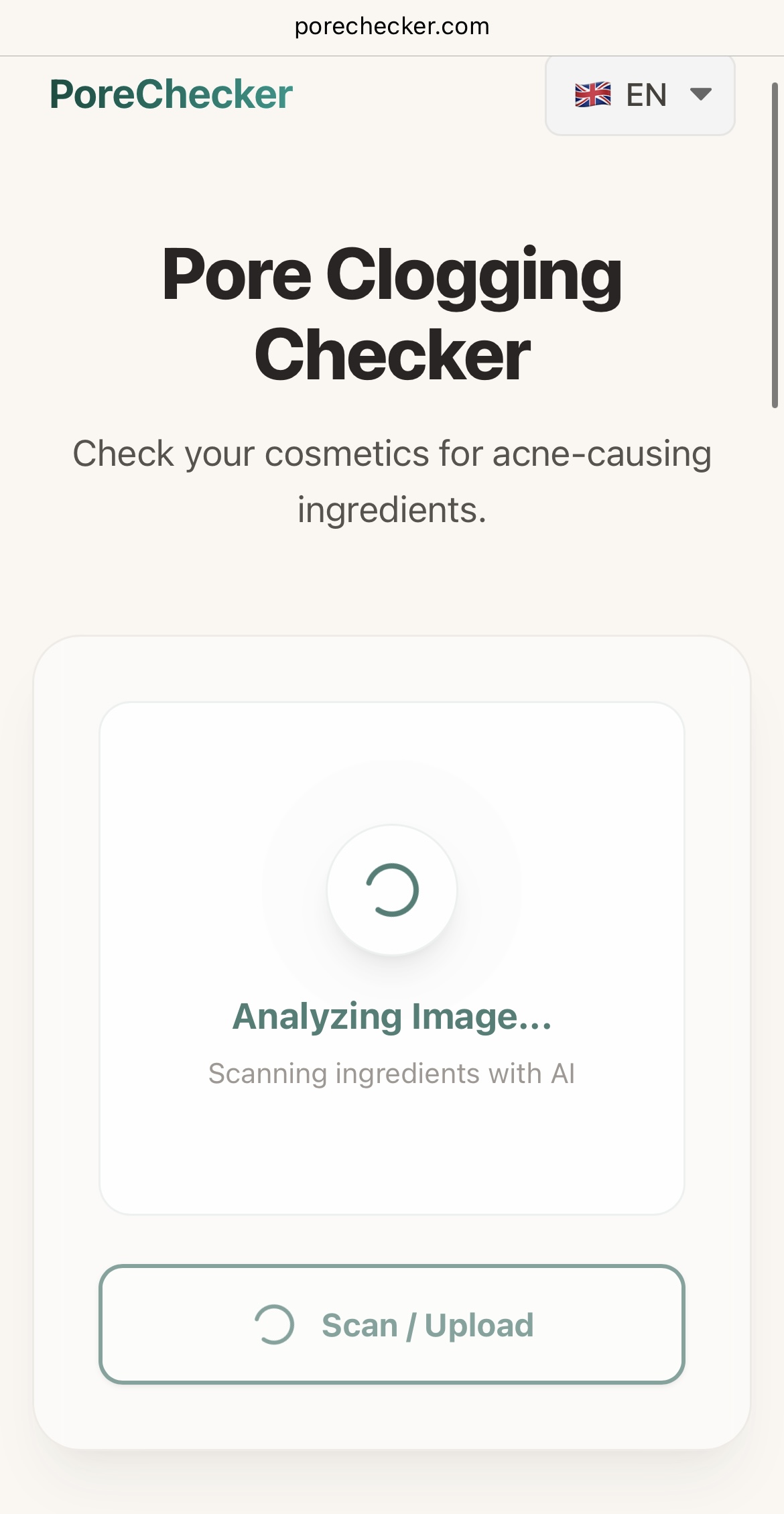
Step 2: Instant AI Ingredient Analysis
Our advanced AI scans the image, performs OCR (Optical Character Recognition), and matches every ingredient against our curated database of comedogenic substances.
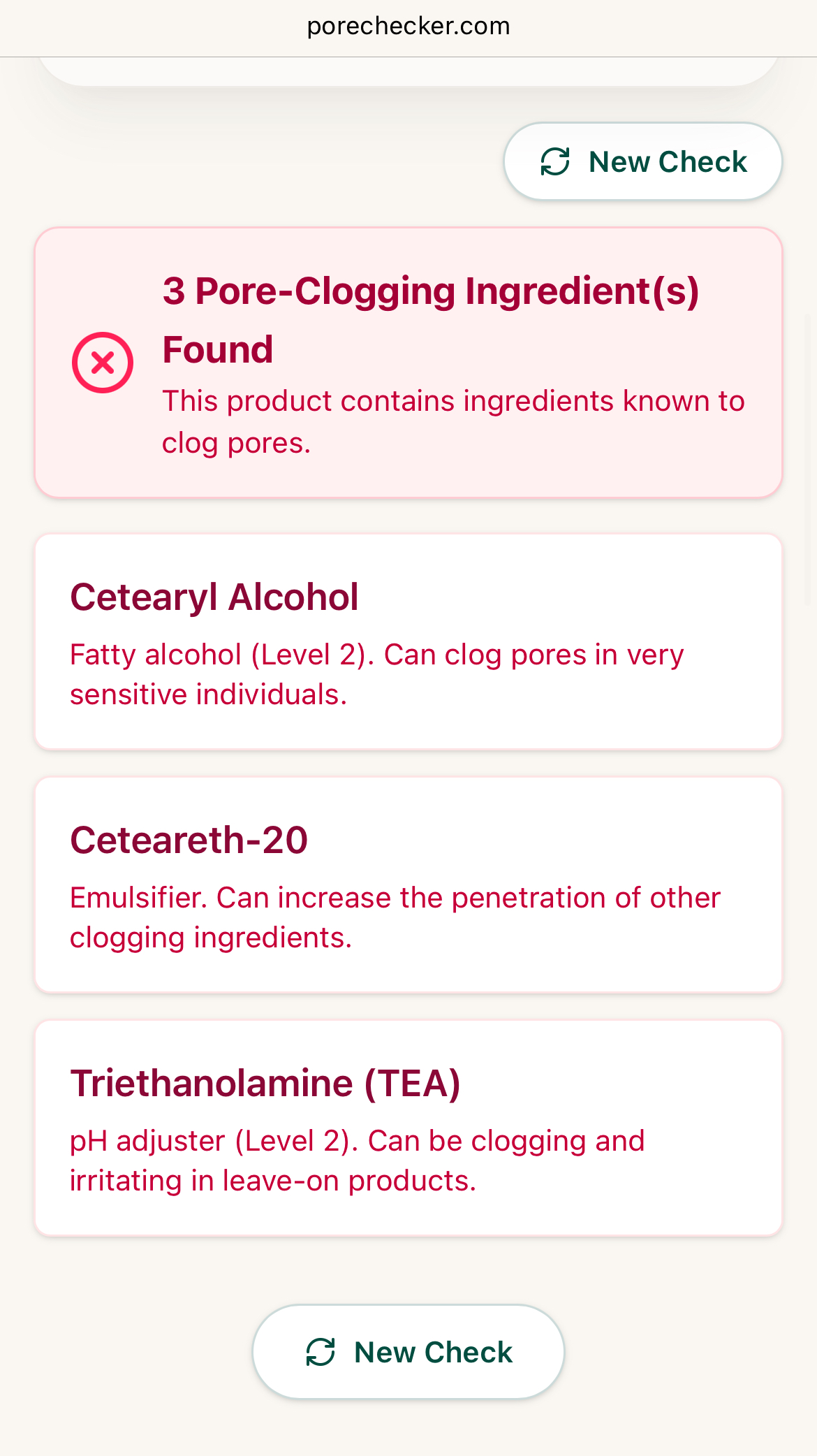
Step 3: Clear Results for Clearer Skin
You get an immediate breakdown. If any red-flag ingredients are found, we highlight them and explain why they might be problematic for your pores.
Does this product fit my skin's needs?
Check Your Products Now