Does Shea Butter Clog Pores? The Science Behind Your Moisturizer
Confused about heavy moisturizers? Discover the truth: does shea butter clog pores, and how to tell if it belongs in your routine.
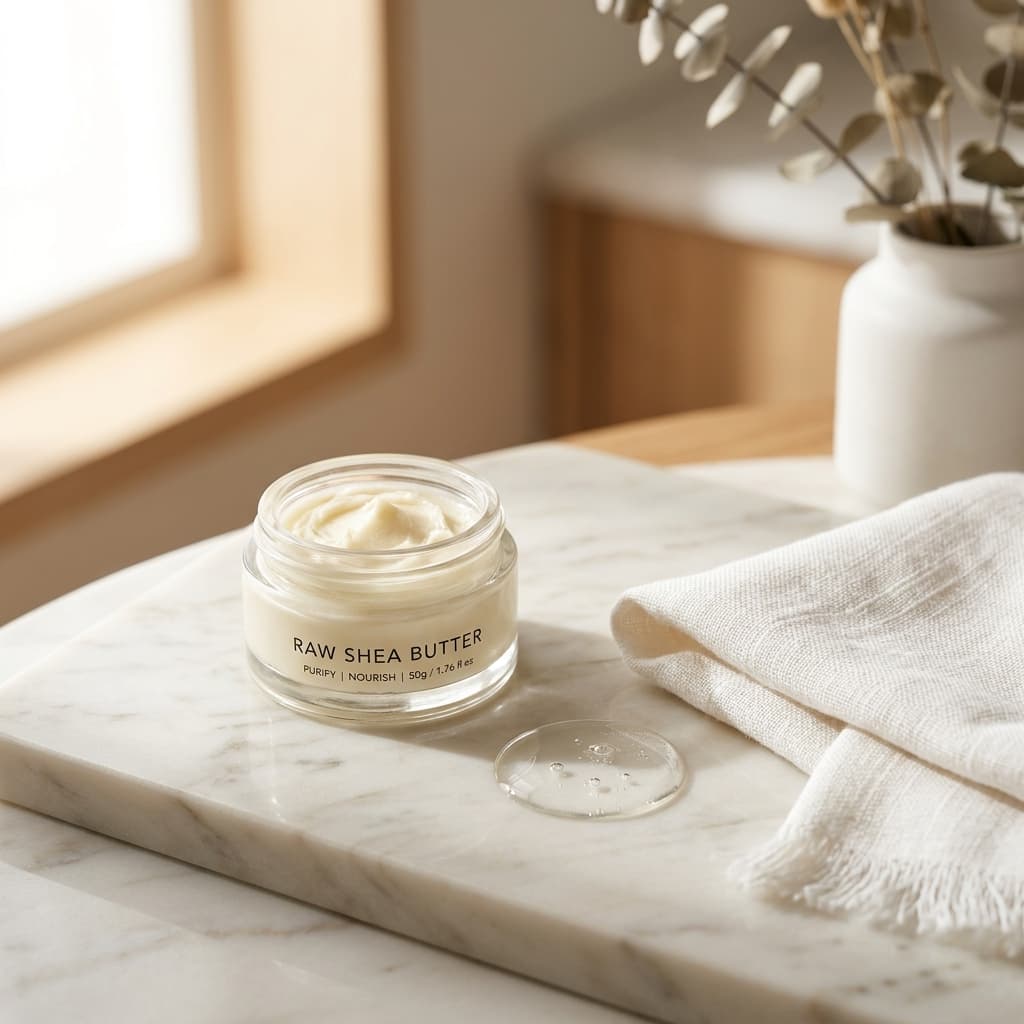
The quest for a healthy, glowing complexion often leads to a complex web of ingredient lists and conflicting advice. Among the most debated staples in natural skincare is shea butter. Praised for its intense emollient properties and ability to soothe dry, irritated skin, it remains a favorite for body care. Yet, when it comes to the delicate skin of your face, many fear that this rich, plant-derived fat might be sabotaging their goals by causing congestion.
To understand whether shea butter is truly a culprit for acne, we have to look at the comedogenic scale—a system that ranks ingredients on a scale of zero to five based on their potential to clog pores. While the science of skin health is rarely black and white, parsing through the technical data helps you decide whether this ingredient should have a place in your vanity or stay reserved for your elbows and knees.
The Truth Behind the Comedogenic Scale
Shea butter is generally assigned a comedogenic rating of zero to two, depending on its purity and processing. In its raw, unrefined state, it is packed with fatty acids like oleic and stearic acid, which provide deep hydration. However, these same fatty acids have a thick consistency that can sit heavily on the skin's surface if your pores are already prone to stagnation.
Is Your Skin Type the Real Factor?
The reality is that "does shea butter clog pores" is a question that cannot be answered with a simple yes or no. The true answer depends on your unique skin microbiome. If you have dry, dehydrated, or barrier-compromised skin, shea butter acts as a vital occlusive, sealing in moisture and preventing transepidermal water loss. In this context, it is a healer.
For those who struggle with oily or acne-prone skin, the situation changes. While shea butter is not inherently "pore-clogging" in the same way as ingredients like isopropyl myristate, its occlusive nature can trap dead skin cells and sebum inside the pore lining. If your skin is already producing excess oil, adding a thick barrier can create an environment where congestion thrives.
Beyond Shea: Identifying Hidden Pore-Cloggers
It is common to blame a single ingredient while overlooking the rest of your formula. Skincare is a synergy of parts, and often, what feels like a shea-induced breakout is actually the result of emulsifiers or preservatives used in the same formulation. Many creams combine shea butter with other potentially comedogenic waxes or oils that exacerbate the issue.
When evaluating your products, look for textures that match your skin's needs. If you enjoy the soothing benefits of plant butters but are prone to breakouts, consider switching to lotions or serums that use shea butter in smaller concentrations, or opt for ingredients like squalane, which provides a similar protective feel without the weight.
Don't Let Your Products Ruin Your Progress
Navigating the ingredient landscape is rarely as simple as pointing to one suspect. Even if a formula is touted as natural or hydrating, it may contain hidden triggers that clash with your specific skin chemistry. To ensure you aren't unknowingly undoing your hard work, it is vital to audit your entire routine for potentially congesting ingredients. By cross-referencing your labels with reliable pore-clogging databases, you can eliminate the guesswork and finally achieve a clear, balanced complexion that feels as good as it looks.
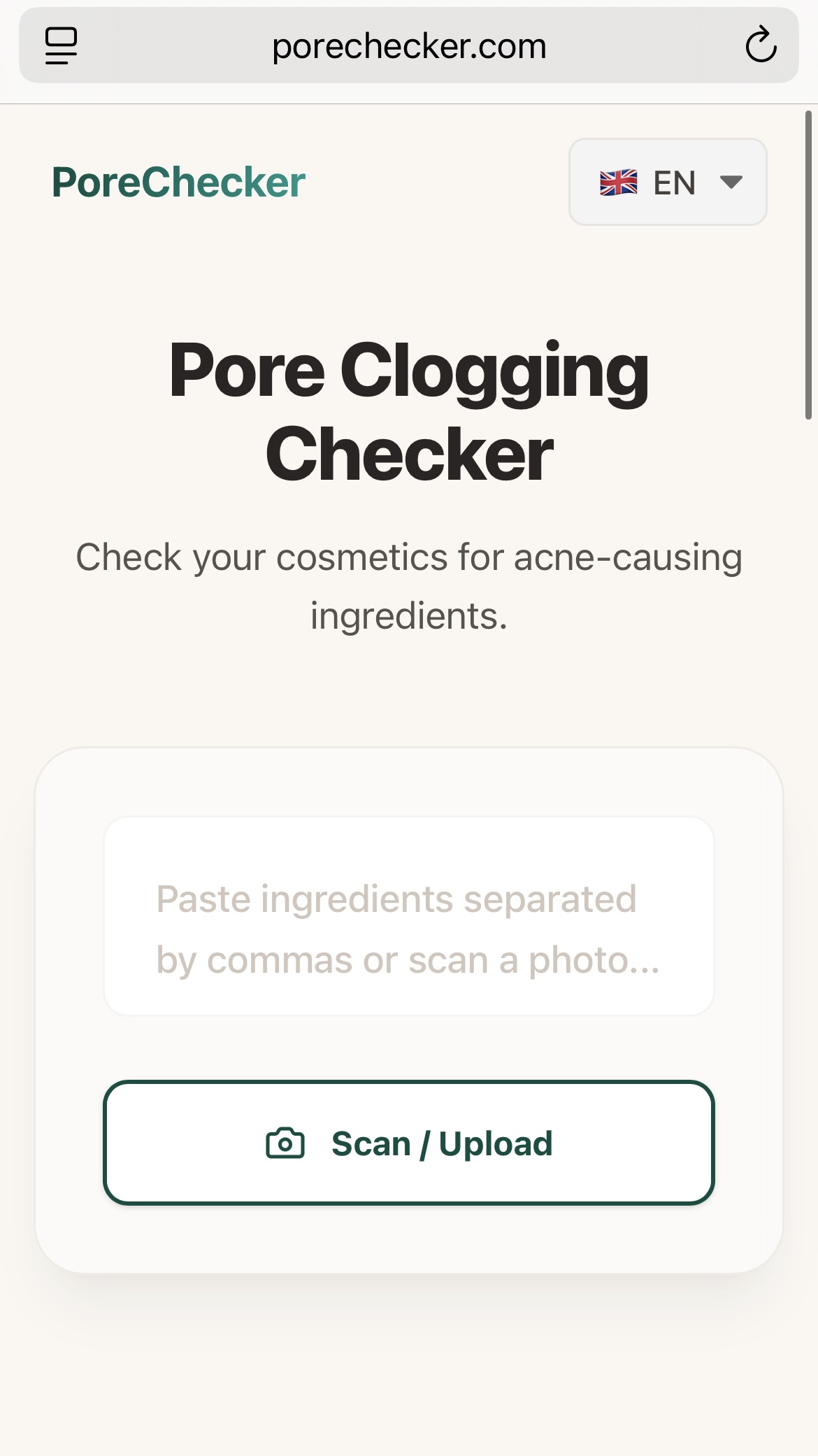
Step 1: Upload Your Product Image
Simply snap a photo of the ingredient list on the back of any bottle, jar, or box. No typing required.
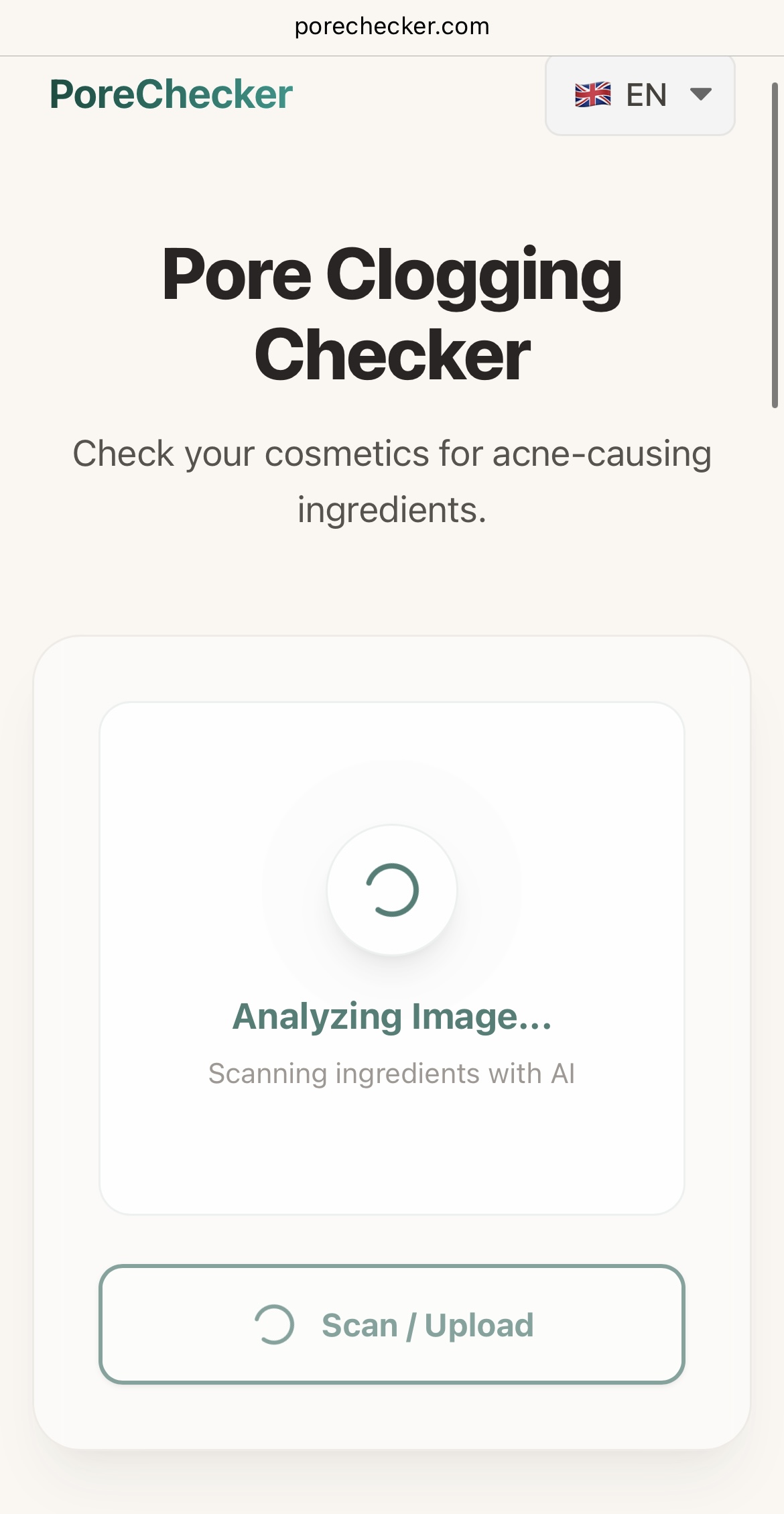
Step 2: Instant AI Ingredient Analysis
Our advanced AI scans the image, performs OCR (Optical Character Recognition), and matches every ingredient against our curated database of comedogenic substances.
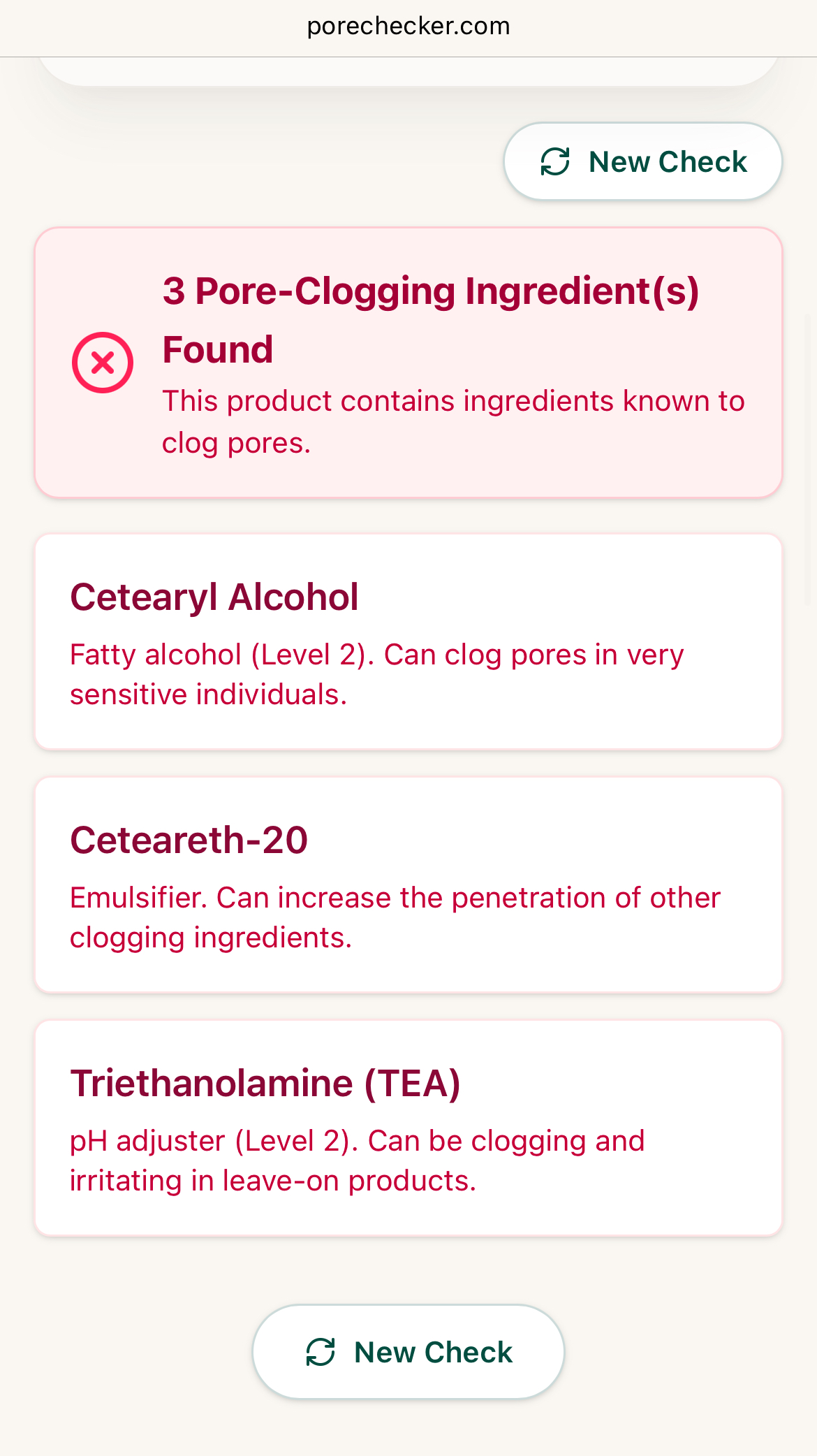
Step 3: Clear Results for Clearer Skin
You get an immediate breakdown. If any red-flag ingredients are found, we highlight them and explain why they might be problematic for your pores.
Does this product fit my skin's needs?
Check Your Products Now