Does Vitamin C Serum Cause Acne? Why You Are Breaking Out
Vitamin C is praised for glowing skin, but can it cause breakouts? Learn why your Vitamin C serum might be triggering acne and how to fix it.
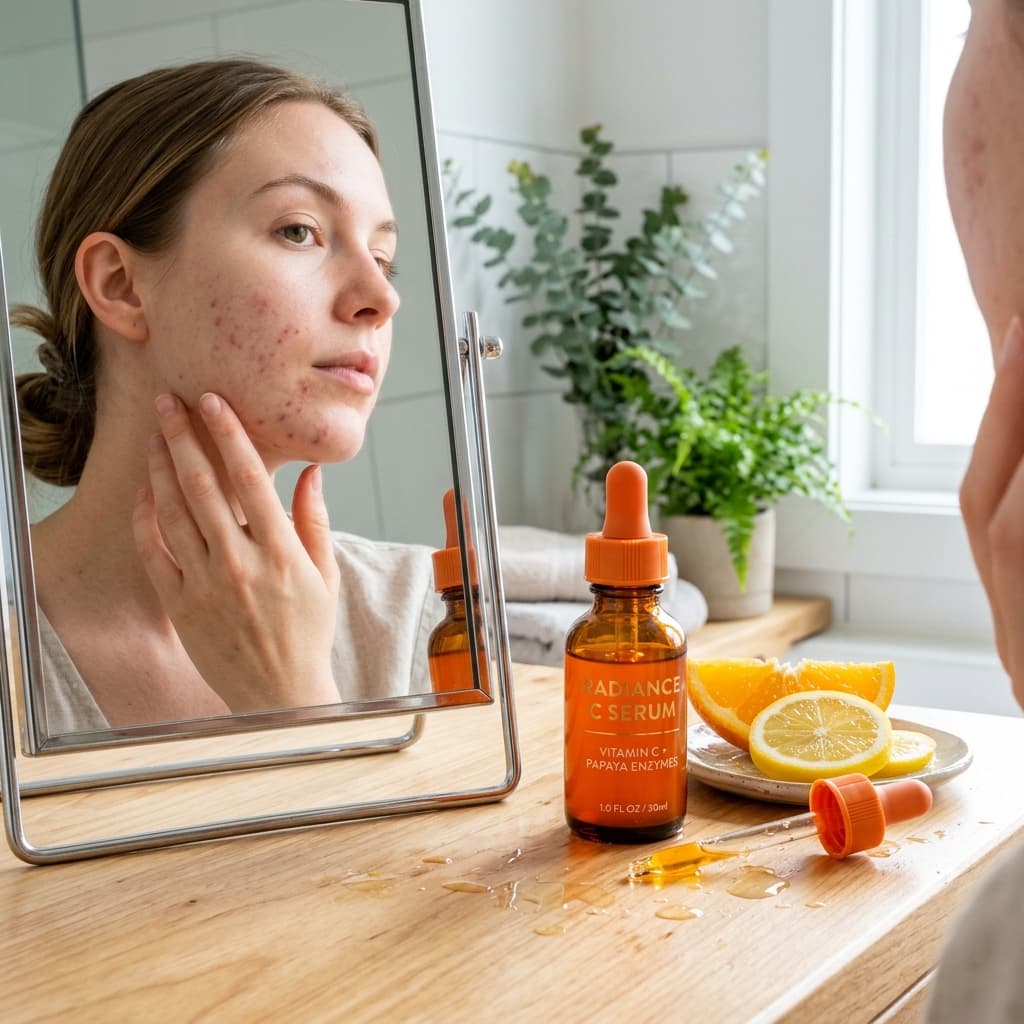
Vitamin C is the golden child of the skincare world. Dermatologists recommend it for fading dark spots, boosting collagen, and achieving a radiant glow. But if you recently added it to your routine and suddenly find yourself dealing with angry red bumps, you are probably asking: does Vitamin C serum cause acne?
The short answer is yes, it can—but not directly because of the vitamin itself. The breakouts are usually caused by the formula's acidity, the carrier ingredients, or the oxidation process.
Reason 1: The Acid Irritation (Not True Acne)
The most potent form of Vitamin C is L-ascorbic acid. In order to penetrate the skin, L-ascorbic acid must be formulated at a very low, highly acidic pH (usually under 3.5). If you have sensitive skin, or an impaired skin barrier, applying this strong acid every morning can cause massive irritation.
Your skin reacts to this chemical irritation by developing tiny, red, inflamed bumps that look exactly like acne (but are technically contact dermatitis). If your "acne" feels burning, itchy, or tight, the serum is too acidic for your barrier.
Reason 2: Pore-Clogging Carrier Ingredients
Vitamin C is notoriously unstable; it degrades rapidly when exposed to light and air. To stabilize it, many brands mix the vitamin into a heavy base of Vitamin E (Tocopherol) and Ferulic Acid. While this combination is excellent for anti-aging, Vitamin E is highly comedogenic.
If you have oily, acne-prone skin, applying a heavy, oily Vitamin E base every morning will quickly clog your pores, leading to real blackheads and whiteheads. You are breaking out from the formula's vehicle, not the Vitamin C itself.
Reason 3: Oxidation on the Skin
If your Vitamin C serum has turned dark orange or brown in the bottle, it has oxidized and gone bad. However, Vitamin C can also oxidize on your face throughout the day as it interacts with oxygen and sebum. This oxidized residue can get trapped in your pores, irritating the follicle and leading to blackheads (which are actually just oxidized melanin and oil).
Summary: How to Fix It
Does Vitamin C serum cause acne? Yes, if you use the wrong formulation. If L-ascorbic acid breaks you out, switch to a more stable, less acidic Vitamin C derivative (like Sodium Ascorbyl Phosphate or Tetrahexyldecyl Ascorbate). These derivatives do not require a low pH to work, they are usually suspended in lightweight, oil-free formulas, and they are much gentler on acne-prone skin.
Step 1: Upload Your Product Image
Simply snap a photo of the ingredient list on the back of any bottle, jar, or box. No typing required.

Step 2: Instant AI Ingredient Analysis
Our advanced AI scans the image, performs OCR (Optical Character Recognition), and matches every ingredient against our curated database of comedogenic substances.

Step 3: Clear Results for Clearer Skin
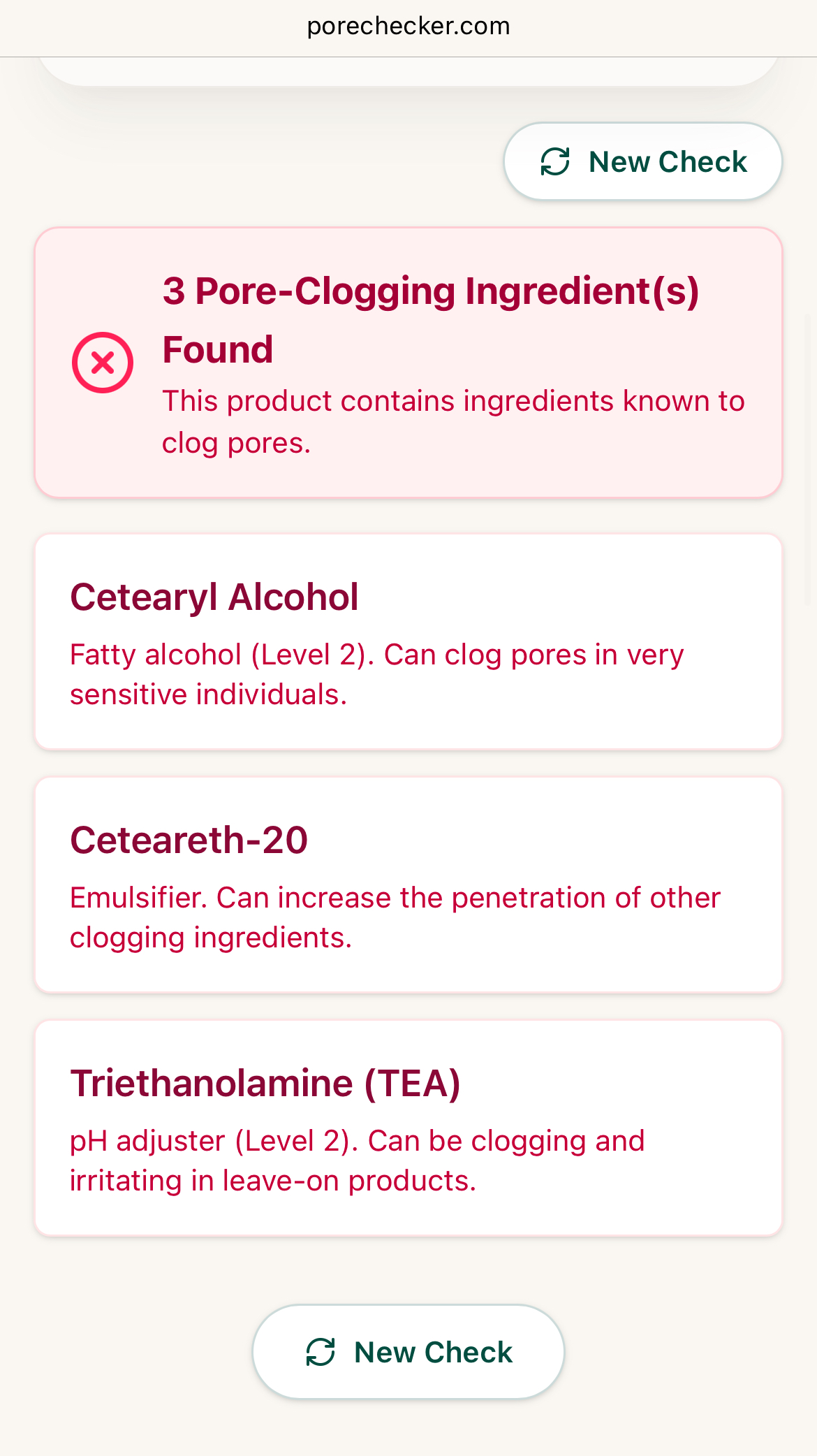
You get an immediate breakdown. If any red-flag ingredients are found, we highlight them and explain why they might be problematic for your pores.
Does this product fit my skin's needs?
Check Your Products Now