Everything You Need to Know: What Are Pore-Clogging Ingredients in Skincare?
Struggling with unexpected breakouts? Discover what pore-clogging ingredients are, why your labels might be misleading, and how to scan your products like a pro.
You’ve perfected your double cleanse, you drink your weight in water, and you never skip your sunscreen. So why are those stubborn bumps still appearing? The answer often lies hidden in the very products you trust to help your skin, buried within complex lists of chemical names that most people can't decode.
Skincare marketing is designed to sound scientific and promising, but the reality is that formulated products are chemical mixtures. Some of these mixtures, while technically "clean" or "safe," are structurally incompatible with human pores, leading to a silent accumulation of congestion that eventually erupts as texture or acne.
The Science of Comedogenicity: What Are Pore-Clogging Ingredients?
At its core, "comedogenic" is a fancy way of saying an ingredient has a high probability of clogging your pores. When an ingredient is pore-clogging, it physically blocks the follicle or triggers an inflammatory response that leads to a "plug" of sebum and dead skin cells. This isn't just a surface-level issue; these plugs, known as comedones, can sit deep within the skin for weeks before becoming visible as a blemish.
What makes this tricky is that many ingredients that seem "natural" or "nourishing"—like certain oils or botanical butters—can be highly comedogenic. Your skin might feel soft for a few days, but underneath the surface, a traffic jam of oil is already forming. This is why you can't always trust a product just because it contains "skin-loving" extracts; the structure of the molecule matters more than the marketing story.
How to Check for Pore-Clogging Ingredients Like a Pro
Historically, checking for pore-clogging ingredients was a tedious manual task. It involved cross-referencing a 50-ingredient INCI list with outdated PDF charts found on internet forums, trying to spot variations of names that change from brand to brand. It’s a process that requires intense focus and a lot of patience, something most of us lack when browsing the aisles of a pharmacy.
Professional estheticians look specifically for "red flag" chemicals. For example, Isopropyl Myristate is a common penetration enhancer that is notorious for causing breakouts, while many Coconut Oil derivatives can be surprisingly heavy for acne-prone skin. Memorizing these hundreds of variations is nearly impossible for anyone without a degree in cosmetic chemistry, making the average consumer vulnerable to poor formulations.
Why Reading the Label Isn't Enough
The biggest misconception in skincare is that products labeled "Non-Comedogenic" or "Dermatologist Tested" are 100% safe. Because these terms aren't strictly regulated, a manufacturer can use them even if the formula contains ingredients known to trigger congestion in many people. There is no standard test that a product must pass to use these buzzwords, meaning they are often more about marketing than medical reality.
Furthermore, brands often hide these components under different technical names or use tiny fonts that lead to visual fatigue. By the time you get to the 20th ingredient, your eyes are glazing over, and you miss the very substance that will cause a flare-up next week. This lack of transparency is why so many people feel like they are doing everything right but still seeing poor results in the mirror.
Stop the Guesswork: How to Use PoreChecker (Step-by-Step)
We built PoreChecker to end the "buy-breakout-regret" cycle. Instead of hours of research, you get a scientific verdict in seconds based on high-level biochemical data.
Our technology is designed to empower you with the same information that top-tier dermatologists use, but simplified for daily life. Here is how you can transform your shopping experience:
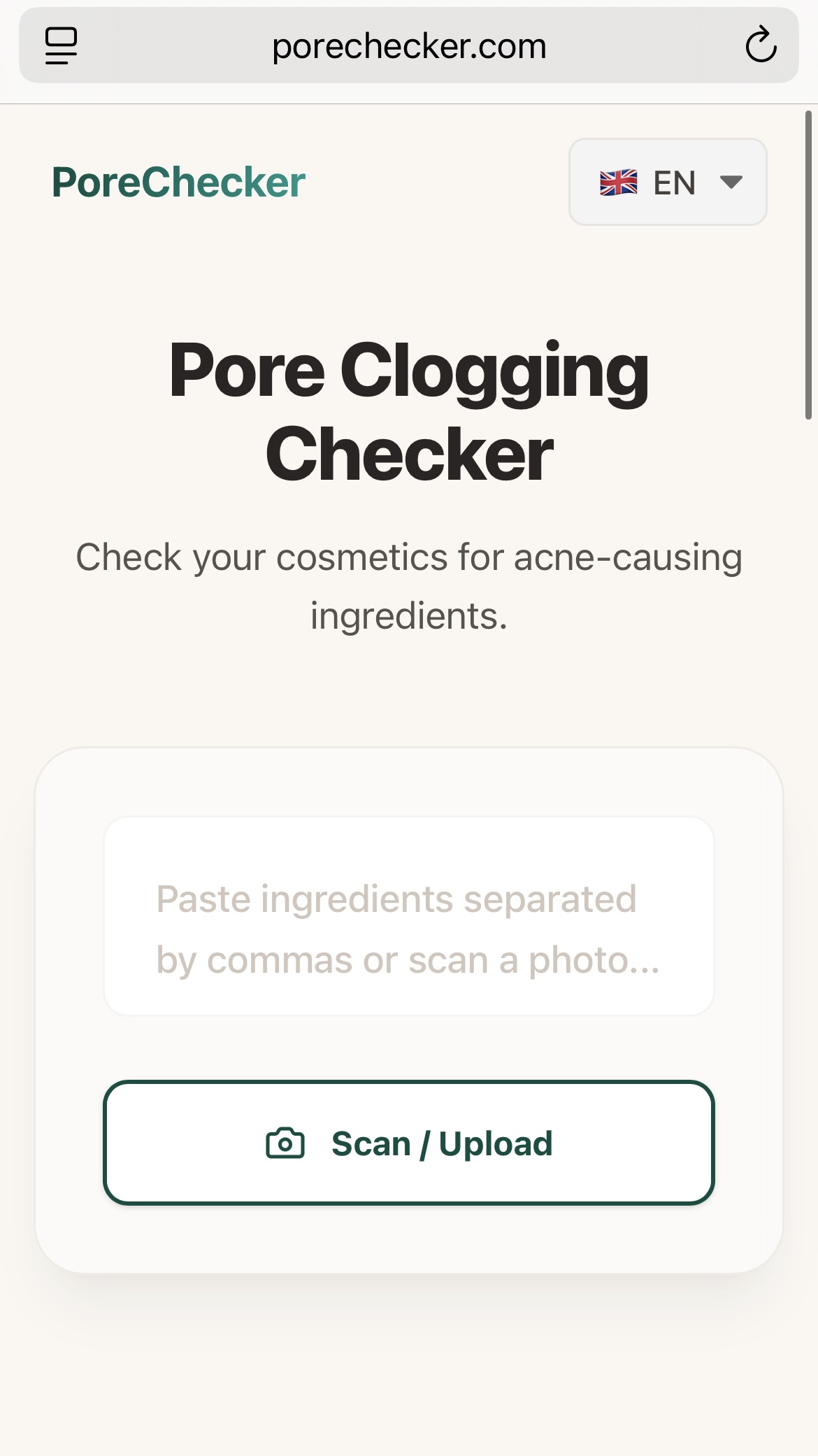
Step 1: Upload Your Product Image
Simply snap a photo of the ingredient list on the back of any bottle, jar, or box. No typing required.
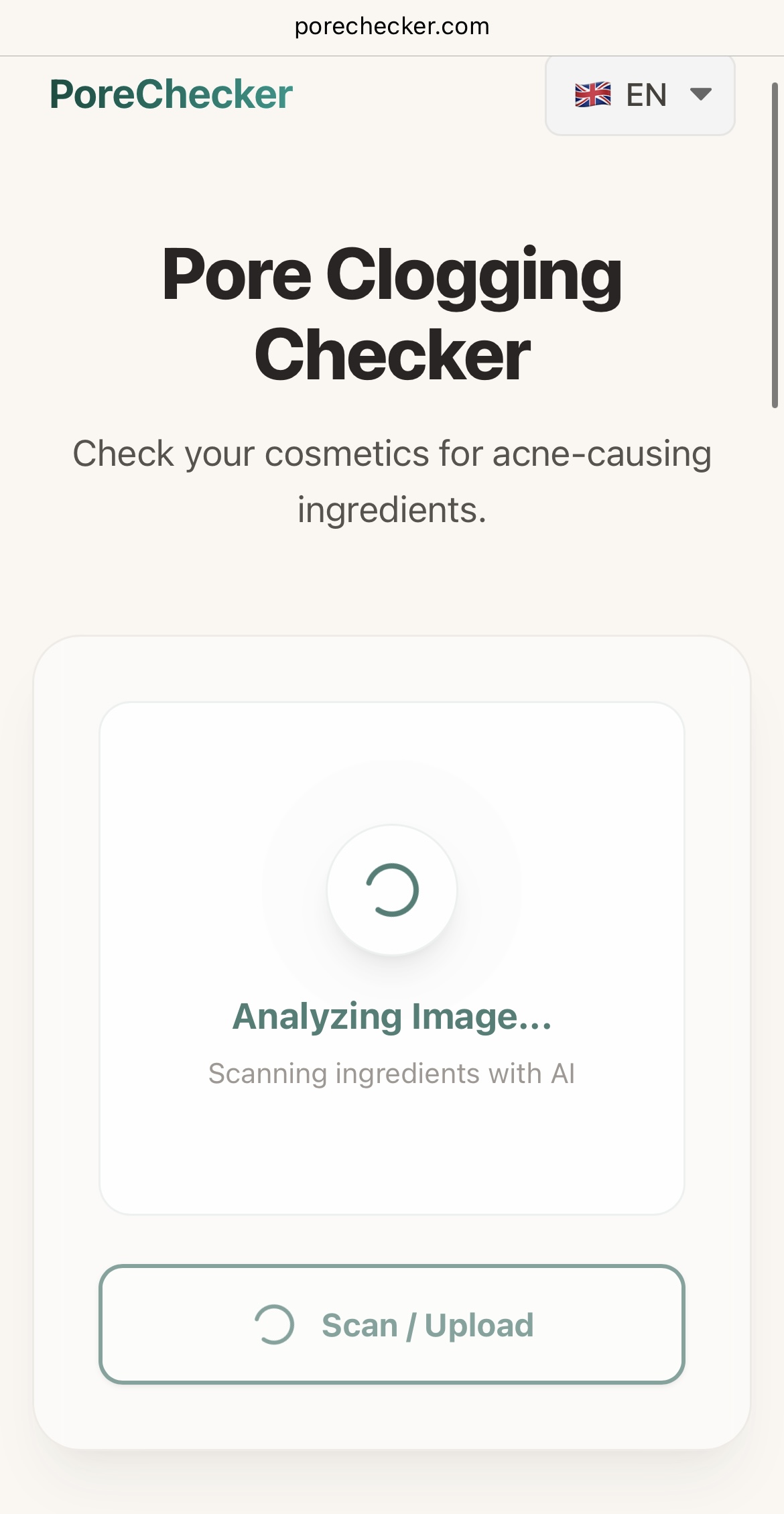
Step 2: Instant AI Ingredient Analysis
Our advanced AI scans the image, performs OCR (Optical Character Recognition), and matches every ingredient against our curated database of comedogenic substances.
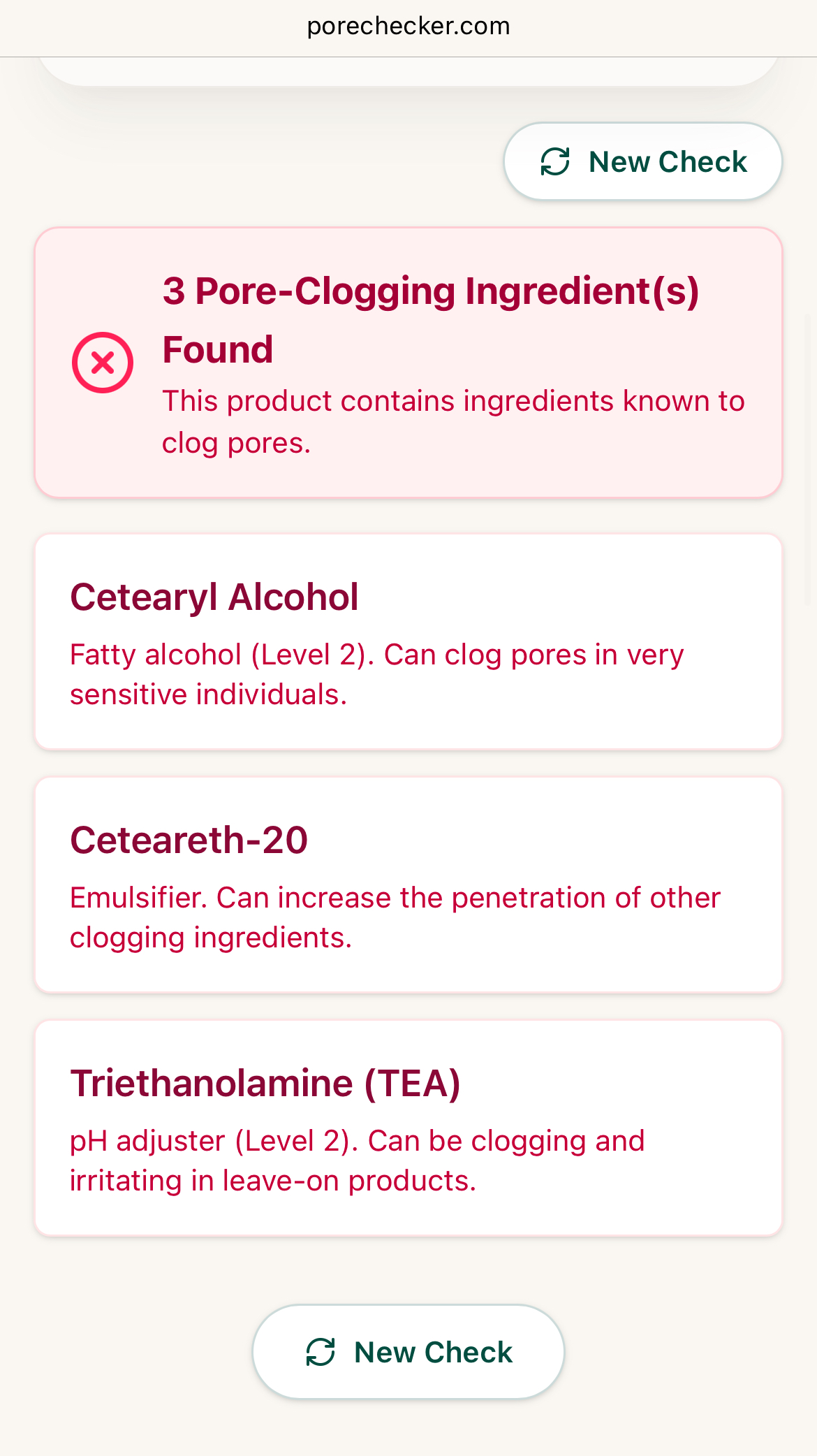
Step 3: Clear Results for Clearer Skin
You get an immediate breakdown. If any red-flag ingredients are found, we highlight them and explain why they might be problematic for your pores.
Does this product fit my skin's needs?
Check Your Products Now