How Do I Get Rid Of Acne Scars: Clinical Pathways To Smooth Skin
Discover evidence-based strategies for skin texture recovery. Learn how to address acne scarring safely without triggering new breakouts.

Acne may be a temporary physiological event, but for many, the physical reminders left behind on the dermal layer feel anything but fleeting. When the skin’s healing response to inflammatory lesions is disrupted, the result is often either post-inflammatory hyperpigmentation or structural collagen damage, commonly recognized as scarring. Understanding the biological distinction between a lingering red mark and an actual pitted scar is the first step toward effective restoration.
Navigating the path to skin clarity requires a disciplined, non-comedogenic approach. While aggressive marketing often pushes harsh peels or high-potency actives, the safest strategy involves supporting the skin’s natural barrier function. Using products that do not congest the follicles is paramount, as new inflammation only adds to the cycle of damage we are working to reverse.
Differentiating Between Pigment and Pitting
Before you select a treatment, you must identify what you are actually treating. Post-Inflammatory Erythema (PIE) manifests as pink or red spots, which are essentially dilated capillaries from prior inflammation. These are vascular in nature and respond best to soothing botanicals and sun protection. Conversely, true acne scarring involves an imbalance in collagen production—either tissue loss (atrophic scars) or tissue overgrowth (hypertrophic scars).
Targeting Surface Texture
For textural irregularities, controlled exfoliation remains the gold standard. Ingredients such as retinaldehyde or stabilized retinol work at the cellular level to promote collagen synthesis and accelerate turnover. However, these must be introduced gradually to avoid the very irritation that triggers new hyperpigmentation. Incorporating a gentle chemical exfoliant, such as mandelic acid, can also be highly effective for sensitive skin types prone to scarring, as it provides a slower, more even penetration than harsher alternatives.
Clinical Intervention
When home care reaches its limit, dermatological procedures offer the next tier of correction. Microneedling remains one of the most effective tools for inducing collagen remodeling, as it creates micro-injuries that signal the body to repair the skin matrix. For deeper boxcar or icepick scars, fractional laser resurfacing or subcision may be recommended by a board-certified professional to physically break up fibrous bands and resurface the epidermis.
Don't Let Your Products Ruin Your Progress
The irony of treating acne scars is that many popular healing creams contain heavy emollients or comedogenic oils that can clandestinely trap debris within your pores. Even high-end, dermatologist-branded products can harbor hidden pore-cloggers like isopropyl myristate or certain algae extracts, which may trigger fresh breakouts just as you are making headway on your existing scars. Maintaining a clear complexion while you repair your skin’s architecture requires strict ingredient vigilance. Before finalizing your regimen, it is vital to audit your current product lineup to ensure that the emollients you are using to soothe your barrier aren't sabotaging your recovery by causing new congestion.
Step 1: Upload Your Product Image
Simply snap a photo of the ingredient list on the back of any bottle, jar, or box. No typing required.

Step 2: Instant AI Ingredient Analysis
Our advanced AI scans the image, performs OCR (Optical Character Recognition), and matches every ingredient against our curated database of comedogenic substances.

Step 3: Clear Results for Clearer Skin
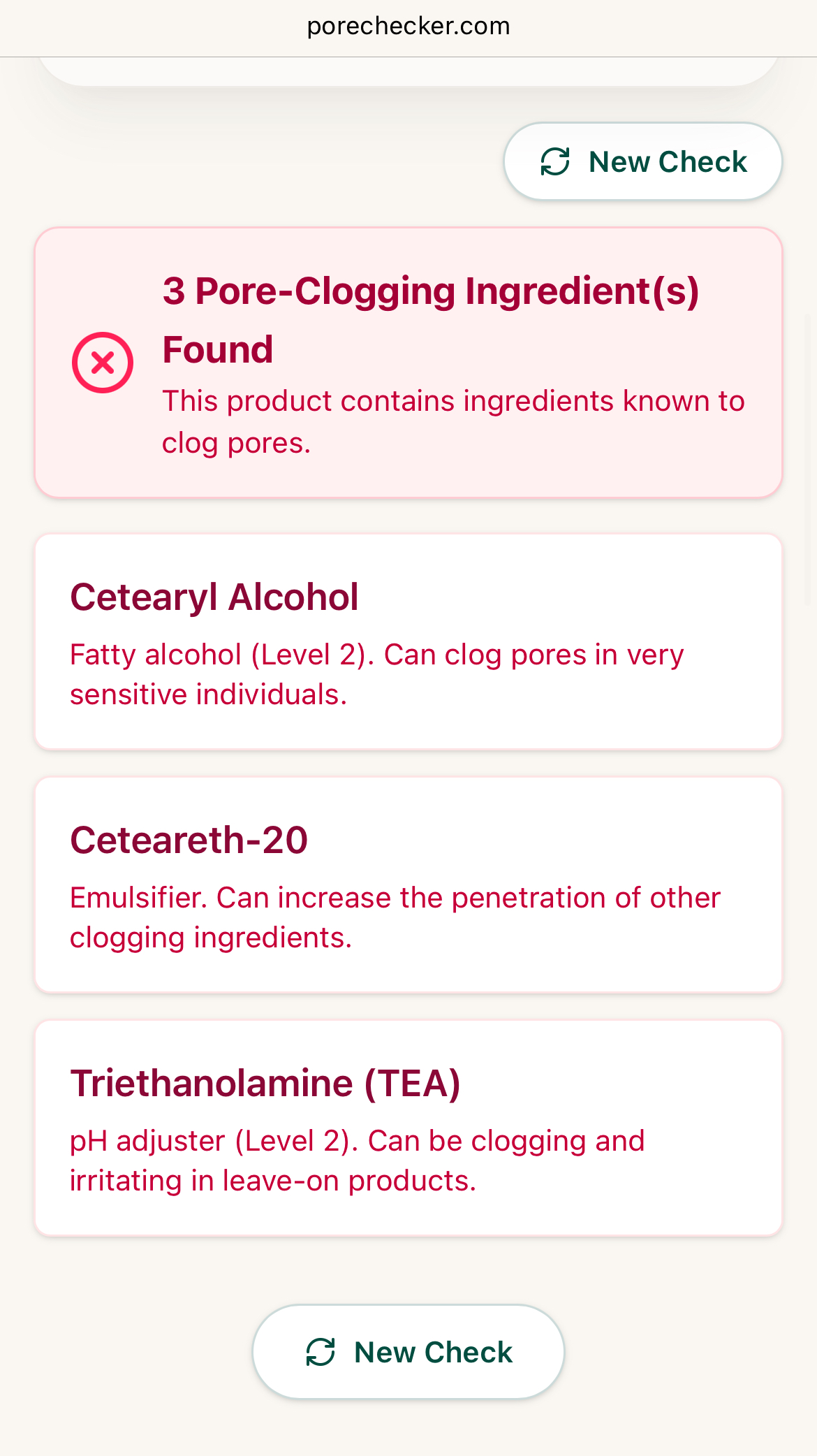
You get an immediate breakdown. If any red-flag ingredients are found, we highlight them and explain why they might be problematic for your pores.
Does this product fit my skin's needs?
Check Your Products Now