How Long Do Acne Scars Last and Can They Actually Fade?
Discover how long do acne scars last and learn the difference between temporary marks and permanent tissue damage for clearer skin.

When a breakout finally clears, the aftermath often leaves behind lingering reminders. Patients frequently ask me how long do acne scars last, and the answer depends heavily on the biological nature of the mark. It is essential to distinguish between post-inflammatory hyperpigmentation (PIH)—the red or brown flat spots—and true atrophic or hypertrophic scarring, which involves structural changes to the collagen in your skin.
While temporary discoloration can fade with time and the right topical support, permanent textural scars require clinical intervention. Regardless of the type, your journey toward recovery must be rooted in non-comedogenic care. Using products that silently congest your pores while you are trying to heal active inflammation is a common pitfall that resets your progress before it even begins.
The Lifespan of Post-Inflammatory Marks
Red or dark spots are not actually scars; they are the skin’s inflammatory response to injury. These marks can last anywhere from three months to two years depending on your skin tone, the severity of the initial inflammation, and your commitment to sun protection. Ultraviolet exposure is the primary culprit in prolonging these marks, as it stimulates melanin production, effectively "locking" the pigment into the skin cells.
Differentiating Texture from Color
True acne scarring manifests as a change in skin texture, appearing as indentations or raised bumps. These represent a permanent disruption in the collagen matrix. Unlike surface-level discoloration, these will not resolve on their own. Treatments such as microneedling, chemical peels, or fractional laser therapy are often required to stimulate new collagen production and resurface the affected areas. Early intervention is key, but the foundation of any treatment plan must be a strictly non-comedogenic environment.
Don't Let Your Products Ruin Your Progress
Achieving clear, even-toned skin is a delicate balance of active treatment and gentle preservation. Even if you are utilizing professional-grade serums or following a strict dermatological protocol, your results can be sabotaged by hidden pore-cloggers lurking in your moisturizer, sunscreen, or makeup. Many common ingredients are highly comedogenic, meaning they can cause micro-comedones that lead to new acne cycles, effectively preventing your skin from ever fully healing. Before applying another layer to your face, ensure every ingredient in your regimen is verified as non-clogging to protect your skin barrier and allow your recovery process to remain uninterrupted.
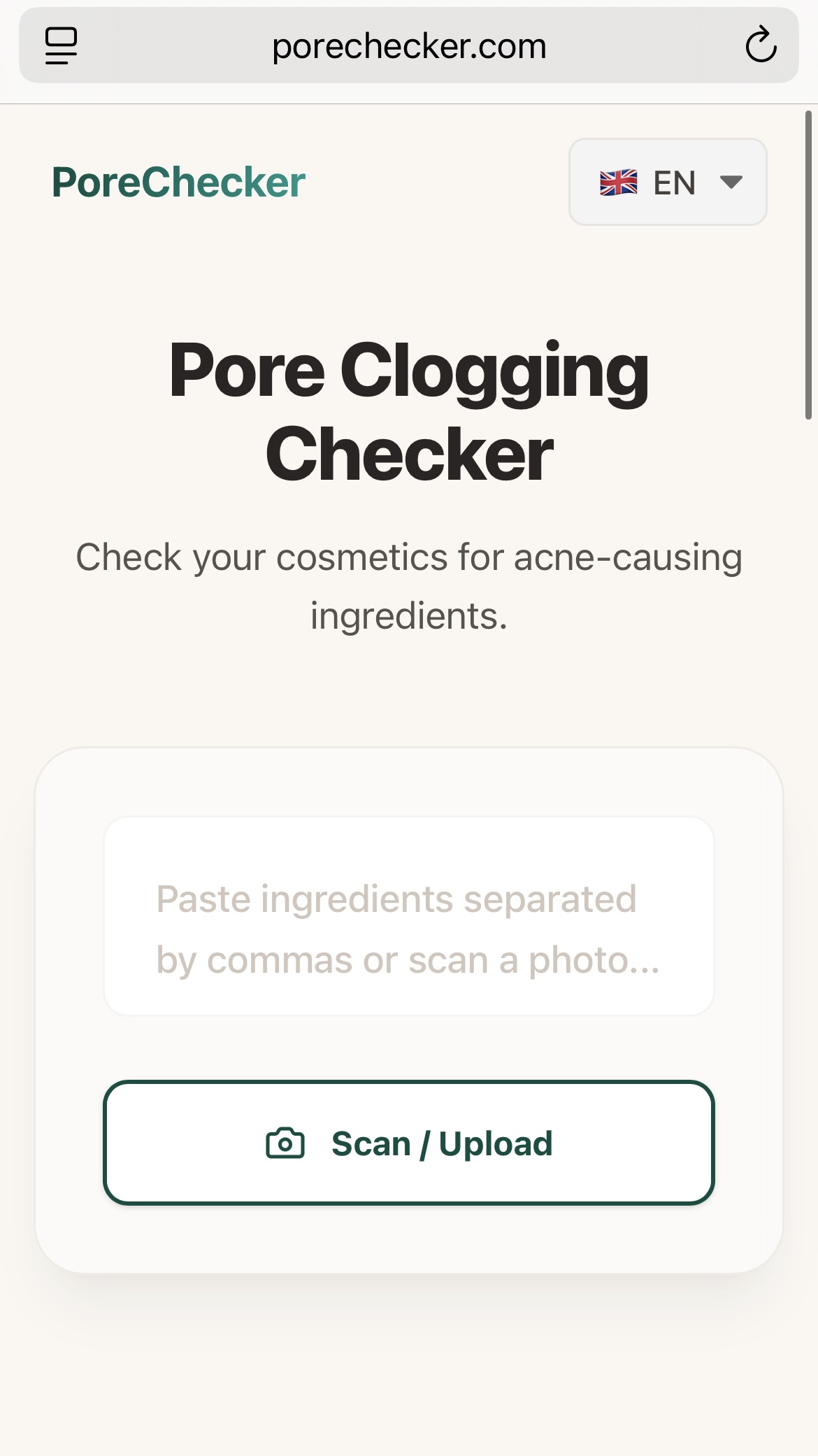
Step 1: Upload Your Product Image
Simply snap a photo of the ingredient list on the back of any bottle, jar, or box. No typing required.
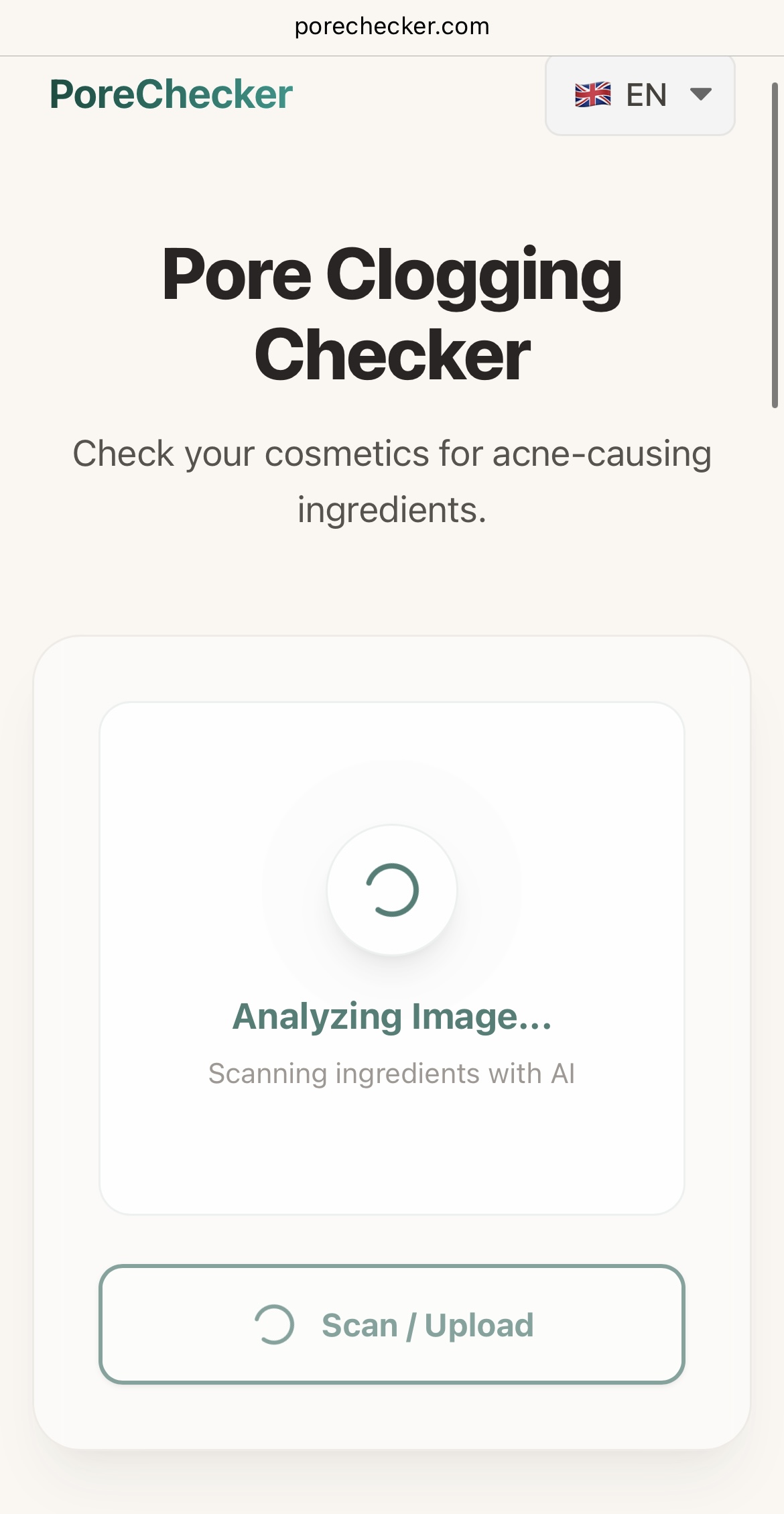
Step 2: Instant AI Ingredient Analysis
Our advanced AI scans the image, performs OCR (Optical Character Recognition), and matches every ingredient against our curated database of comedogenic substances.
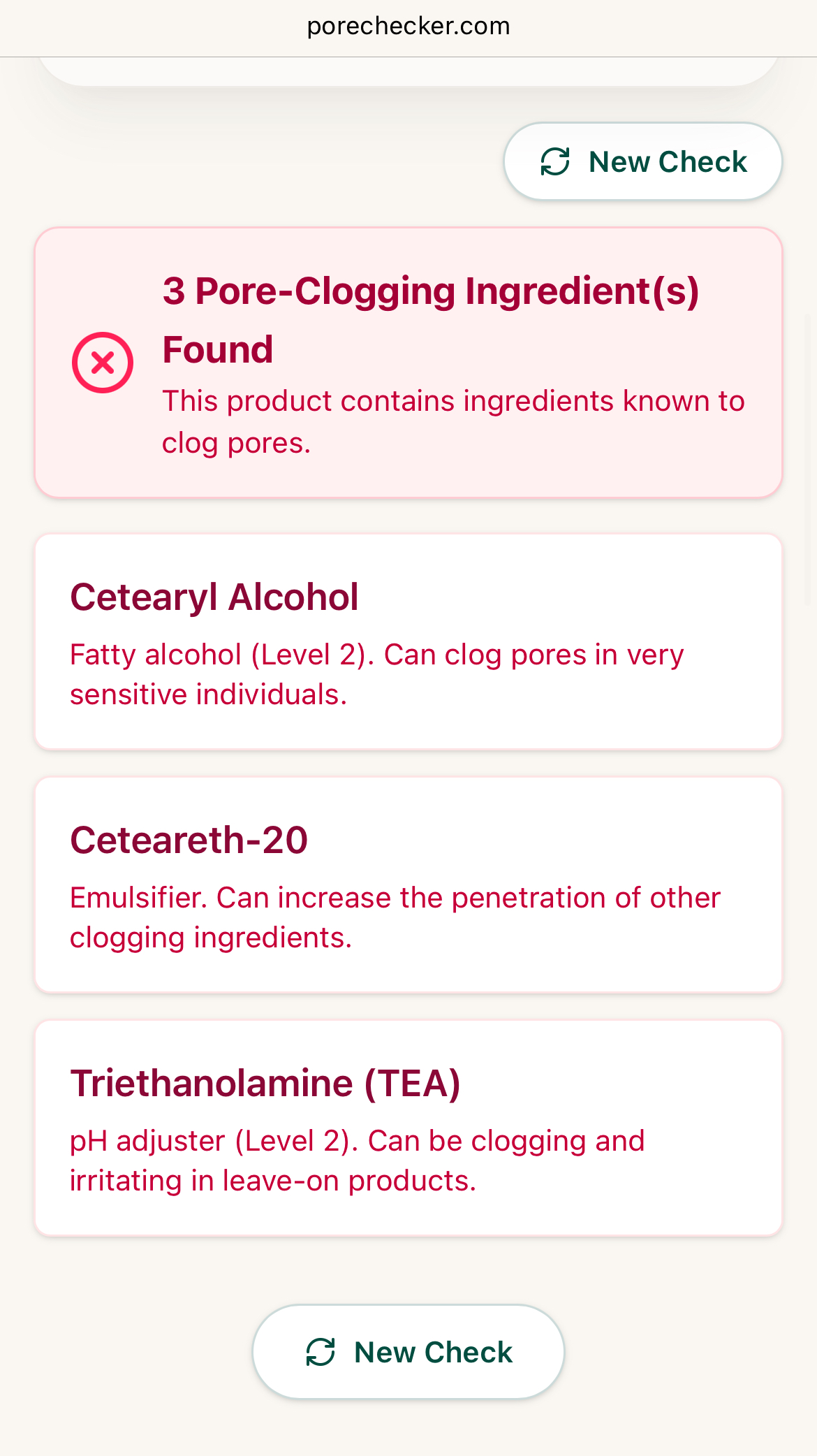
Step 3: Clear Results for Clearer Skin
You get an immediate breakdown. If any red-flag ingredients are found, we highlight them and explain why they might be problematic for your pores.
Does this product fit my skin's needs?
Check Your Products Now