How to Clear Acne Fast: A Dermatologist’s Evidence-Based Approach
Struggling with breakouts? Discover how to clear acne fast using science-backed ingredients and avoid common pore-clogging mistakes.
Acne is rarely just a surface-level issue; it is a complex inflammatory response often triggered by a combination of excess sebum, hormonal shifts, and the proliferation of C. acnes bacteria. When patients ask how to clear acne fast, the immediate instinct is often to reach for the harshest possible chemical exfoliant. However, aggressive scrubbing and over-stripping the skin barrier frequently exacerbate the problem, leading to increased inflammation and persistent breakouts.
Achieving a clear complexion requires a strategic, non-comedogenic approach that focuses on calming the skin while effectively regulating oil production. By prioritizing the health of your moisture barrier alongside targeted treatment, you can reduce the duration of active lesions and prevent the post-inflammatory hyperpigmentation that often follows.
The Science of Targeted Treatment
To address active acne effectively, you must target the specific stage of the breakout. For inflammatory red bumps, ingredients like benzoyl peroxide work by introducing oxygen into the pore, which helps neutralize bacteria. For non-inflammatory issues like blackheads and closed comedones, salicylic acid serves as a gold-standard option. Its lipid-soluble nature allows it to penetrate deep into the follicle, dissolving the "glue" that binds dead skin cells together.
Patience and Consistency
Clear skin is not an overnight transformation; it is the result of consistent cellular turnover. The skin cycle typically lasts four to six weeks, which means a new skincare regimen needs at least one full cycle to show meaningful results. Introducing too many potent actives at once can lead to chemical burns or irritation, which forces the skin into a defensive mode, often leading to more breakouts rather than fewer.
Hidden Ingredients That Sabotage Healing
Many products marketed as "acne-fighting" contain secondary ingredients that are ironically comedogenic. Oils like coconut oil, algae extract, or certain heavy fatty acids can create a seal over the skin, trapping bacteria and debris deep within the follicle. Even if your primary active ingredient is high-quality, the formulation’s base can be the root cause of persistent congestion.
Don't Let Your Products Ruin Your Progress
Your dedication to clearing acne can be easily undermined by the very products intended to help. Many high-performing formulas contain hidden occlusives or botanical extracts that, while natural, are highly pore-clogging for acne-prone skin types. Before you invest in a new routine, it is essential to look beyond the marketing claims on the front of the bottle and scrutinize the full ingredient list for these common offenders. Ensuring that every product in your regimen is truly non-comedogenic is the final, vital step in securing the long-term results you are working so hard to achieve.
Step 1: Upload Your Product Image
Simply snap a photo of the ingredient list on the back of any bottle, jar, or box. No typing required.
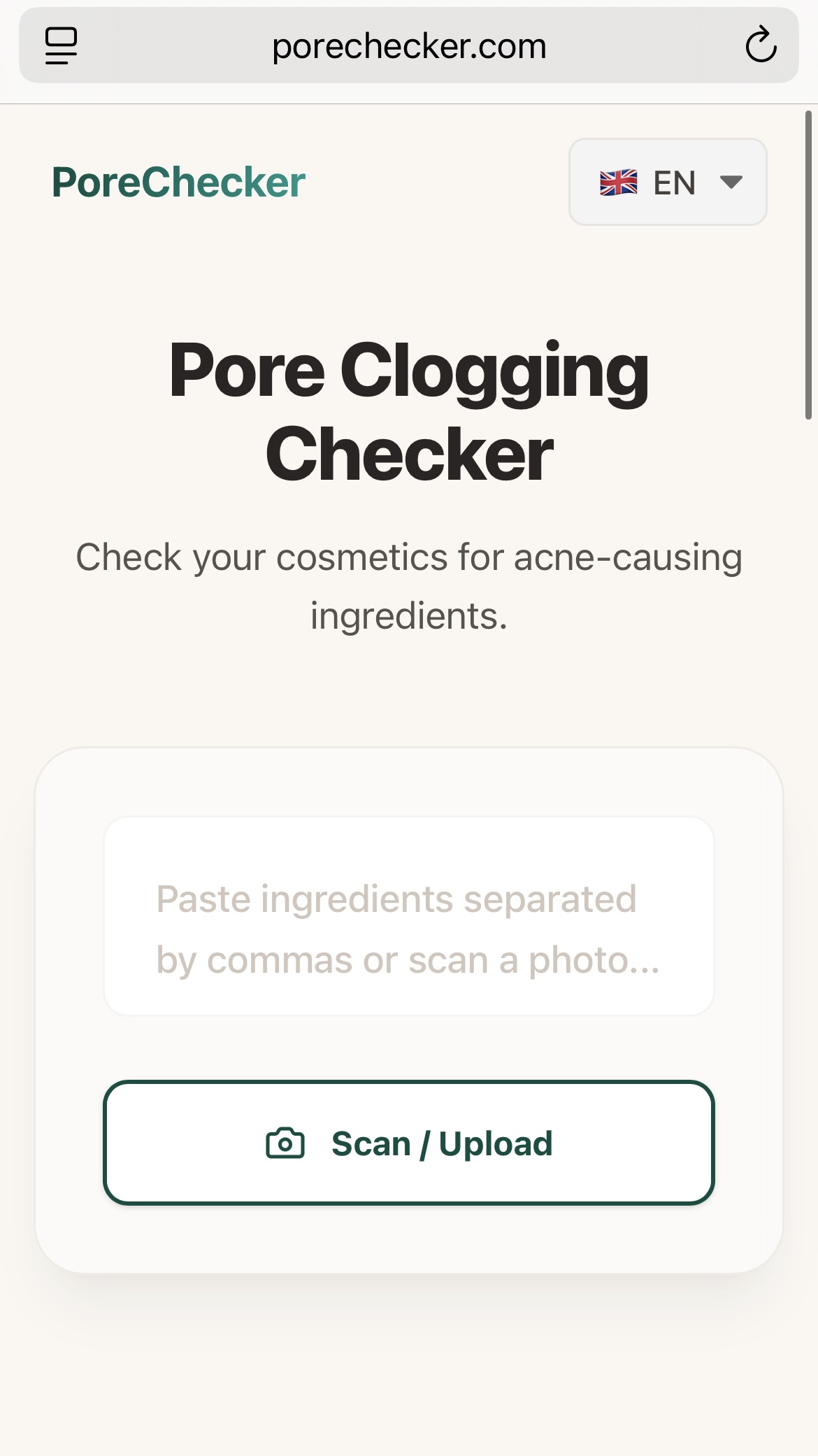
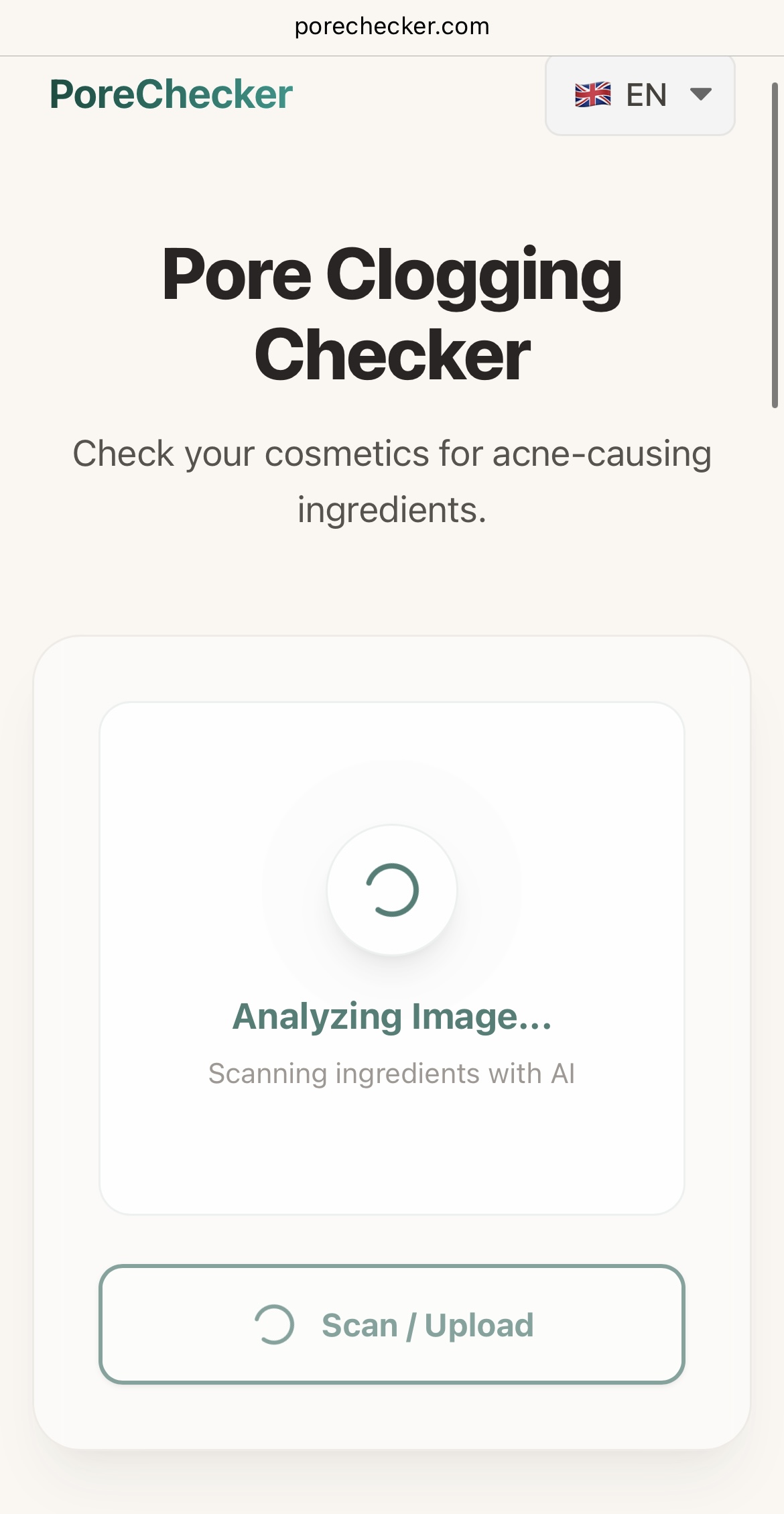
Step 2: Instant AI Ingredient Analysis
Our advanced AI scans the image, performs OCR (Optical Character Recognition), and matches every ingredient against our curated database of comedogenic substances.
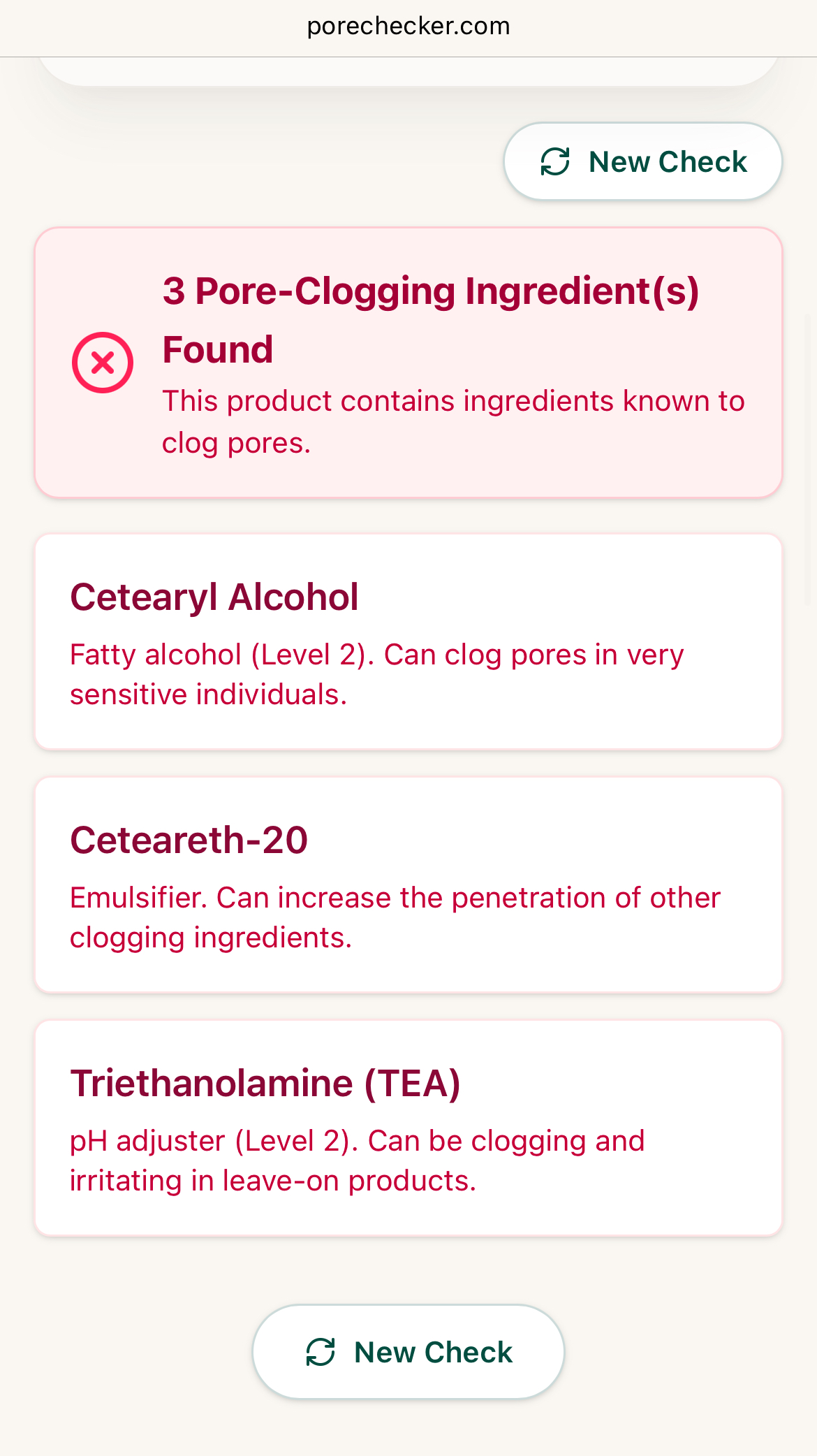
Step 3: Clear Results for Clearer Skin
You get an immediate breakdown. If any red-flag ingredients are found, we highlight them and explain why they might be problematic for your pores.
Does this product fit my skin's needs?
Check Your Products Now