How to Get Rid of Pores on Face: Expert Strategies for Smoother Skin
Tired of visible pores? Discover expert strategies on how to get rid of pores on face. Learn about effective skincare routines and ingredients.
The quest for flawless skin often begins with minimizing the appearance of pores. These tiny openings, essential for releasing oil and sweat, can sometimes appear larger than we'd like. Understanding the factors that contribute to enlarged pores is the first step in addressing them effectively. This article delves into science-backed methods and practical advice to help you achieve a smoother, more refined complexion. Remember, the key is consistent, non-comedogenic skincare.
We'll navigate the complexities of pore size, debunking common myths and providing a realistic perspective on what's achievable. While it's impossible to completely "get rid" of pores, we can certainly minimize their visibility. This approach requires a holistic understanding of your skin type, a tailored skincare regimen, and a commitment to consistency. Let's embark on this journey toward your best skin.
Understanding the Root Causes of Visible Pores
Before we explore solutions, let's identify the underlying reasons why pores appear more prominent. Factors such as genetics, age, and sun exposure play significant roles. Oily skin, characterized by excessive sebum production, often leads to enlarged pores as the oil stretches them. Loss of collagen and elastin with age contributes to a lack of firmness, making pores appear more visible. The accumulation of dead skin cells and debris within the pores can also cause them to become enlarged and clogged.
Genetics and Skin Type
Your genetic makeup significantly influences your skin type and pore size. If your parents have larger pores, you're more likely to have them too. Oily and combination skin types tend to have more noticeable pores due to increased sebum production. Consider your skin's inherent characteristics when designing your skincare routine.
Sun Damage and Aging
Prolonged sun exposure damages collagen and elastin, which provide structural support to the skin. This damage reduces skin elasticity, causing pores to appear larger and more stretched. Aging further exacerbates this issue as collagen production naturally declines over time. Using sunscreen daily is non-negotiable for preserving skin firmness and minimizing pore visibility.
Buildup and Blockages
Pores can become clogged with oil, dead skin cells, and other impurities, leading to blackheads, whiteheads, and enlarged pores. Regular exfoliation is crucial to remove this buildup. In addition, the use of comedogenic products can worsen the problem. Hidden pore-cloggers, such as certain oils and thick emollients, can silently sabotage your efforts to achieve clear skin. Choosing the right products is a vital step in your skincare journey.
Actionable Strategies: How to Get Rid of Pores on Face
Adopting a consistent skincare routine tailored to your skin's needs is key to improving the appearance of pores. This involves cleansing, exfoliation, and targeted treatments. Remember, consistency is more important than using a multitude of products at once.
Gentle Cleansing
Cleanse your face twice daily with a gentle, non-comedogenic cleanser to remove impurities without stripping the skin of its natural oils. Avoid harsh soaps that can irritate the skin and potentially worsen pore appearance. Look for cleansers containing ingredients like salicylic acid or glycolic acid, known for their exfoliating properties. Pat your skin dry with a soft towel; avoid rubbing.
Regular Exfoliation
Exfoliation is essential to remove dead skin cells that can clog pores. Chemical exfoliants, such as AHAs (alpha hydroxy acids) and BHAs (beta hydroxy acids), are particularly effective. AHAs, like glycolic and lactic acid, work on the skin's surface. BHAs, like salicylic acid, penetrate deeper into the pores, dissolving oil and debris. Start slowly and gradually increase frequency to avoid over-exfoliation.
Targeted Treatments
Incorporate treatments that address pore size. Retinoids, derived from vitamin A, are effective at increasing cell turnover and promoting collagen production. They can also help unclog pores and reduce inflammation. Niacinamide, a form of vitamin B3, helps to regulate oil production and minimize the appearance of pores. Always introduce new products gradually and monitor your skin's response.
Sun Protection
Protecting your skin from sun damage is crucial. Use a broad-spectrum sunscreen with an SPF of 30 or higher daily, even on cloudy days. This protects collagen and elastin and prevents further enlargement of pores. Reapply sunscreen every two hours when outdoors.
Don't Let Your Products Ruin Your Progress
You've diligently followed your skincare routine, yet you're still not seeing the results you desire? It's time to take a closer look at the products you're using. Many skincare products contain ingredients that can clog pores, counteracting all your efforts. These hidden pore-cloggers are often found in seemingly innocuous formulas, causing frustrating breakouts and enlarged pores. Before you invest in another product, it's wise to ensure it's compatible with your skin.
Step 1: Upload Your Product Image
Simply snap a photo of the ingredient list on the back of any bottle, jar, or box. No typing required.

Step 2: Instant AI Ingredient Analysis
Our advanced AI scans the image, performs OCR (Optical Character Recognition), and matches every ingredient against our curated database of comedogenic substances.

Step 3: Clear Results for Clearer Skin
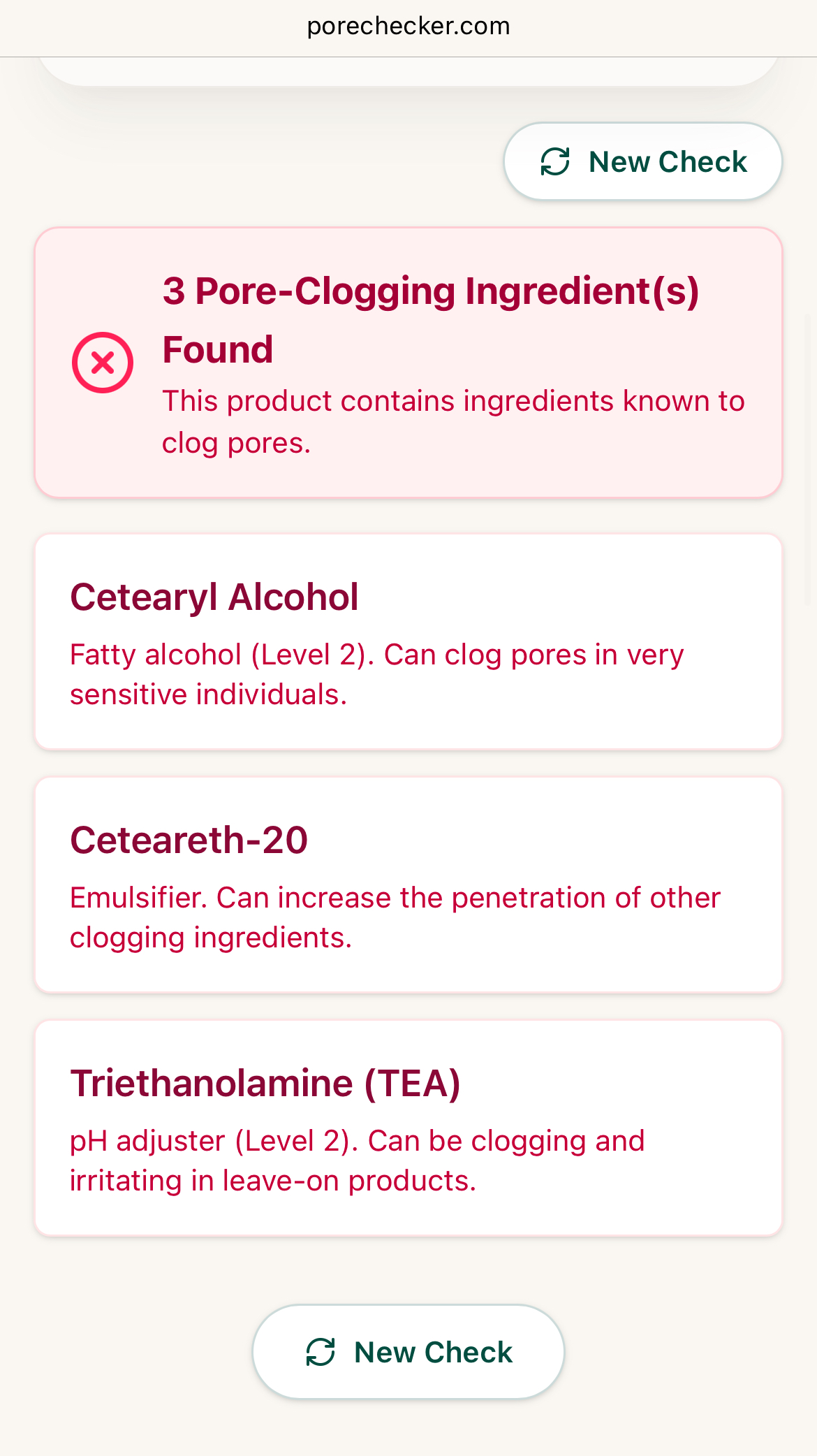
You get an immediate breakdown. If any red-flag ingredients are found, we highlight them and explain why they might be problematic for your pores.
Does this product fit my skin's needs?
Check Your Products Now