How to Heal Acne Scars: Your Path to Smoother, Clearer Skin
Discover effective ways to heal acne scars & regain smooth, clear skin. Expert advice on treatments, prevention, and skincare routines.
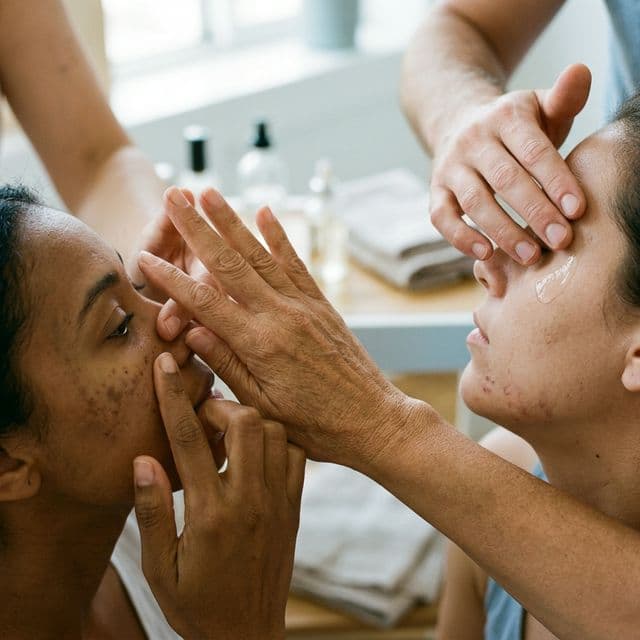
Acne scars, the lingering reminders of past breakouts, can understandably impact one's confidence. The good news is that they are treatable, and with the right approach, you can significantly improve their appearance. This article will explore the science behind acne scarring, offering a roadmap to smoother, clearer skin. It's important to remember that achieving noticeable results takes time and consistency, and a non-comedogenic skincare approach is crucial to avoid further breakouts that can worsen scarring.
Healing acne scars involves addressing the specific type of scar you have, from ice pick scars to rolling scars and boxcar scars. This means employing targeted treatments and developing a consistent skincare routine. Patience and realistic expectations are key. We'll delve into effective strategies, covering both professional treatments and at-home care. A focus on non-comedogenic products will be a constant. This is because introducing new breakouts can easily delay healing.
Understanding Acne Scars: The Science Behind the Blemishes
Acne scars develop as a result of inflammation deep within the skin. When a blemish forms, the inflammation damages the surrounding tissue. The body's natural response is to repair this damage, which can lead to the formation of scar tissue. The type of scar that forms depends on several factors, including the severity of the acne, how long it lasted, the individual's skin type, and how the blemish was handled (e.g., picking or squeezing). Understanding these elements is essential for effective treatment.
Types of Acne Scars
Different types of acne scars require different treatment approaches. Here's a breakdown:
- Ice Pick Scars: These are narrow, deep scars that resemble a small puncture. They are often the most difficult to treat.
- Boxcar Scars: These are wider, box-like depressions with sharp edges.
- Rolling Scars: These create a wave-like appearance on the skin's surface.
- Hypertrophic and Keloid Scars: These are raised scars that develop due to excessive collagen production. They are more common on the chest and back.
The Role of Collagen
Collagen is a protein that provides structural support to the skin. During the scar formation process, the body either produces too much collagen (resulting in raised scars) or not enough (leading to indented scars). Effective treatments work by either stimulating collagen production or breaking down existing scar tissue.
Effective Treatments to Heal Acne Scars
A multifaceted approach, combining professional treatments with a consistent at-home skincare routine, usually yields the best results. A dermatologist can assess your specific scar type and recommend the most appropriate treatments. This might include a combination of different approaches to achieve optimal results.
Professional Treatments
- Laser Resurfacing: This uses focused light to remove the damaged outer layers of skin and stimulate collagen production. Different types of lasers are used to treat different types of scars.
- Chemical Peels: These use chemical solutions to exfoliate the skin and promote new skin growth. Deeper peels can be effective for more severe scarring.
- Microneedling: This involves using tiny needles to create micro-injuries in the skin, which stimulates collagen production.
- Dermal Fillers: These are injected into indented scars to plump them up and reduce their appearance.
- Subcision: This involves releasing the fibrous bands that tether the scar tissue to the underlying skin, allowing the scar to rise.
At-Home Skincare for Scar Healing
While professional treatments are often necessary for significant improvement, a consistent at-home skincare routine can significantly complement these treatments and help with the healing process. Consistency is key, and it is also essential to ensure that your products are non-comedogenic and will not trigger further breakouts. That is a primary reason why we have provided a resource below to help you check the ingredients.
- Sunscreen: Protecting your skin from the sun is crucial, as UV rays can worsen the appearance of scars. Choose a broad-spectrum sunscreen with an SPF of 30 or higher.
- Retinoids: These vitamin A derivatives can increase cell turnover, stimulate collagen production, and reduce the appearance of scars. Start with a low concentration and gradually increase as tolerated.
- Vitamin C Serum: This antioxidant can help to brighten the skin and protect against further damage.
- Exfoliants: Chemical exfoliants like AHAs (alpha-hydroxy acids) and BHAs (beta-hydroxy acids) can help to remove dead skin cells and promote cell turnover.
Don't Let Your Products Ruin Your Progress
A crucial, often overlooked element in the journey to heal acne scars is the products you use on your skin. Even with the most advanced treatments, using skincare products that clog pores can trigger new breakouts, which in turn can lead to new scars. Recognizing hidden pore-clogging ingredients, which are sometimes disguised in product formulations, is important. A good way to prevent potential setbacks is to thoroughly vet your products, ensuring they are non-comedogenic and suitable for acne-prone skin. It is always wise to proactively check the ingredients list to verify the formulations you use.
Step 1: Upload Your Product Image
Simply snap a photo of the ingredient list on the back of any bottle, jar, or box. No typing required.

Step 2: Instant AI Ingredient Analysis
Our advanced AI scans the image, performs OCR (Optical Character Recognition), and matches every ingredient against our curated database of comedogenic substances.

Step 3: Clear Results for Clearer Skin
You get an immediate breakdown. If any red-flag ingredients are found, we highlight them and explain why they might be problematic for your pores.
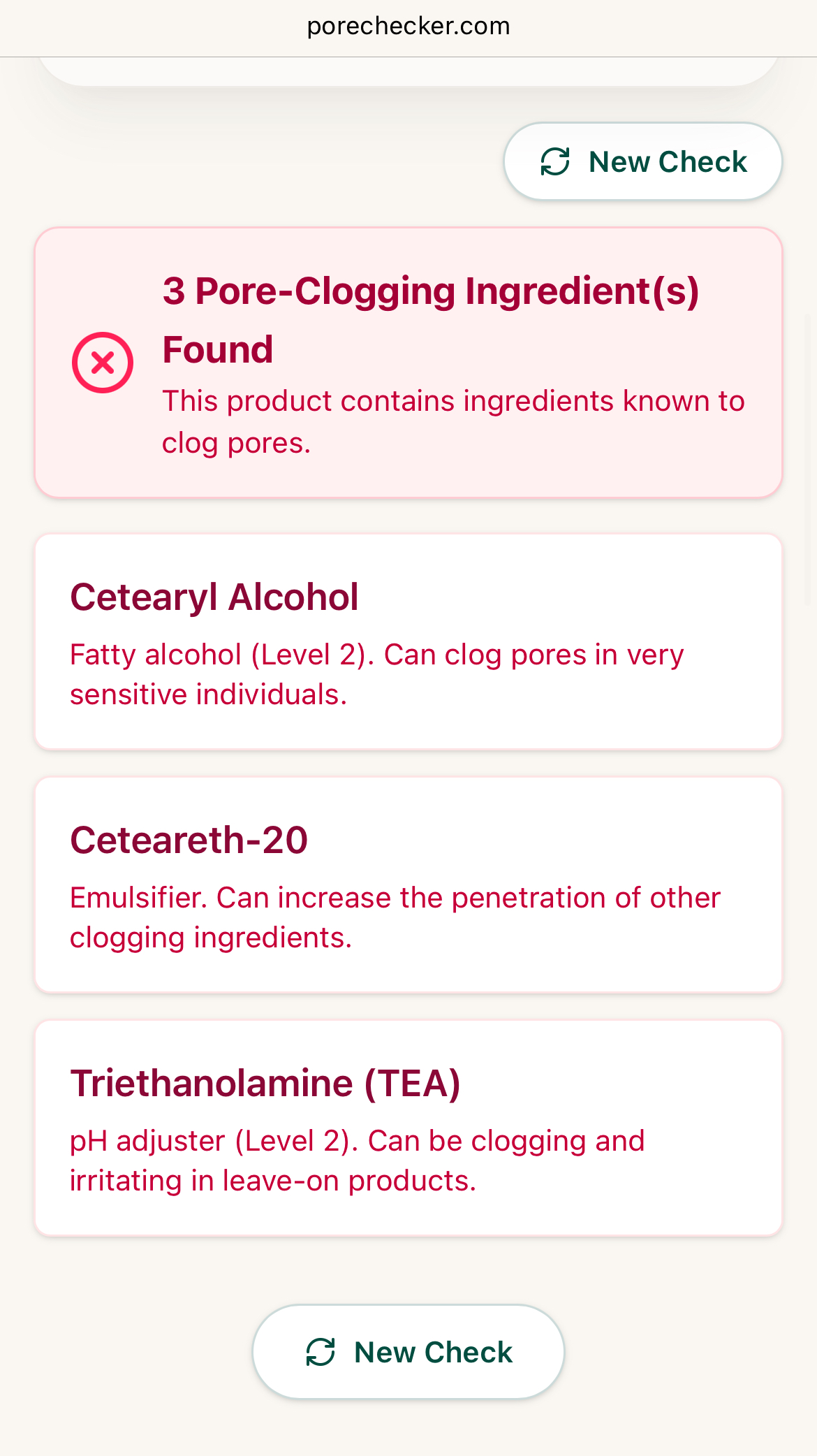
Does this product fit my skin's needs?
Check Your Products Now