How to Make Pores Smaller: Unveiling the Path to Refined Skin
Discover expert tips on how to make pores smaller! Learn about skincare routines, hidden pore-cloggers, and ingredients to achieve refined skin.

The quest for smoother, more refined skin often centers around the appearance of pores. While pore size is largely determined by genetics, and pores are essential for skin health (they release sebum, the skin’s natural oil), their visibility can fluctuate. Factors like excess oil, dead skin cell buildup, and the use of comedogenic products can make pores appear larger. This article provides a science-backed, yet accessible approach to understanding how to make pores smaller and improve skin texture.
It's crucial to remember that achieving "poreless" skin isn't realistic. Instead, the focus should be on minimizing their appearance and keeping them clean. The cornerstone of effective pore care is a non-comedogenic skincare routine – that is, one that doesn't clog pores. Choosing the right products and consistently following a tailored regimen is key to visible results.
Understanding the Science Behind Pores
Pores are the openings of hair follicles on the skin's surface. Each pore contains a sebaceous gland that produces sebum, an oil that helps keep the skin moisturized. When sebum, along with dead skin cells and other debris, gets trapped within the pore, it can lead to enlargement and the appearance of blackheads and whiteheads. Certain skin types, especially those with oily skin, are more prone to this.
The Role of Genetics
Genetics play a significant role in determining your baseline pore size. If your parents have larger pores, you're more likely to have them too. However, even if you're genetically predisposed to larger pores, you can still minimize their appearance through proper skincare.
The Impact of Oil Production
Excess sebum production is a major contributor to enlarged pores. Oily skin is often accompanied by more noticeable pores because the excess oil stretches the pore walls. Hormonal fluctuations, environmental factors, and even diet can influence oil production.
Your Action Plan: Skincare Strategies to Minimize Pore Size
Cleansing for Clear Pores
Choose a gentle, non-comedogenic cleanser suitable for your skin type. Avoid harsh cleansers that can strip the skin of its natural oils, which can lead to increased sebum production as the skin attempts to compensate. Cleansing twice daily, morning and evening, is a cornerstone of any effective pore-minimizing routine.
Exfoliation: The Key to Removing Buildup
Regular exfoliation helps remove dead skin cells that can clog pores. Chemical exfoliants, like those containing AHAs (alpha-hydroxy acids) or BHAs (beta-hydroxy acids), are often more effective than physical scrubs. BHAs, such as salicylic acid, are particularly effective as they penetrate the pores to dissolve oil and debris. Start slowly, perhaps once or twice a week, and gradually increase frequency as your skin tolerates it.
Targeted Treatments for Enhanced Results
Incorporate serums and treatments that contain ingredients like retinol or niacinamide. Retinol promotes cell turnover, helping to keep pores clear and reducing their appearance. Niacinamide can help regulate oil production and minimize pore size. Always patch-test new products and introduce them gradually to avoid irritation.
Sun Protection is Non-Negotiable
Sun exposure can damage collagen and elastin, which support the skin's structure and can make pores appear larger. Using a broad-spectrum SPF 30 or higher sunscreen daily is essential to protect your skin and prevent further pore enlargement. Opt for a non-comedogenic sunscreen to avoid clogging your pores.
The Hydration Factor
Keeping your skin hydrated is crucial. Dehydrated skin can sometimes lead to increased oil production, potentially making pores more prominent. Use a lightweight, non-comedogenic moisturizer to maintain skin hydration. This helps your skin stay balanced and healthy.
Hidden Pore-Cloggers to Avoid
Beyond your daily skincare routine, certain products can unknowingly contribute to clogged pores. Here are some culprits to be aware of:
Comedogenic Ingredients in Makeup
Some makeup products contain ingredients that are known to clog pores. Look for non-comedogenic, oil-free, and mineral-based makeup formulations. Always remove your makeup thoroughly before bed.
Hair Products Can Affect Your Face
Hair products, such as hairspray, gels, and conditioners, can come into contact with your face and contribute to pore clogging. Try to keep these products away from your face and consider using a gentle cleanser to remove any residue.
The Impact of a Dirty Pillowcase
Your pillowcase can accumulate oil, bacteria, and dead skin cells overnight. Changing your pillowcase regularly (ideally every 2-3 days) helps prevent the transfer of these pore-clogging elements to your face.
Don't Let Your Products Ruin Your Progress
You've diligently established your skincare routine, and you're seeing improvements. However, hidden within the ingredient lists of your favorite products could be substances working against your goals. Even products marketed as "gentle" or "natural" may contain pore-clogging ingredients that undo your hard work. Understanding what ingredients to avoid is vital. Before you invest in new products, consider the ingredients. The key is to be informed. This is where a reliable product checker can become your best friend, helping you navigate the complexities of ingredient lists and ensuring your skincare choices support your journey to smoother, more refined skin.
Step 1: Upload Your Product Image
Simply snap a photo of the ingredient list on the back of any bottle, jar, or box. No typing required.
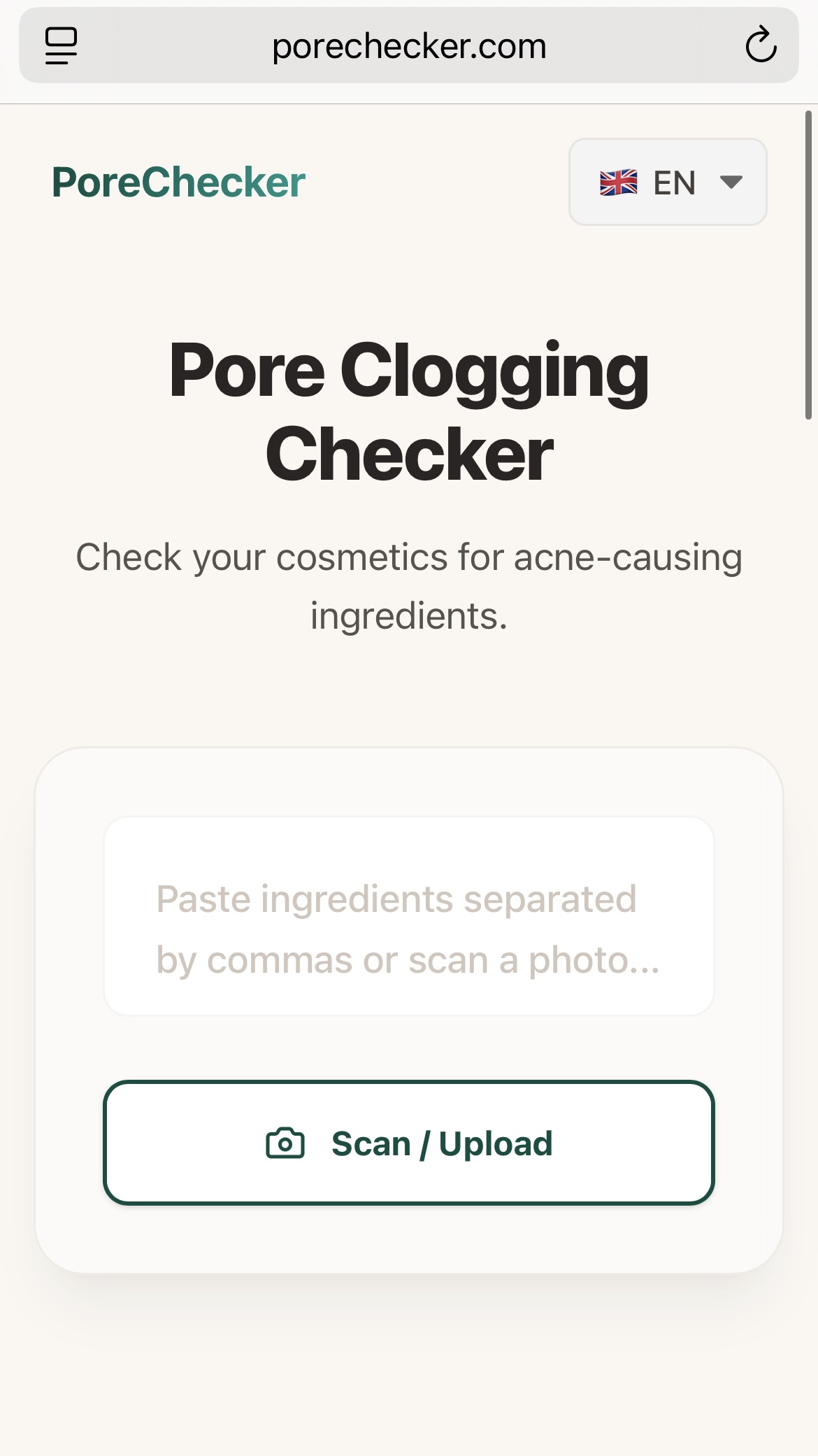
Step 2: Instant AI Ingredient Analysis
Our advanced AI scans the image, performs OCR (Optical Character Recognition), and matches every ingredient against our curated database of comedogenic substances.

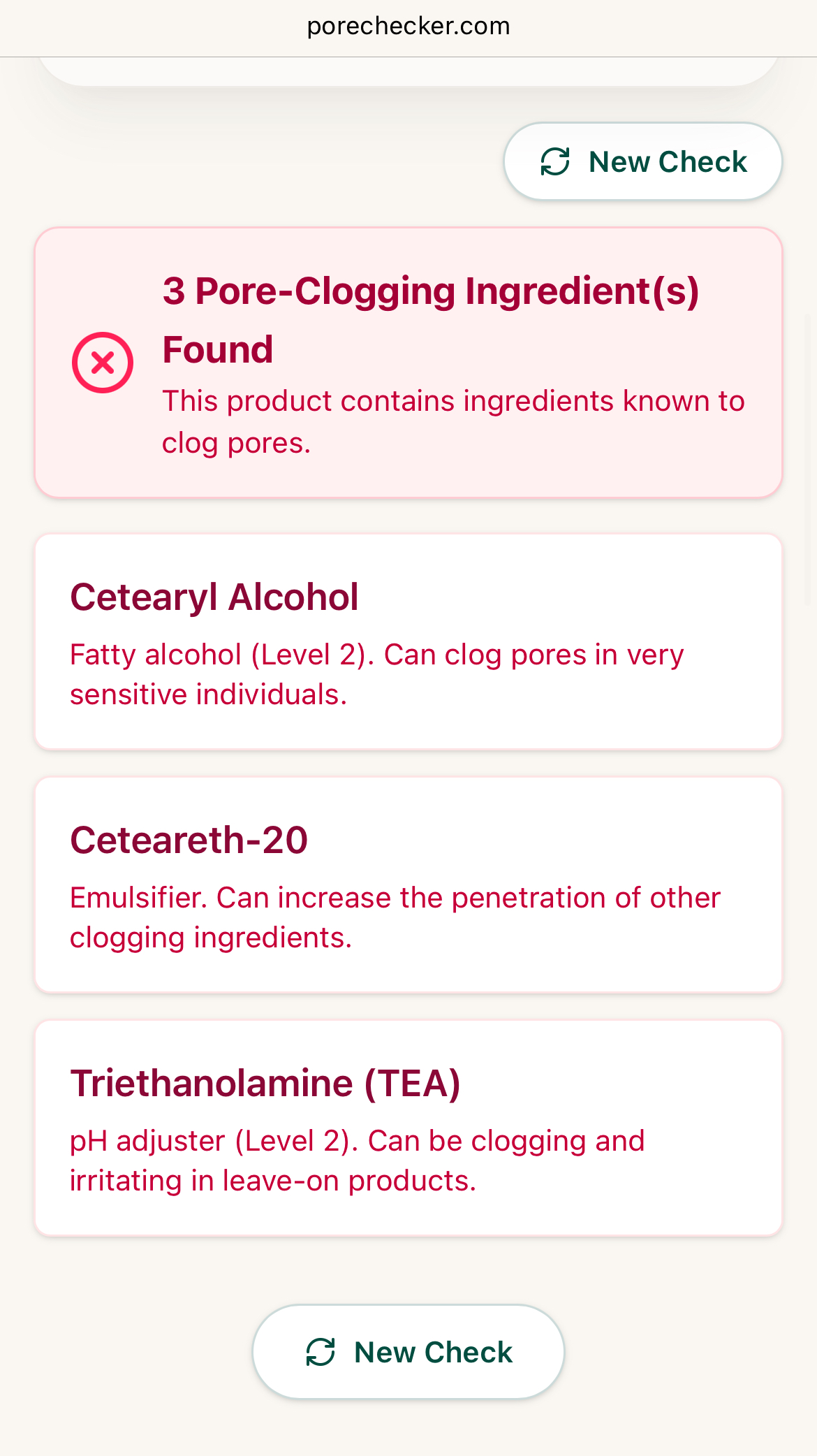
Step 3: Clear Results for Clearer Skin
You get an immediate breakdown. If any red-flag ingredients are found, we highlight them and explain why they might be problematic for your pores.
Does this product fit my skin's needs?
Check Your Products Now