How to Minimize Pores on Face: A Dermatologist's Guide to Smooth Skin
Learn how to minimize pores on face with expert dermatologist advice. Discover effective skincare routines & hidden pore-cloggers for a flawless complexion.

The quest for smooth, flawless skin often leads us down a rabbit hole of products and promises. One of the most common concerns is the appearance of enlarged pores, which can significantly impact the overall texture and look of our skin. While it's important to understand that pores are a natural and essential part of our skin, their visibility can be reduced, leading to a more refined and even complexion. This guide, based on scientific principles and dermatological expertise, will explore effective strategies on how to minimize pores on face, helping you achieve your skin goals.
Before we dive into solutions, it's crucial to acknowledge the importance of non-comedogenic skincare. This means choosing products that are specifically formulated not to clog pores. Many seemingly innocent ingredients can contribute to pore enlargement by trapping dead skin cells, oil, and debris within the pore. By prioritizing non-comedogenic options, we lay the groundwork for a successful and lasting skincare journey. We are building a foundation for skin that can breathe.
Understanding Your Pores
Pores are tiny openings on the skin's surface, acting as channels for sebum (oil) and sweat. They also house hair follicles. The size of your pores is primarily determined by genetics, but other factors like age, sun damage, and skin type can influence their appearance. Oily skin often has more visible pores due to increased sebum production, which can stretch and enlarge the pore opening. Loss of collagen as we age also contributes to larger pores as the skin loses elasticity.
The Role of Sebum Production
Sebum, produced by the sebaceous glands, is vital for moisturizing and protecting the skin. However, excessive sebum can mix with dead skin cells and debris, leading to clogged pores and the appearance of blackheads and enlarged pores. Managing sebum production is a key step in minimizing pore size.
Sun Damage and Pore Appearance
Prolonged sun exposure damages collagen and elastin, the structural proteins that keep skin firm and supple. This damage causes a loss of skin elasticity, making pores appear more prominent. Regular sun protection is, therefore, vital, not just for preventing skin cancer but also for maintaining a youthful appearance.
Effective Strategies to Minimize Pores
Gentle Cleansing
Effective cleansing is the cornerstone of any pore-minimizing routine. Choose a gentle, non-comedogenic cleanser to remove impurities without stripping the skin of its natural oils. Over-cleansing can lead to dryness, prompting the skin to produce more oil, which can exacerbate pore visibility. Cleansing twice a day, morning and night, is generally sufficient. Look for cleansers containing ingredients like salicylic acid or benzoyl peroxide (for acne-prone skin) to help unclog pores.
Exfoliation with Care
Regular exfoliation helps remove dead skin cells that can clog pores. Chemical exfoliants, such as AHAs (like glycolic acid) and BHAs (like salicylic acid), are often more effective than physical scrubs, as they penetrate deeper into the pores. Start with a low concentration and gradually increase as tolerated. Over-exfoliation can irritate the skin, so always listen to your skin’s needs.
Targeted Treatments
Certain ingredients can significantly impact pore appearance. Retinoids, derived from vitamin A, are highly effective in increasing cell turnover, unclogging pores, and boosting collagen production. Niacinamide (vitamin B3) can help regulate sebum production and minimize the appearance of pores. Incorporate these into your routine gradually, starting with lower concentrations to minimize irritation.
Non-Comedogenic Hydration and Sun Protection
Even oily skin needs hydration. Choose lightweight, oil-free moisturizers to keep the skin balanced without clogging pores. Sunscreen is non-negotiable. Look for broad-spectrum, non-comedogenic sunscreens with an SPF of 30 or higher. The sun is one of the worst offenders when it comes to prematurely aging the skin and increasing the size of pores.
Don't Let Your Products Ruin Your Progress
While diligently following the strategies outlined above is essential, remember that your efforts can be undermined by the products you use. Even if a product claims to be beneficial, it may contain hidden pore-clogging ingredients. Ingredients like mineral oil, certain silicones, and some thick emollients can contribute to the problem. It is critical to carefully review the ingredients list of all your skincare products, from cleansers and moisturizers to makeup, to ensure they are non-comedogenic and align with your pore-minimizing goals. This is why knowing how to read and interpret ingredient lists is key to achieving true progress.
Step 1: Upload Your Product Image
Simply snap a photo of the ingredient list on the back of any bottle, jar, or box. No typing required.

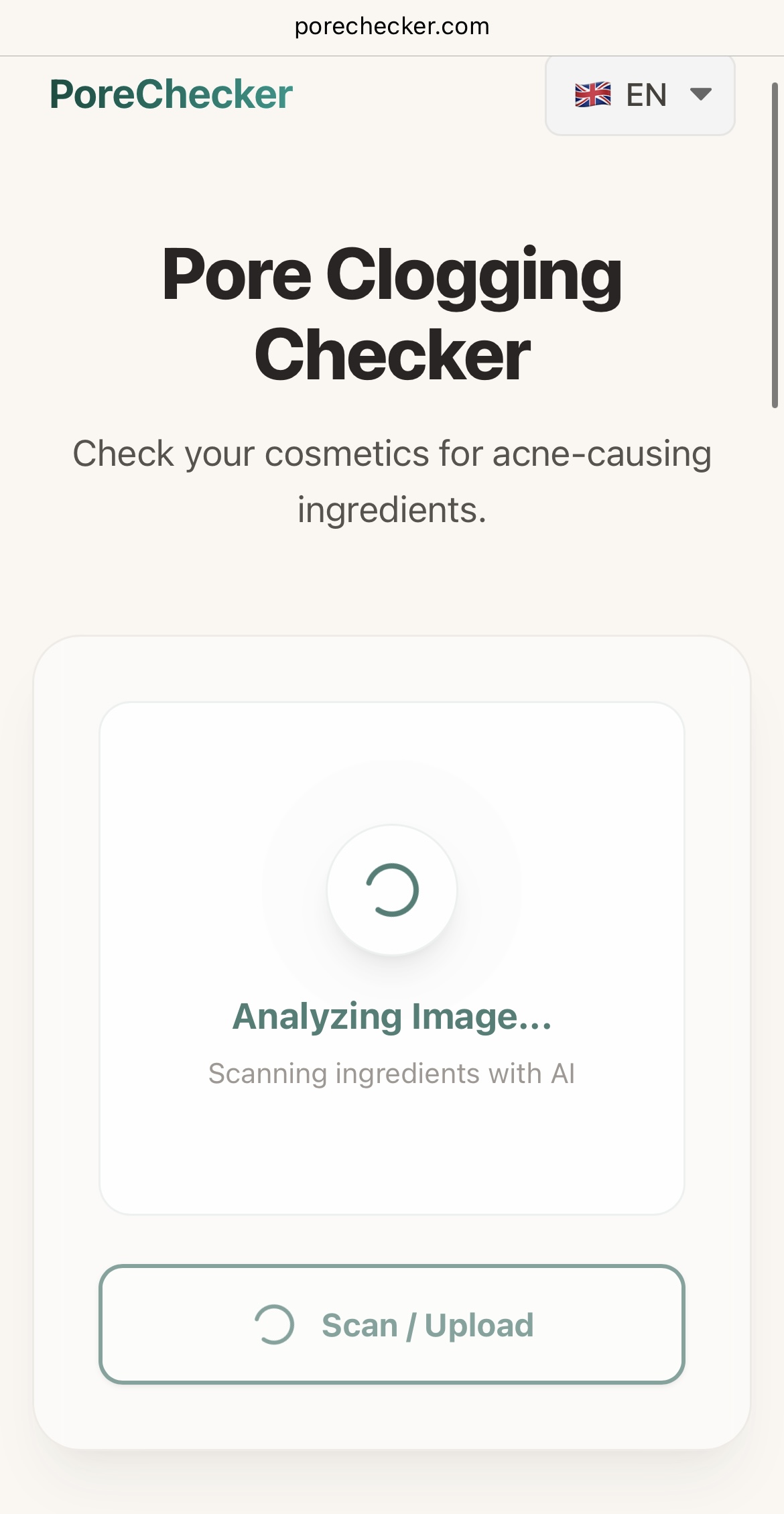
Step 2: Instant AI Ingredient Analysis
Our advanced AI scans the image, performs OCR (Optical Character Recognition), and matches every ingredient against our curated database of comedogenic substances.
Step 3: Clear Results for Clearer Skin
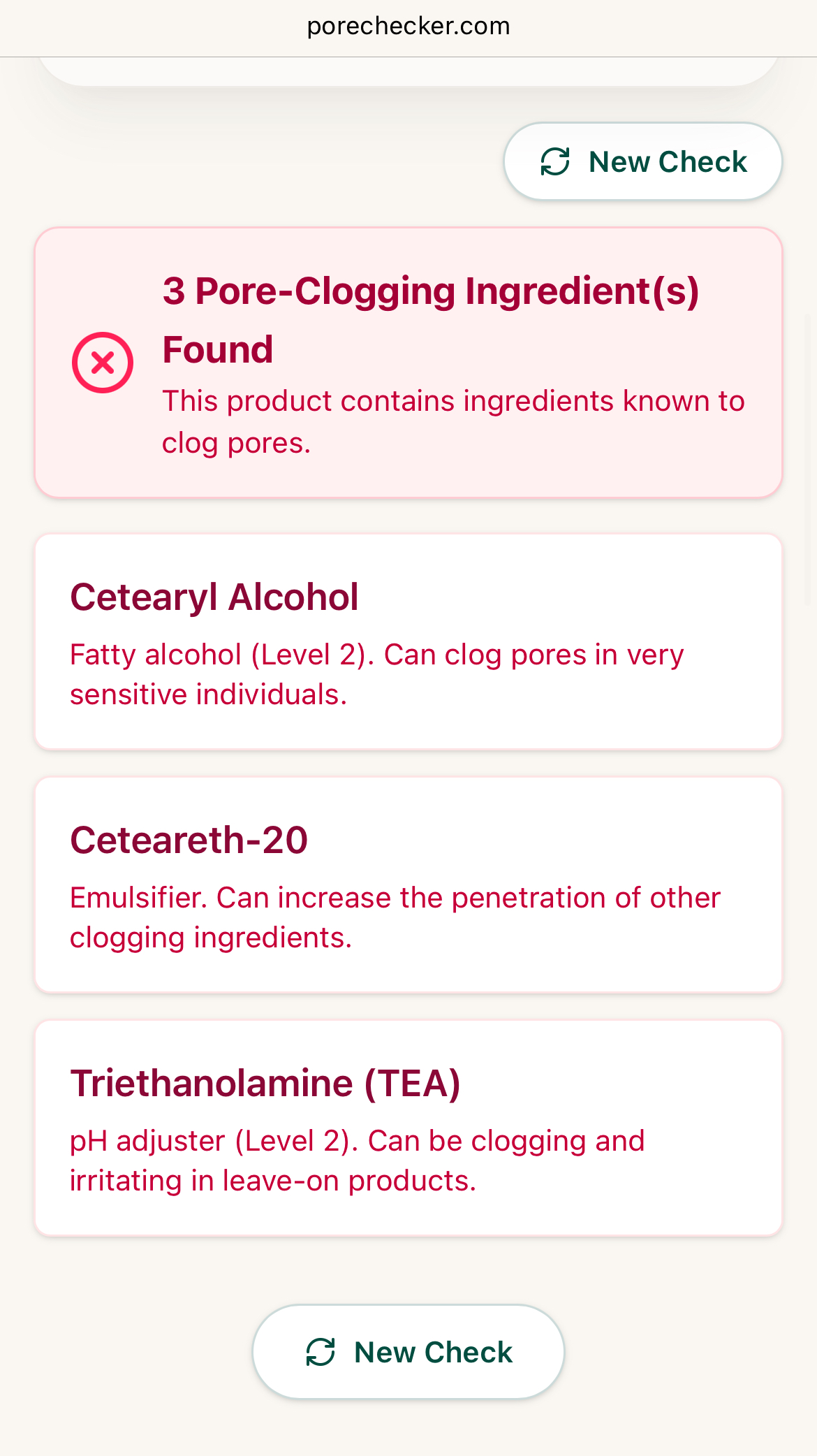
You get an immediate breakdown. If any red-flag ingredients are found, we highlight them and explain why they might be problematic for your pores.
Does this product fit my skin's needs?
Check Your Products Now