How to Tell If Acne Is Hormonal or Bacterial: A Guide to Identifying Breakouts
Not all breakouts are created equal. Learn how to tell if your acne is hormonal or bacterial, so you can treat it effectively and achieve clearer skin.
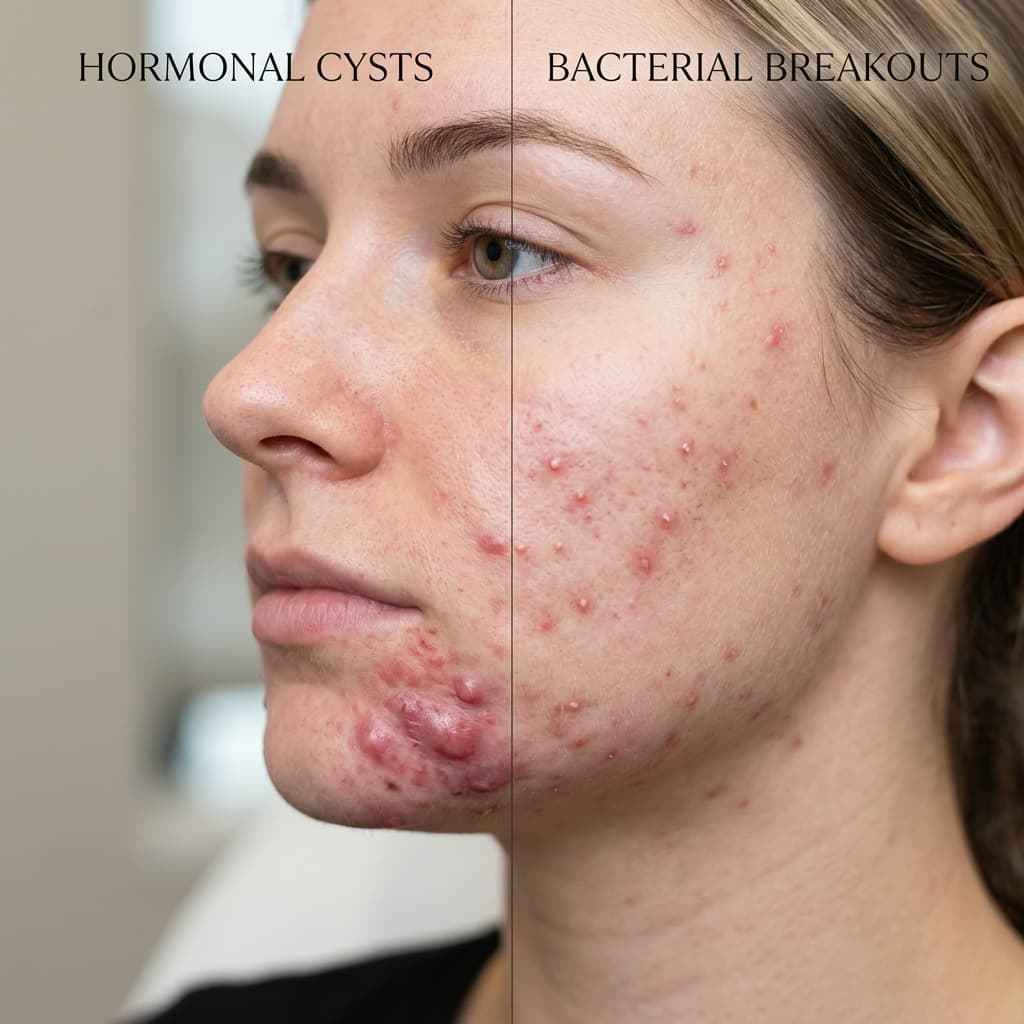
Treating skin issues correctly starts with an accurate diagnosis. If you've been struggling with persistent breakouts, you've likely asked yourself, "how to tell if acne is hormonal or bacterial?" While they can look similar to the naked eye, these two types of acne have very different root causes and require distinct treatment approaches. Using a bacterial-fighting treatment on hormonal cysts, for example, might yield little to no results. Understanding the subtle clues—like location, timing, and sensation—is the key to finally achieving the clear, healthy skin you deserve.
Identifying Bacterial Acne
Bacterial acne (Acne Vulgaris) is typically caused by the overgrowth of C. acnes bacteria in clogged pores. Here are its hallmarks:
- Appearance: It often presents as small, superficial whiteheads, blackheads, or small red bumps (papules) that come to a head quickly.
- Location: It can appear anywhere on the face, often focusing on areas where oil production is highest, like the T-zone (forehead, nose, chin).
- Triggers: It's frequently linked to external factors like sweat, touching your face, dirty pillowcases, or using comedogenic products that trap bacteria in the pores.
Identifying Hormonal Acne
Hormonal acne is driven by internal fluctuations, particularly in androgens. Here is how it differs:
- Appearance: It often takes the form of deep, painful, cystic blemishes that don't easily come to a head. They feel like hard lumps under the skin.
- Location: The "U-zone" is a classic marker. Look for breakouts along the jawline, chin, and lower cheeks.
- Timing: If your skin flares up reliably once a month—especially right before or during your period—it's likely hormonal.
The Non-Comedogenic Common Denominator
Regardless of whether your acne is hormonal or bacterial, the baseline for clearing it is the same: you must use strictly non-comedogenic products. If your cleanser or moisturizer contains pore-clogging ingredients, you are essentially feeding the fire. Check every product you use against an acne-safe database to ensure you aren't unknowingly sabotaging your progress.
Treatment Strategies for Each Type
Once you know what you're dealing with, you can target your treatments:
- For Bacterial Acne: Focus on antimicrobial and exfoliating ingredients like benzoyl peroxide, salicylic acid, and regular cleansing of external items (like phones and pillowcases).
- For Hormonal Acne: Internal balance is often required. Consult a dermatologist about options like spironolactone, birth control, or high-strength topical retinoids. Anti-inflammatory ingredients like niacinamide can also help soothe the deep-seated redness.
Summary
Differentiating between hormonal and bacterial acne is a crucial first step toward recovery. By paying attention to the location and pattern of your breakouts, you can stop guessing and start treating. Remember, both types respond best to a gentle, consistent, and—most importantly—non-comedogenic routine. If you're unsure, consulting with a professional is always the fastest path to a clear, confident complexion.
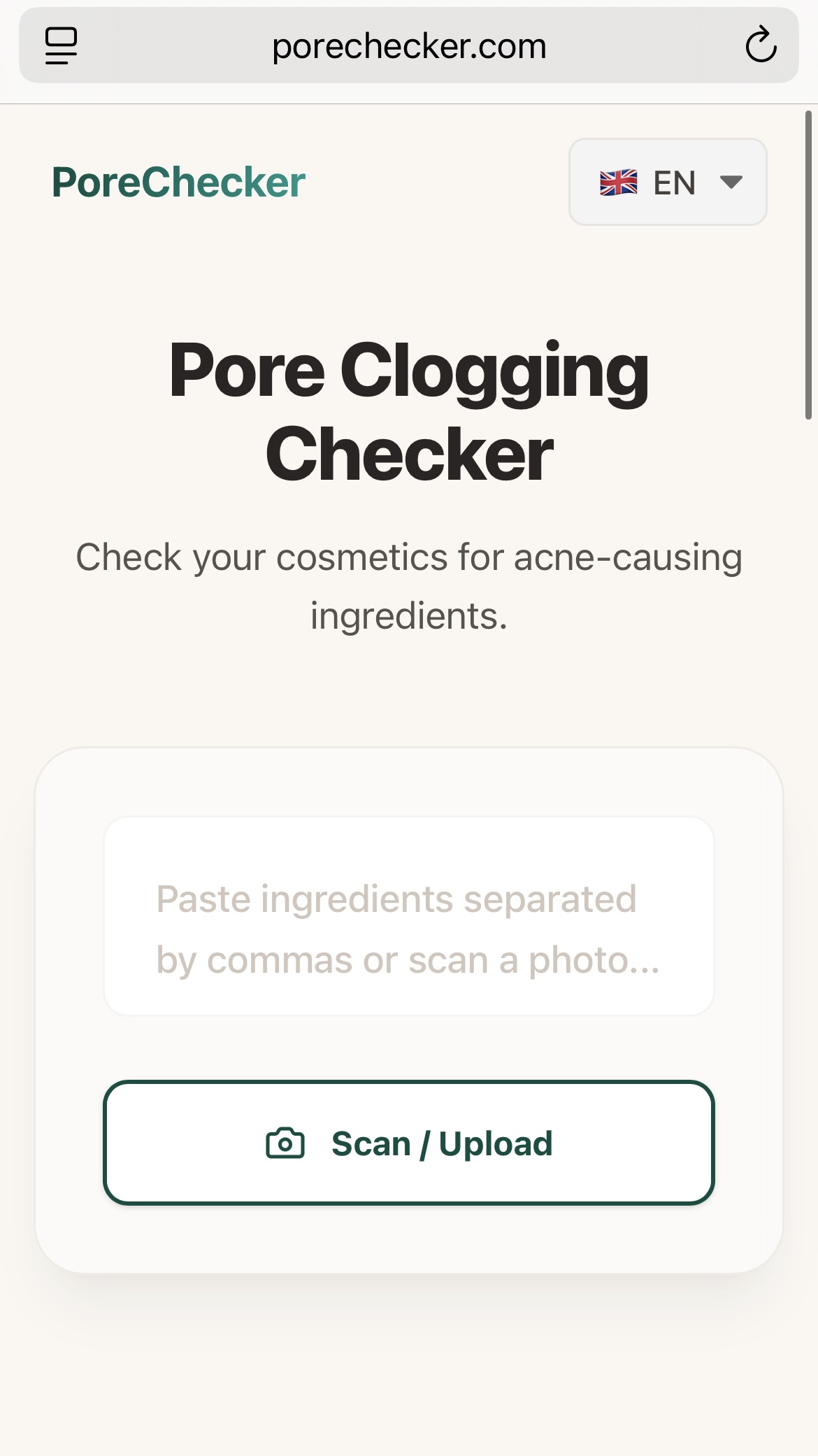
Step 1: Upload Your Product Image
Simply snap a photo of the ingredient list on the back of any bottle, jar, or box. No typing required.
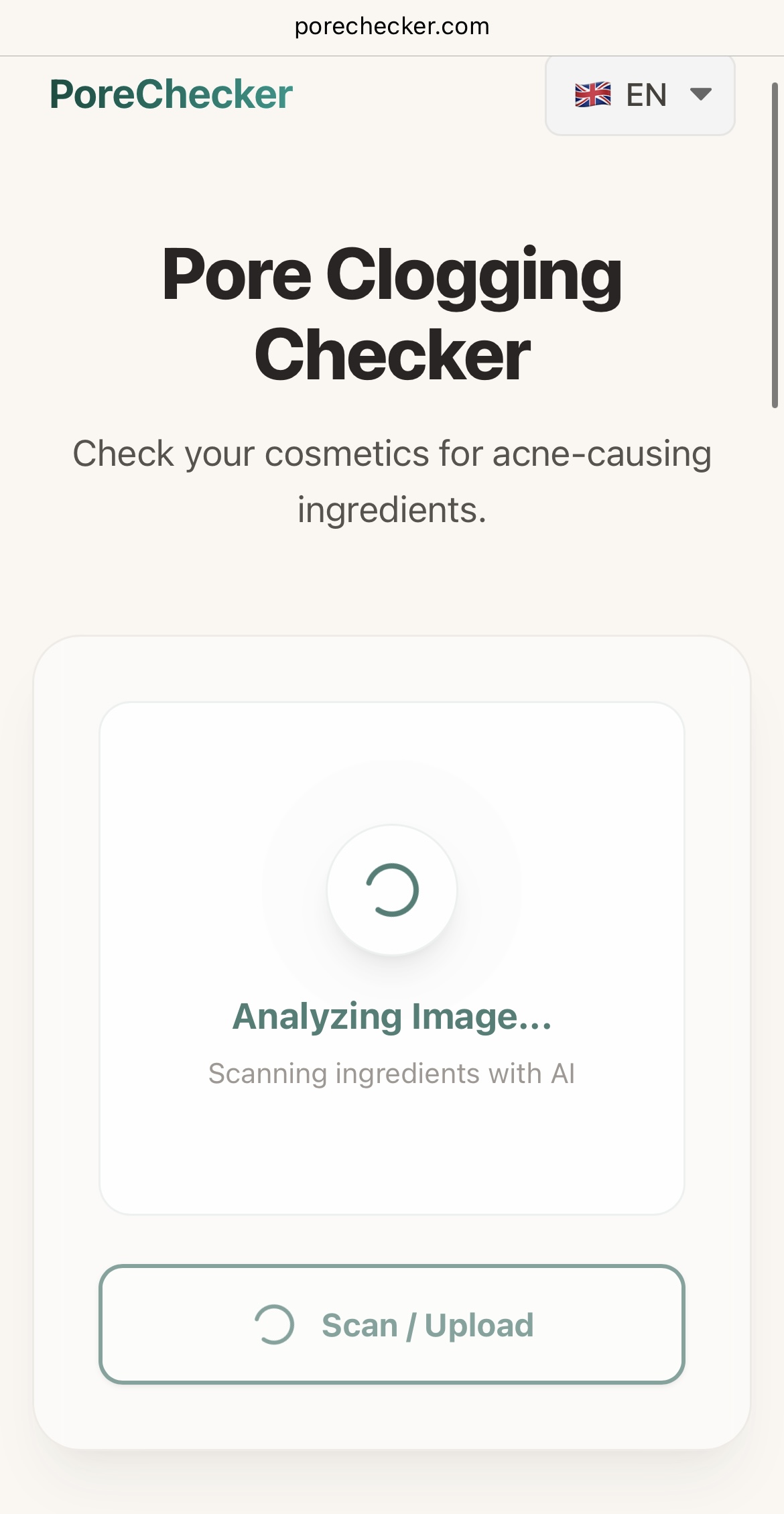
Step 2: Instant AI Ingredient Analysis
Our advanced AI scans the image, performs OCR (Optical Character Recognition), and matches every ingredient against our curated database of comedogenic substances.
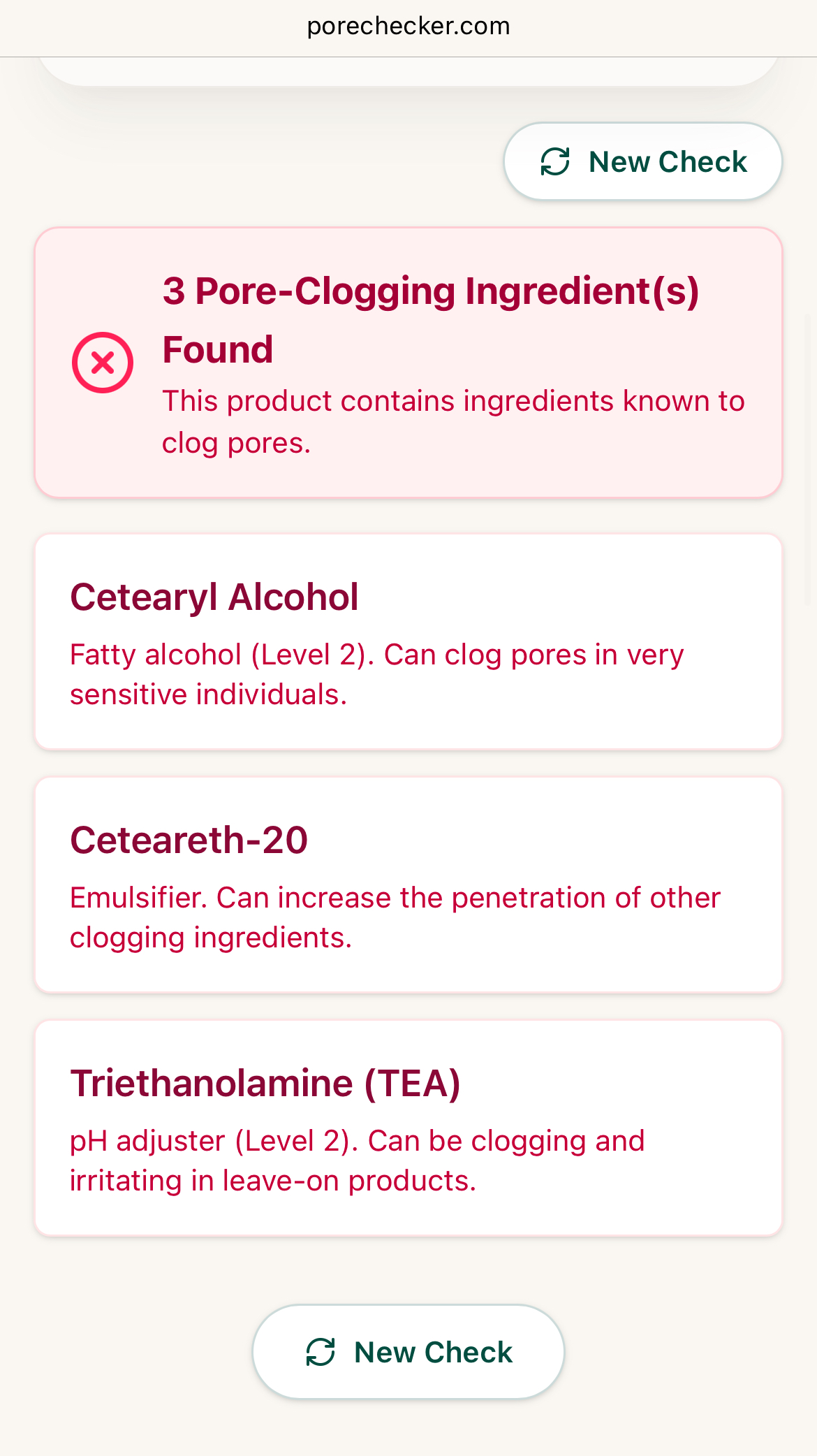
Step 3: Clear Results for Clearer Skin
You get an immediate breakdown. If any red-flag ingredients are found, we highlight them and explain why they might be problematic for your pores.
Does this product fit my skin's needs?
Check Your Products Now