Is Cetaphil Moisturizer Good for Your Skin Type?
Thinking about switching to Cetaphil? Our skincare expert breaks down the formula to help you decide if it’s the right choice.
Choosing a daily moisturizer often feels like navigating a minefield of marketing claims and complex chemical compounds. As a dermatologist, I frequently see patients struggling with persistent breakouts, not because their skin is inherently problematic, but because their chosen moisturizer is fundamentally incompatible with their skin barrier. When patients ask me, "is cetaphil moisturizer good," they are usually looking for a baseline product that won't exacerbate their current concerns.
At its core, Cetaphil is designed for stability and simplicity. It focuses on the primary function of a moisturizer: hydration and barrier support through occlusives and humectants. For those with normal to dry or sensitive skin, this "back to basics" approach is often exactly what the doctor ordered, especially if you are using active treatments like retinoids that require a gentle, non-irritating base.
The Science Behind the Formulation
The reason Cetaphil has maintained its status in dermatology offices for decades is its commitment to being non-comedogenic and fragrance-free. These qualities are non-negotiable for anyone prone to contact dermatitis or acne. By avoiding volatile essential oils and common irritants, the formula reduces the risk of sub-clinical inflammation, which can silently undermine your skin’s health over time.
Understanding Your Skin’s Tolerance
While the brand is widely tolerated, no moisturizer is a universal panacea. For patients with severely oily or acne-prone skin, even "non-comedogenic" labeled products can sometimes contain fatty alcohols or specific emollients that trigger congestion. It is critical to differentiate between a moisturizer that is "good" in a general sense and one that is "good for your specific skin chemistry."
Identifying Hidden Pore-Cloggers
The label "non-comedogenic" is a helpful starting point, but it is not a legal guarantee that a product will remain pore-neutral for every individual. Some formulas contain ingredients that, while technically safe for most, can act as triggers for those with highly reactive, acne-prone skin. Ingredients like isopropyl palmitate or certain types of algae extracts can be sneaky culprits that cause small, non-inflammatory comedones to develop over several weeks of use.
Don't Let Your Products Ruin Your Progress
Even the most highly recommended moisturizers can contain trace ingredients that conflict with your unique skin profile. If you have been diligent with your routine but continue to see stubborn bumps or uneven texture, the issue is often hiding in plain sight within your ingredient list. Taking the time to cross-reference your products against a professional-grade ingredient checker ensures that you aren't unknowingly working against your own progress. Aligning your daily staples with a verified, pore-safe routine is the most effective way to ensure your skin barrier stays healthy without the risk of hidden congestion.
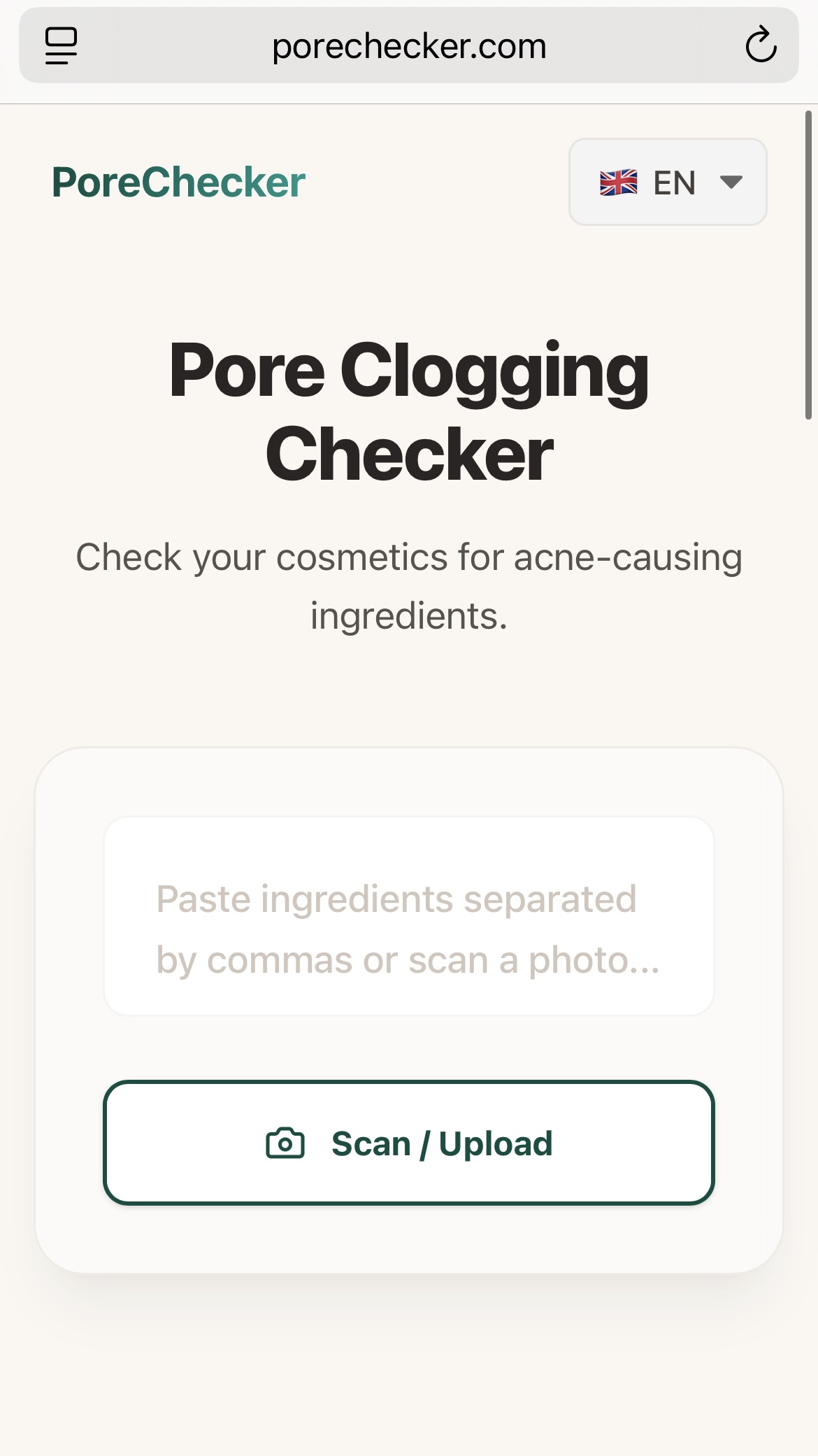
Step 1: Upload Your Product Image
Simply snap a photo of the ingredient list on the back of any bottle, jar, or box. No typing required.
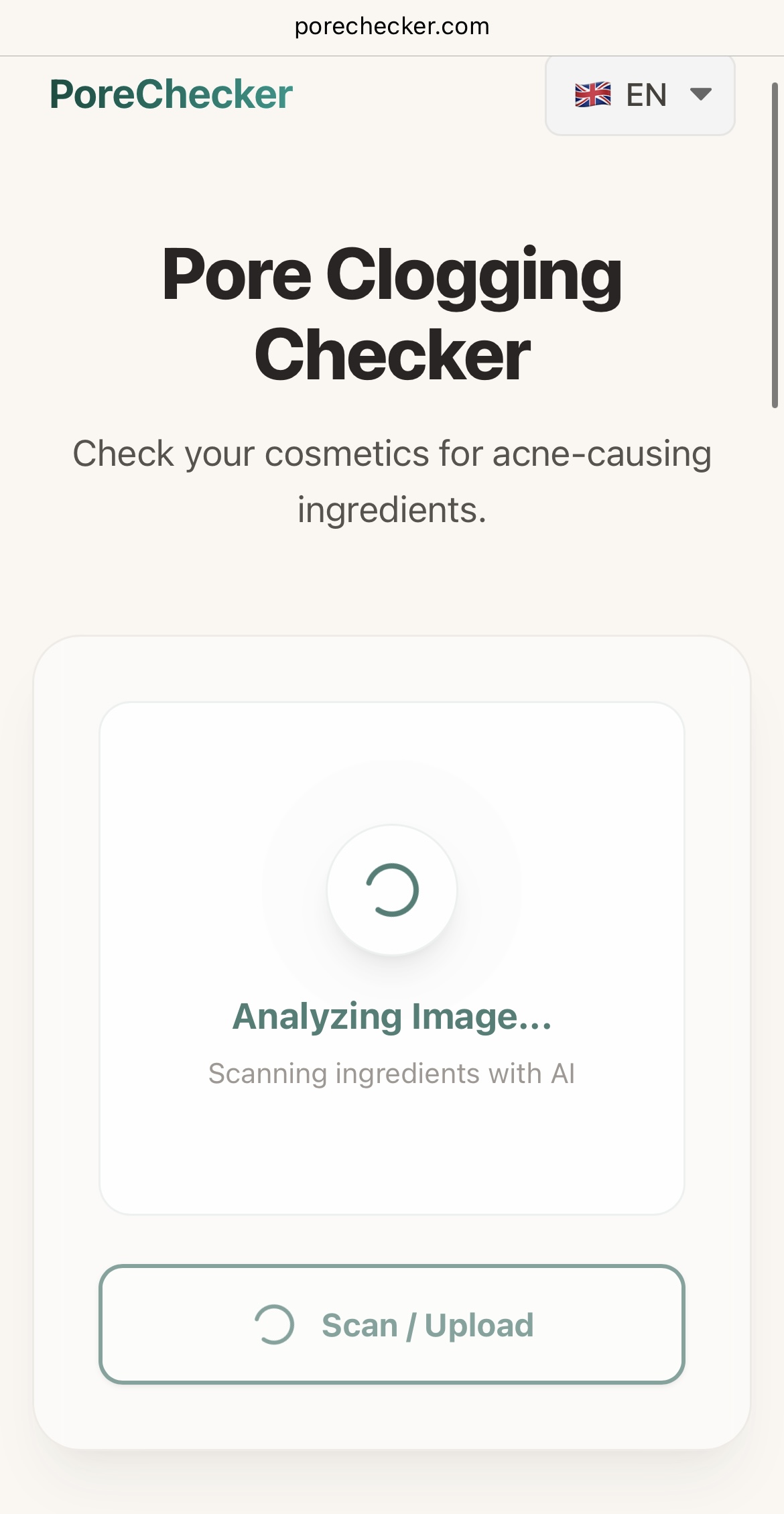
Step 2: Instant AI Ingredient Analysis
Our advanced AI scans the image, performs OCR (Optical Character Recognition), and matches every ingredient against our curated database of comedogenic substances.
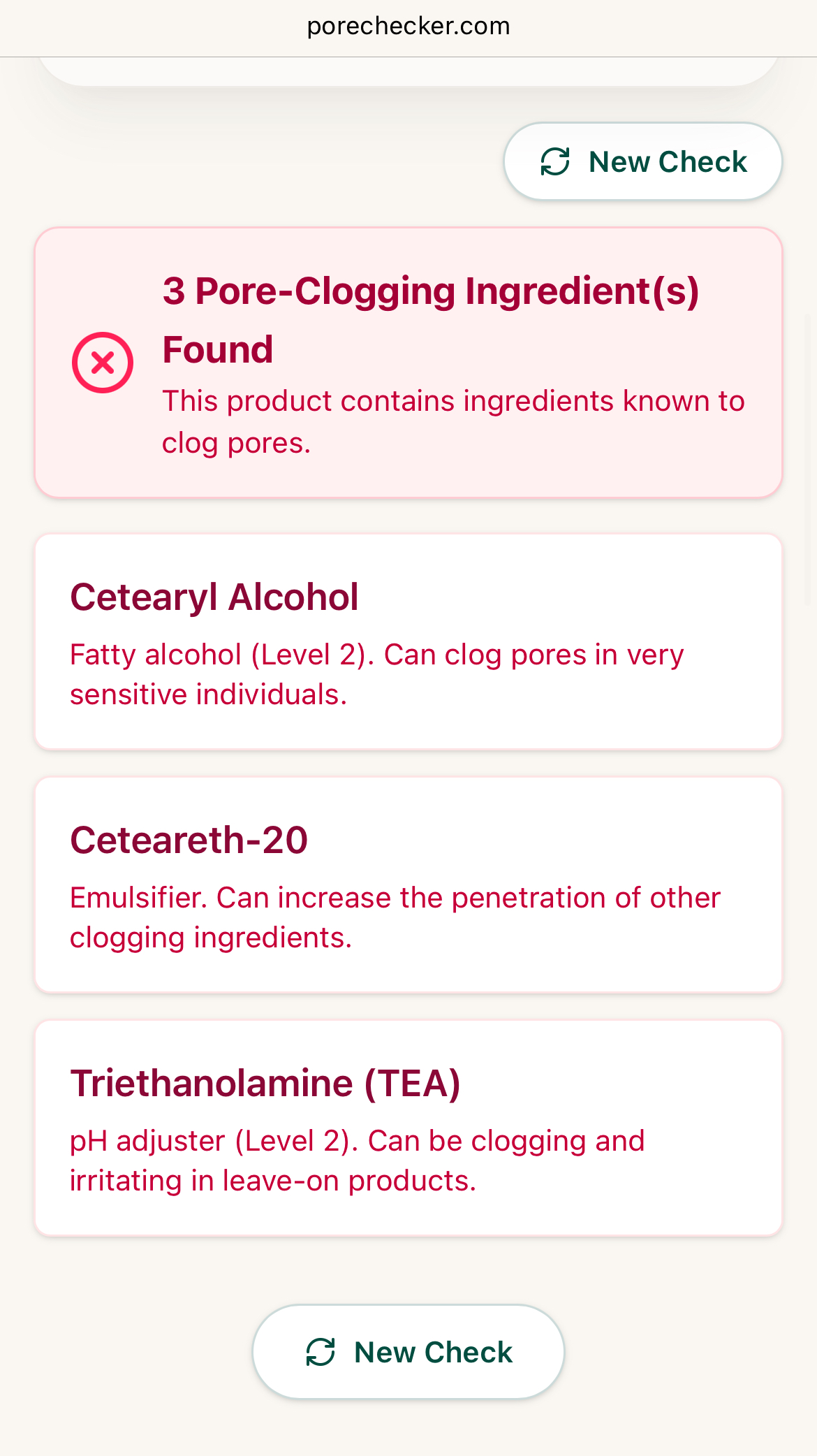
Step 3: Clear Results for Clearer Skin
You get an immediate breakdown. If any red-flag ingredients are found, we highlight them and explain why they might be problematic for your pores.
Does this product fit my skin's needs?
Check Your Products Now