Is Vitamin C Serum Good for Skin? The Ultimate Antioxidant
Dermatologists universally recommend it, but is vitamin C serum good for skin in everyday practice? Discover the brightening, anti-aging, and protective benefits.

If you were stranded on a desert island and could only take three skincare products, any dermatologist would tell you to pack: a cleanser, a sunscreen, and a Vitamin C serum. It is one of the most extensively researched ingredients in the beauty industry. But "is vitamin c serum good for skin" for everyone, and what exactly does it do to earn such high praise? Let's explore the science behind the glow.
1. The Ultimate Free Radical Scavenger
Every day, your skin is bombarded by UV rays, pollution, and environmental stress. These create "free radicals"—unstable molecules that damage your skin cells and accelerate aging. Vitamin C is a potent antioxidant. It neutralizes these free radicals, acting like an invisible shield that prevents daily environmental damage before it can permanently alter your skin.
2. The Collagen Builder
Collagen is the protein that gives your skin its firmness and bounce. As we age, collagen production naturally slows down, leading to sagging and wrinkles. Vitamin C is a required cofactor in the body's natural collagen synthesis process. Applying it topically directly stimulates the fibroblasts in your skin to produce new, healthy collagen.
3. The Dark Spot Eraser
Whether you have sun spots, age spots, or hyperpigmentation from old acne scars, Vitamin C is your best friend. It works by inhibiting the enzyme tyrosinase, which is responsible for melanin production. By blocking this enzyme, it prevents new dark spots from forming and gradually fades existing ones, resulting in a significantly brighter, more even complexion.
Is It Good for *Everyone*?
While the benefits are undeniable, the most potent form—L-ascorbic acid—is highly acidic. If you have extremely sensitive skin, rosacea, or an active eczema flare-up, a high percentage L-ascorbic acid serum might cause stinging and redness. In these cases, opting for a gentler derivative (like Sodium Ascorbyl Phosphate or THD Ascorbate) will provide the benefits without the intense irritation.
Summary
Is vitamin c serum good for skin? Absolutely. It is a foundational pillar of preventative skincare. When applied every morning underneath your sunscreen, it dramatically boosts your UV protection, keeps your collagen levels high, and ensures a bright, even skin tone for years to come.
Step 1: Upload Your Product Image
Simply snap a photo of the ingredient list on the back of any bottle, jar, or box. No typing required.

Step 2: Instant AI Ingredient Analysis
Our advanced AI scans the image, performs OCR (Optical Character Recognition), and matches every ingredient against our curated database of comedogenic substances.

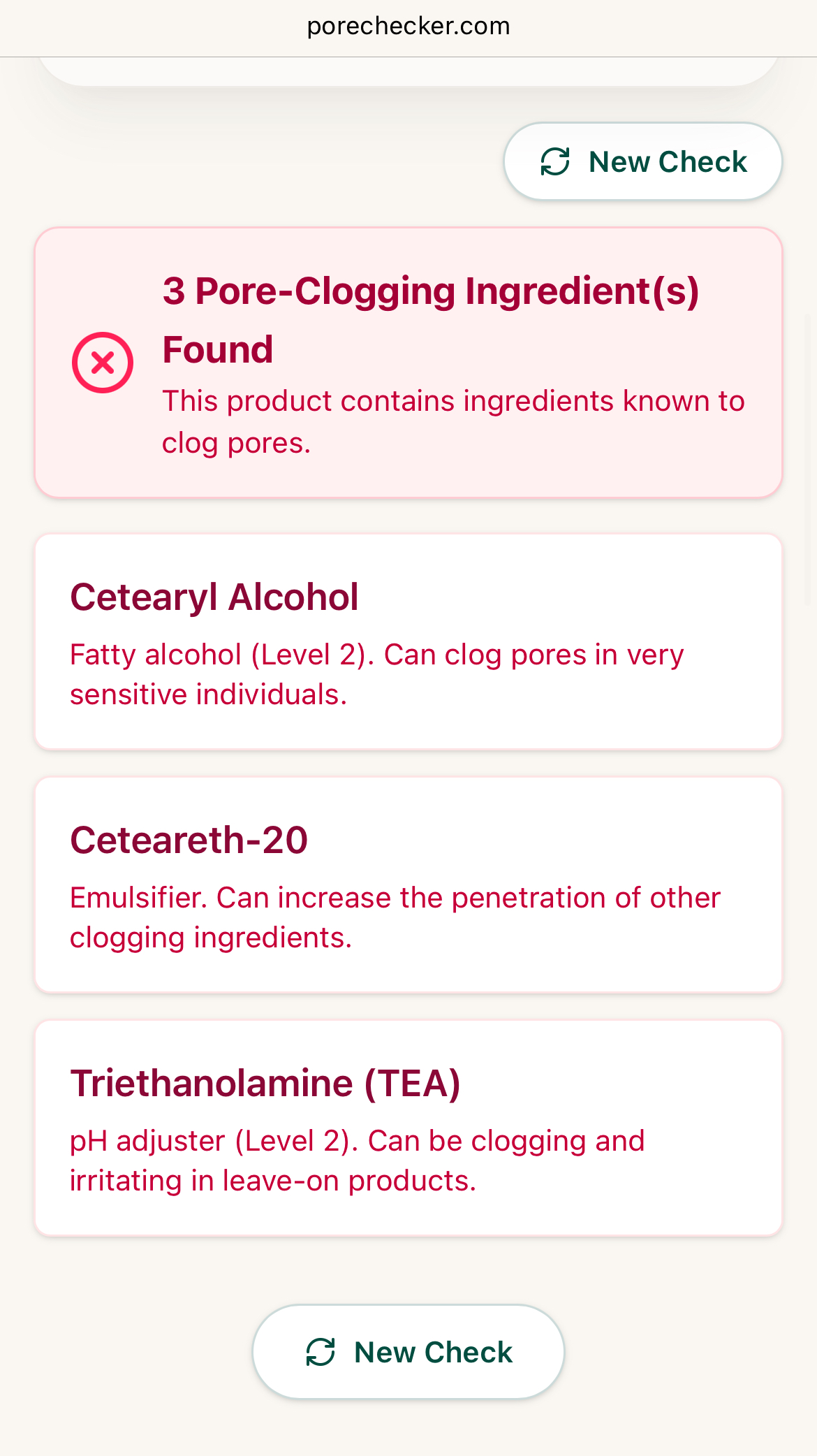
Step 3: Clear Results for Clearer Skin
You get an immediate breakdown. If any red-flag ingredients are found, we highlight them and explain why they might be problematic for your pores.
Does this product fit my skin's needs?
Check Your Products Now