Is Neutrogena Hydro Boost Water Gel Acne-Safe? Ingredients Breakdown
Detailed analysis of Neutrogena Hydro Boost Water Gel to see if it contains pore-clogging ingredients. Is your skincare routine actually safe?
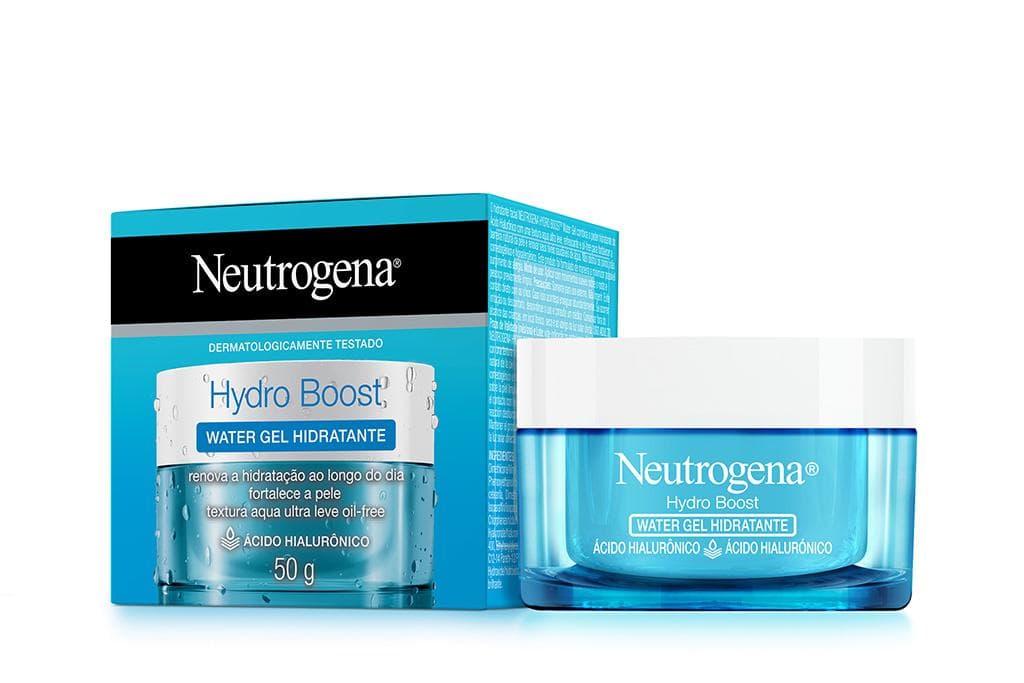
When choosing a moisturizer or treatment like Neutrogena Hydro Boost Water Gel, the most important question for acne-prone skin is always the same: are the ingredients safe for my pores?
Even well-loved products can sometimes contain hidden triggers that lead to persistent texture or breakouts. Today, we break down exactly what's inside this formula.
Understanding Neutrogena Hydro Boost Water Gel Ingredients
The Neutrogena Hydro Boost Water Gel has become a hydration hero for many, promising a refreshing burst of moisture. However, understanding the ingredient list is crucial for those with acne-prone skin. While the formula boasts ingredients like hyaluronic acid, which is excellent at drawing moisture into the skin, we must also consider the supporting players. For instance, the emulsifier Sorbitan Oleate, derived from oleic acid, is a potential comedogenic offender. This means it has a higher chance of clogging pores and contributing to breakouts. When creating a water-based gel, these emulsifiers are crucial in holding the formula together. However, some, like Sorbitan Oleate, may increase the chance of pore congestion.
Another ingredient that warrants attention is C13-14 Isoparaffin, a mineral oil derivative. Its primary role is to act as an occlusive agent. This means it creates a barrier on the skin's surface, helping to prevent moisture loss. While this sounds beneficial, it can also trap dirt, sebum, and other impurities, which is problematic for acne-prone skin. This trapping effect can lead to clogged pores and the formation of blemishes. This is why careful consideration is important when it comes to ingredients that might create a barrier on your skin.
Finally, we have the Laureth-7/12/23 family of surfactants. These ingredients help to cleanse the skin, act as emulsifiers, and solubilize other ingredients. However, in higher concentrations, these are rated as comedogenic. Therefore, their presence in the Hydro Boost Water Gel necessitates a closer look, especially for those highly sensitive to pore-clogging ingredients. The intention of these ingredients may not be harmful, but they could contribute to breakouts depending on the individual's skin sensitivity.
While these ingredients might be perfectly fine for dry or normal skin types, those struggling with closed comedones should be cautious. Skincare isn't one-size-fits-all, and what works for one person might cause issues for another.
How to check your own products
Navigating the world of skincare can feel overwhelming, especially when you're trying to avoid breakouts. Knowing what's in your products is the first step towards achieving clearer skin. But don't worry, you don't have to become a chemist! The good news is, there are tools to help you confidently assess your skincare and makeup. Ready to take control of your routine and make informed decisions? Let's get started. Use the PoreChecker app to analyze the ingredient lists of your current products!
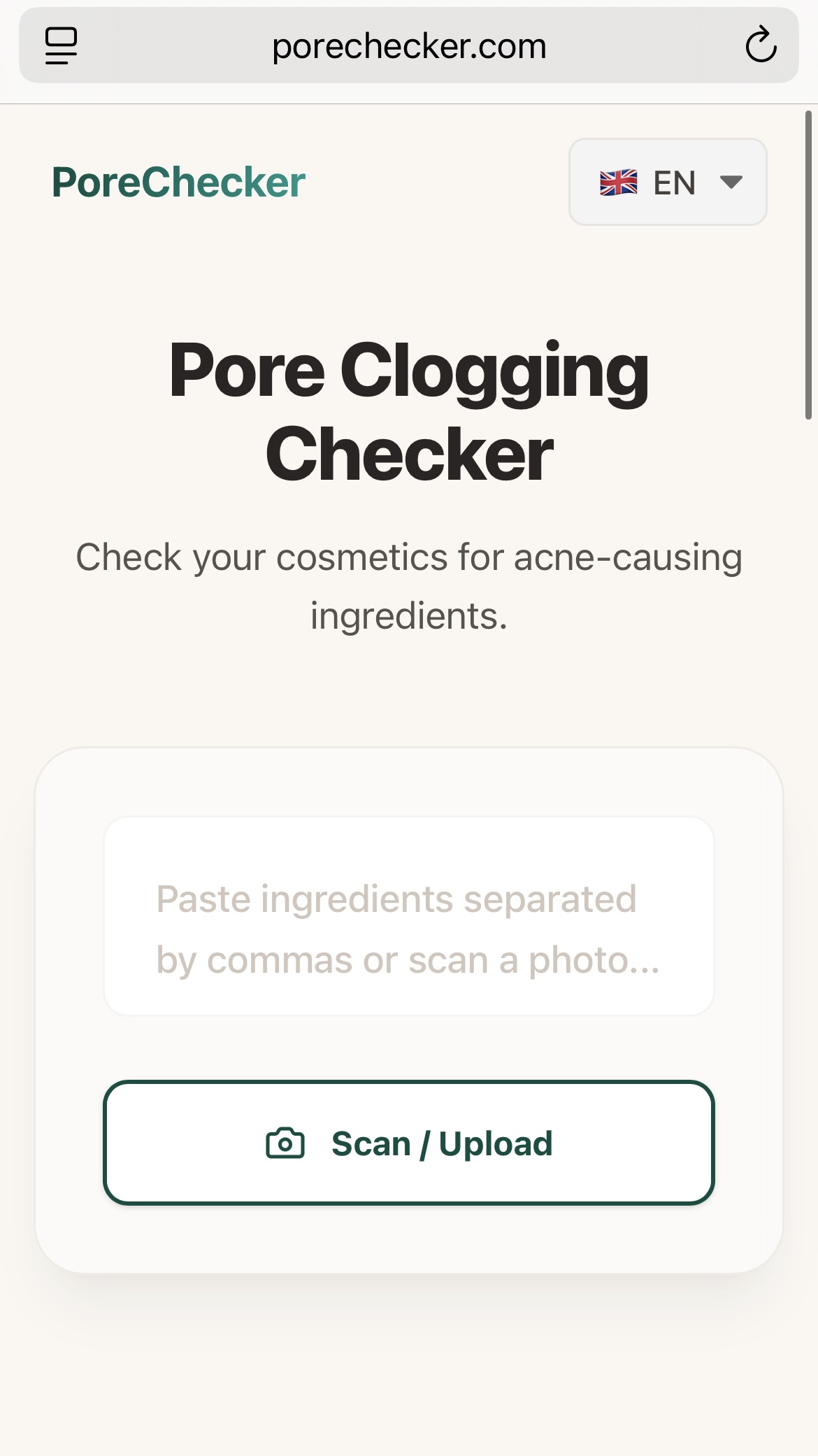
Step 1: Upload Your Product Image
Simply snap a photo of the ingredient list on the back of any bottle, jar, or box. No typing required.
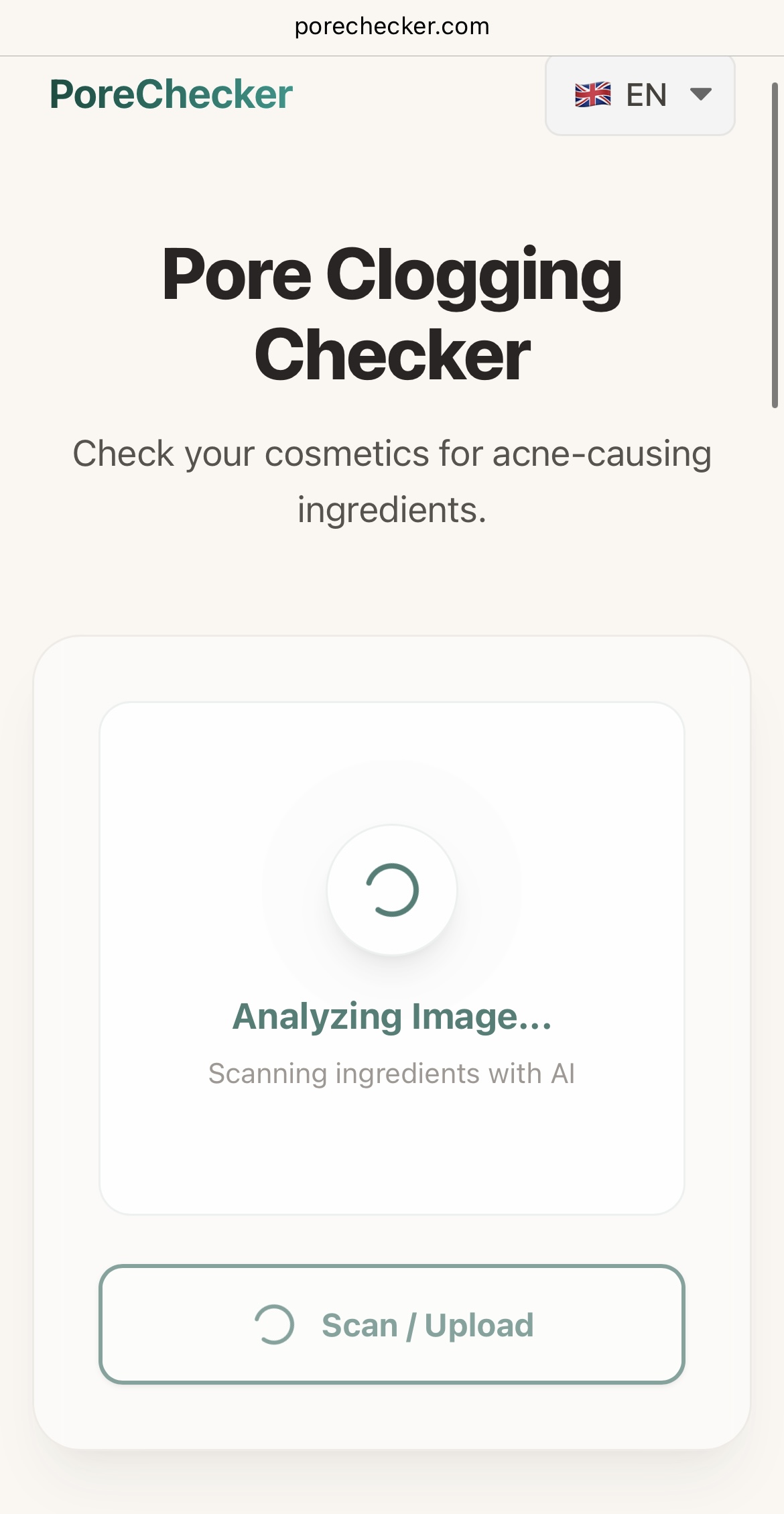
Step 2: Instant AI Ingredient Analysis
Our advanced AI scans the image, performs OCR (Optical Character Recognition), and matches every ingredient against our curated database of comedogenic substances.
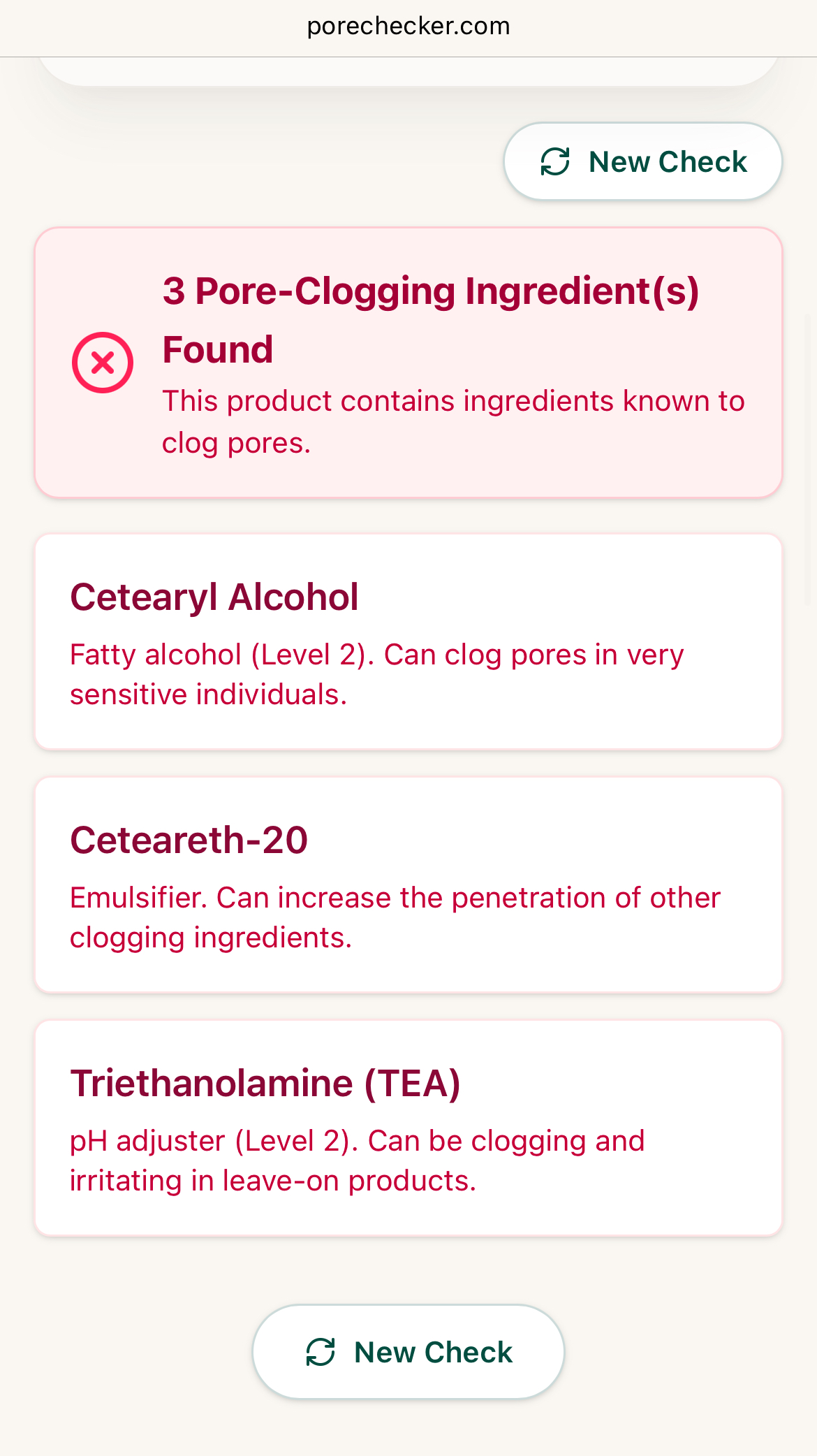
Step 3: Clear Results for Clearer Skin
You get an immediate breakdown. If any red-flag ingredients are found, we highlight them and explain why they might be problematic for your pores.
Does this product fit my skin's needs?
Check Your Products Now