Unlocking Smooth Skin: How to Reduce Pores and Achieve a Flawless Complexion
Learn how to reduce pores and achieve a flawless complexion. Expert skincare tips, hidden pore-cloggers, and actionable advice for smoother skin.

The quest for smooth, poreless skin is a common one. While it's important to remember that pores are a natural and essential part of our skin's structure, their appearance can be minimized. This article explores how to reduce pores, focusing on science-backed methods and practical steps you can integrate into your daily routine. The key lies in understanding what causes enlarged pores and adopting a non-comedogenic approach to skincare.
Effective pore reduction strategies go beyond quick fixes. They encompass a holistic approach that considers your skin type, lifestyle, and the products you use. By focusing on gentle exfoliation, proper cleansing, and the use of specific ingredients, you can significantly refine your skin's texture. Remember, consistent care is paramount in this journey, and results take time.
Understanding the Science Behind Pores
Pores are tiny openings in the skin that release sebum (oil) and sweat. Their size is largely determined by genetics, but several factors can make them appear larger. These include excessive oil production, loss of collagen and elasticity (common with aging), sun damage, and the presence of comedones (blackheads and whiteheads) that stretch the pore opening. It's crucial to address these underlying causes to effectively minimize their appearance.
The Role of Sebum and Oil Control
One of the primary contributors to enlarged pores is excess sebum. When oil production is high, it can mix with dead skin cells and debris, leading to clogged pores. This buildup stretches the pore, making it more visible. Ingredients like salicylic acid (a beta-hydroxy acid or BHA) and benzoyl peroxide can help control oil production and exfoliate the skin, reducing the likelihood of pore-clogging.
Exfoliation and the Importance of Cell Turnover
Regular exfoliation is key to keeping pores clear and minimizing their appearance. Exfoliation removes dead skin cells that can accumulate and clog pores. Chemical exfoliants, such as AHAs (alpha-hydroxy acids) like glycolic or lactic acid, work by dissolving the bonds between skin cells, promoting smoother skin. Physical exfoliants, like scrubs, should be used with caution, as aggressive scrubbing can irritate the skin.
The Impact of Sun Damage and Collagen Loss
Sun exposure damages collagen and elastin, leading to a loss of skin elasticity. This can make pores appear larger. Protecting your skin from the sun with a broad-spectrum SPF of 30 or higher is crucial. Incorporating antioxidants, like Vitamin C, into your routine can also help combat free radical damage and support collagen production.
Actionable Steps to Reduce Pores
Implementing a consistent skincare routine is essential for long-term results. This involves choosing the right products, applying them in the correct order, and being patient. Remember, what works for one person might not work for another, so be prepared to adjust your routine based on your skin's response.
Effective Cleansing Practices
Gentle, yet effective, cleansing is the foundation of any pore-reducing routine. Use a cleanser formulated for your skin type. Avoid harsh soaps that can strip your skin of its natural oils, leading to increased oil production. Double cleansing in the evening, using an oil-based cleanser followed by a water-based cleanser, can effectively remove makeup, sunscreen, and impurities.
Choosing the Right Skincare Ingredients
Look for products containing ingredients like retinol, which promotes cell turnover and collagen production, and niacinamide, which can help regulate oil production and minimize pore size. Always patch-test new products before applying them to your entire face to check for potential sensitivities. Incorporate these into your routine gradually to allow your skin to adjust.
Lifestyle Adjustments for Pore Health
Your lifestyle plays a significant role in your skin's health. Drink plenty of water to keep your skin hydrated. Manage stress levels, as stress can contribute to breakouts. Get enough sleep to allow your skin to repair itself. Avoid touching your face throughout the day, as this can transfer dirt and bacteria.
Hidden Pore-Cloggers to Avoid
Many products contain ingredients that can clog pores, counteracting your efforts to reduce pore size. Non-comedogenic products are specifically formulated to avoid this, but it's essential to be vigilant about ingredient lists. Some common pore-cloggers include certain oils (like coconut oil and mineral oil), thick emollients, and comedogenic alcohols.
Common Culprits in Skincare and Makeup
Pay close attention to the ingredients in your makeup, especially foundations and concealers. Look for oil-free, non-comedogenic formulas. Certain silicones, waxes, and heavy oils can also contribute to clogged pores. In skincare, some thick creams and occlusive ingredients can trap oil and dead skin cells, exacerbating pore issues.
Understanding Product Labels and Ingredient Lists
Become familiar with common comedogenic ingredients. Research ingredient lists and become familiar with ingredients that are known to clog pores, and learn to identify them. Learn how to interpret product labels and understand the meaning of terms like "non-comedogenic." This awareness will empower you to make informed decisions about your skincare choices.
Don't Let Your Products Ruin Your Progress
Successfully minimizing the appearance of pores requires a multi-pronged approach, encompassing effective cleansing, targeted treatments, and a healthy lifestyle. However, all of these efforts can be undermined by the very products you use on your skin. Even seemingly innocuous formulas can harbor ingredients that contribute to pore congestion. The best way to ensure your products are contributing to – rather than hindering – your progress is to carefully scrutinize their ingredient lists. Using a dedicated ingredient checker tool can help you identify potential pore-clogging components, enabling you to make informed choices and build a truly effective skincare routine.
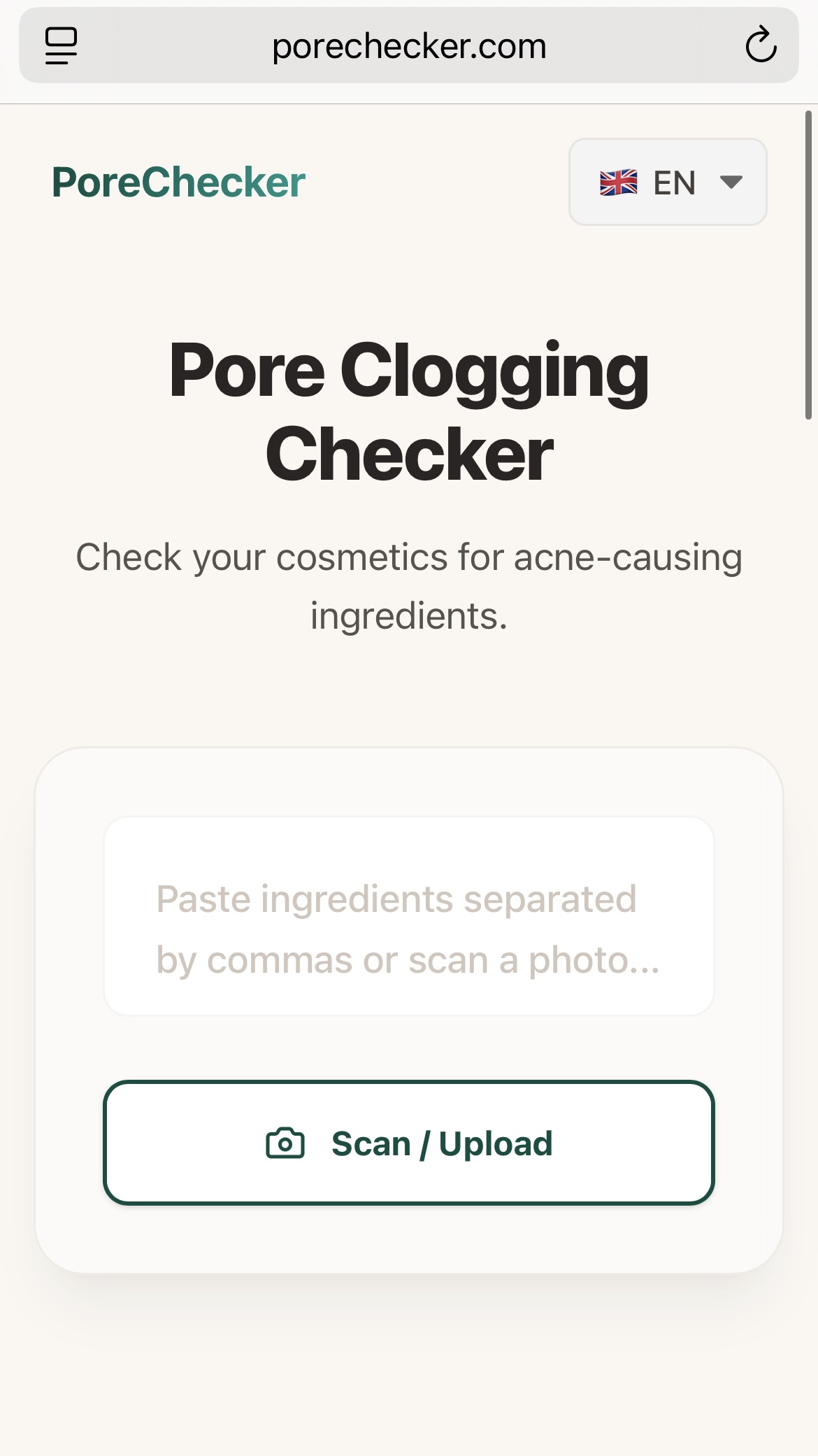
Step 1: Upload Your Product Image
Simply snap a photo of the ingredient list on the back of any bottle, jar, or box. No typing required.
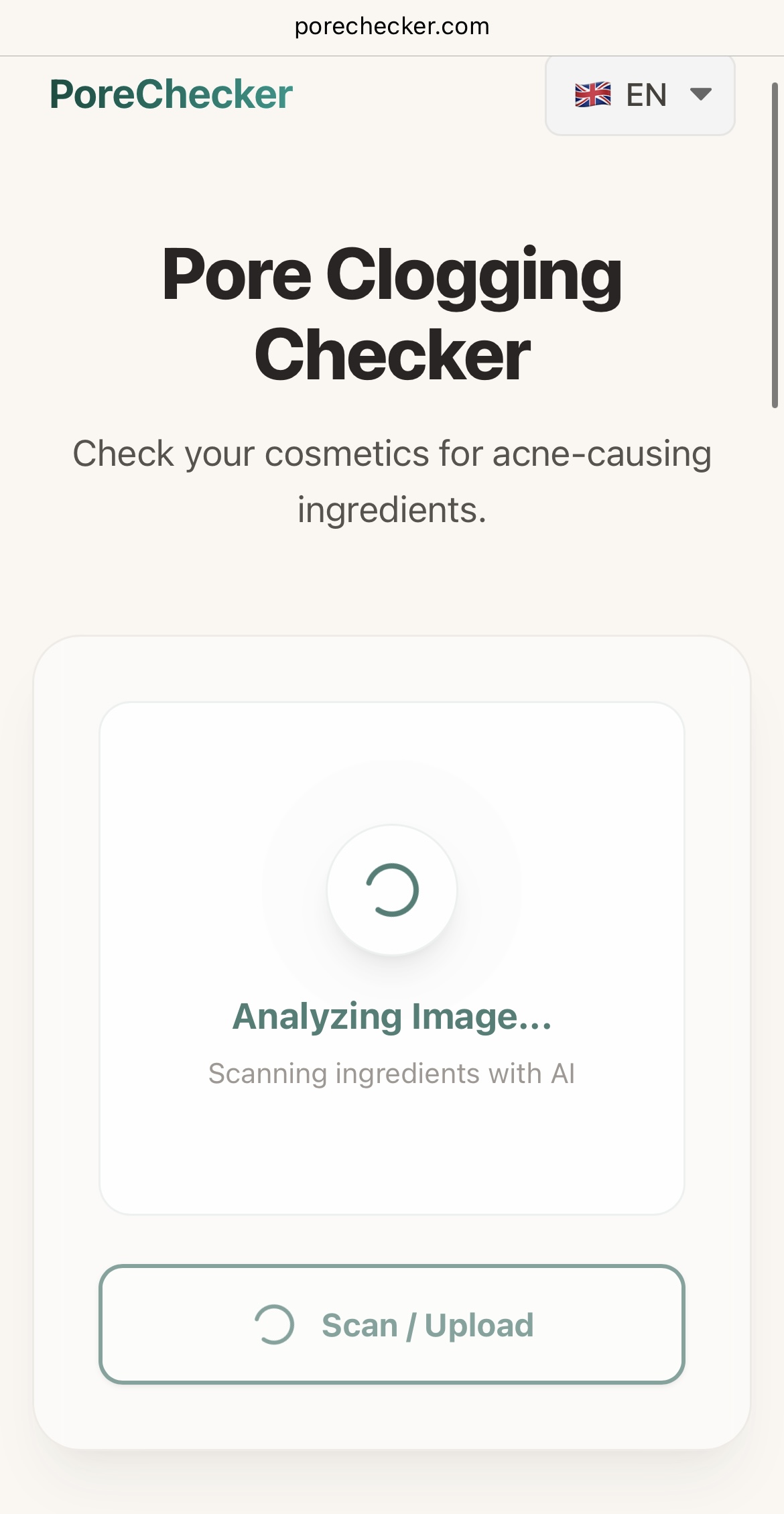
Step 2: Instant AI Ingredient Analysis
Our advanced AI scans the image, performs OCR (Optical Character Recognition), and matches every ingredient against our curated database of comedogenic substances.
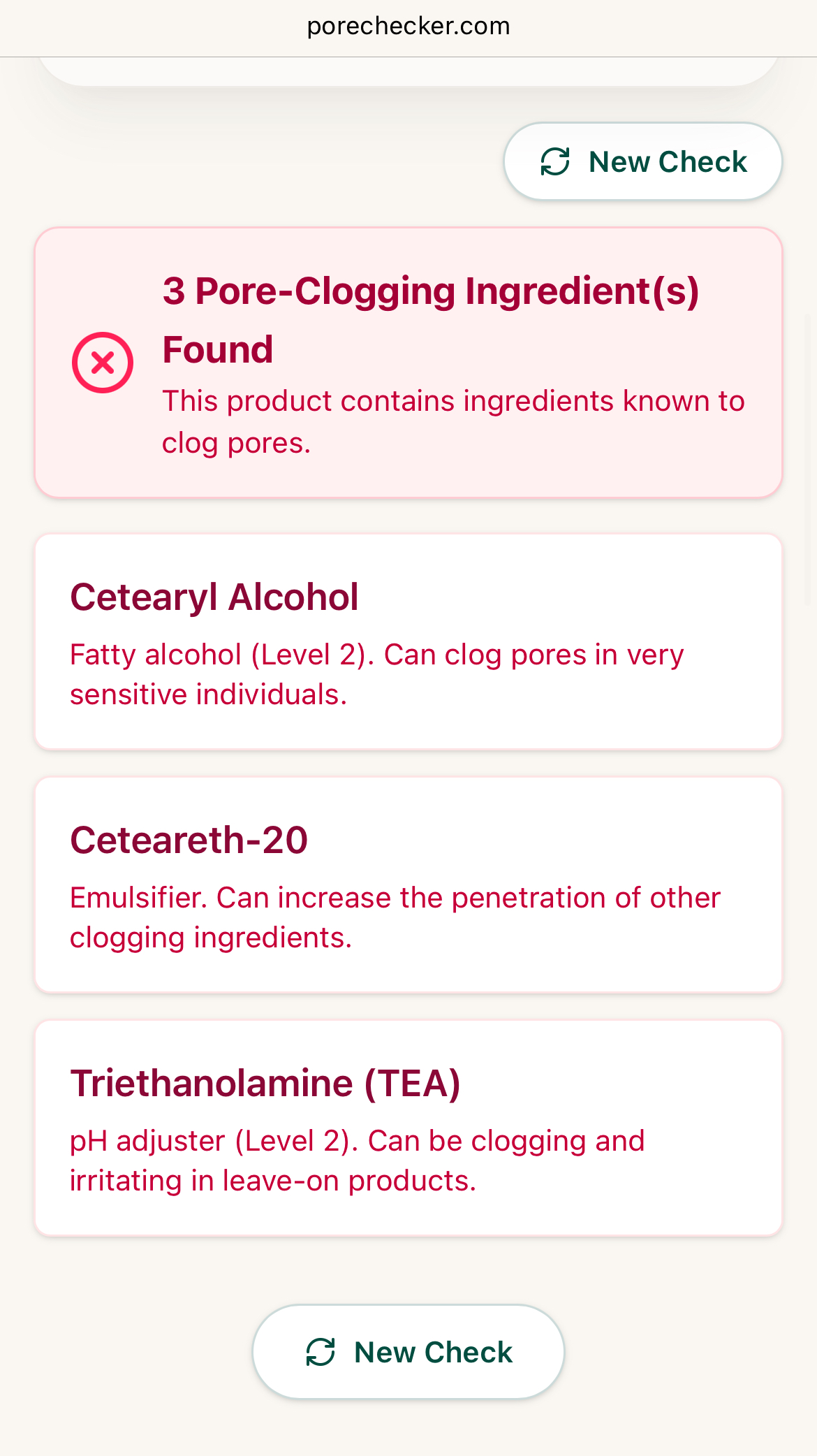
Step 3: Clear Results for Clearer Skin
You get an immediate breakdown. If any red-flag ingredients are found, we highlight them and explain why they might be problematic for your pores.
Does this product fit my skin's needs?
Check Your Products Now