Unveiling Radiance: How to Get Rid of Acne Scars Naturally
Struggling with acne scars? Discover effective, natural ways to fade them and achieve clear skin. Expert advice for a radiant complexion.
The lingering shadows of acne scars can be a source of frustration, impacting not only our complexion but also our confidence. While professional treatments offer powerful solutions, many individuals seek gentler, natural approaches to address these marks. The good news is that with patience, consistency, and a deep understanding of your skin, it is possible to significantly reduce the appearance of acne scars using ingredients and practices readily available to you. Prioritizing non-comedogenic skincare is the crucial first step on your journey to skin recovery.
This article will explore evidence-based strategies to help you navigate the process of fading acne scars naturally. We'll delve into the science behind scar formation, introduce key ingredients and routines, and emphasize the importance of understanding your skin type and its specific needs. Remember, consistency and self-compassion are your most valuable allies throughout this process.
Understanding Acne Scars: The Science of Healing
Acne scars are the visible aftermath of inflammation caused by acne. When a blemish develops, the body attempts to repair the damage. The type of scar that forms depends on several factors, including the severity of the acne, the skin's natural healing ability, and whether the blemish was picked or squeezed. Common scar types include atrophic scars (depressed scars like ice pick, boxcar, and rolling scars) and hypertrophic or keloid scars (raised scars). Naturally fading these scars involves stimulating collagen production, reducing inflammation, and promoting healthy skin cell turnover.
Key Ingredients for Natural Scar Fading
Several natural ingredients have shown promise in reducing the appearance of acne scars. Consider incorporating these into your routine. Always patch test before incorporating new ingredients:
* Vitamin C: A potent antioxidant that can boost collagen production and brighten the skin, potentially improving the appearance of hyperpigmentation (dark spots). * Rosehip Oil: Rich in essential fatty acids and vitamin A, this oil can hydrate the skin, promote cell regeneration, and potentially reduce the appearance of scars. * Aloe Vera: Known for its soothing and anti-inflammatory properties, aloe vera can aid in the healing process and potentially reduce redness associated with scars. * Honey: With antibacterial and wound-healing properties, honey can promote skin repair and reduce the risk of further scarring.
Gentle Exfoliation and Routine
Regular, gentle exfoliation can help remove dead skin cells and promote cell turnover, aiding in the fading of scars. Avoid harsh scrubs, which can worsen inflammation. Instead, consider:
* Chemical Exfoliation (AHAs/BHAs): Introduce alpha-hydroxy acids (AHAs) or beta-hydroxy acids (BHAs) slowly, starting with a low concentration and gradually increasing as tolerated. They help to exfoliate the top layers of skin. * Gentle Cleansing: Use a mild, non-comedogenic cleanser twice daily to remove impurities without stripping the skin of its natural oils. * Moisturize: Keeping your skin hydrated is crucial for healing. Choose a non-comedogenic moisturizer suitable for your skin type. * Sun Protection: Daily sunscreen is non-negotiable. Sun exposure can worsen the appearance of scars and hyperpigmentation. Choose a broad-spectrum sunscreen with an SPF of 30 or higher.
Lifestyle and Diet for Skin Health
While topical treatments play a significant role, lifestyle choices can greatly impact your skin's ability to heal and regenerate. Consider these points:
* Healthy Diet: Consume a balanced diet rich in fruits, vegetables, and antioxidants. These provide essential nutrients for skin health. * Hydration: Drink plenty of water to keep your skin hydrated and support overall cellular function. * Stress Management: Stress can exacerbate acne and hinder healing. Practice stress-reducing techniques such as meditation, yoga, or deep breathing exercises. * Avoid Picking and Popping: Resist the urge to pick or squeeze blemishes, as this can worsen inflammation and increase the risk of scarring.
Don't Let Your Products Ruin Your Progress
Even with the best intentions, the wrong skincare products can sabotage your efforts to fade acne scars. Many seemingly innocuous ingredients can clog pores and trigger new breakouts, potentially leading to even more scarring. Hidden pore-cloggers, such as certain oils, silicones, and thick emollients, are common culprits. To safeguard your skin, always diligently read the ingredient list of every product you use. This proactive approach will help you select the most compatible and beneficial products for your skin type, thus supporting and accelerating your journey to a clearer, more radiant complexion.
Step 1: Upload Your Product Image
Simply snap a photo of the ingredient list on the back of any bottle, jar, or box. No typing required.

Step 2: Instant AI Ingredient Analysis
Our advanced AI scans the image, performs OCR (Optical Character Recognition), and matches every ingredient against our curated database of comedogenic substances.

Step 3: Clear Results for Clearer Skin
You get an immediate breakdown. If any red-flag ingredients are found, we highlight them and explain why they might be problematic for your pores.
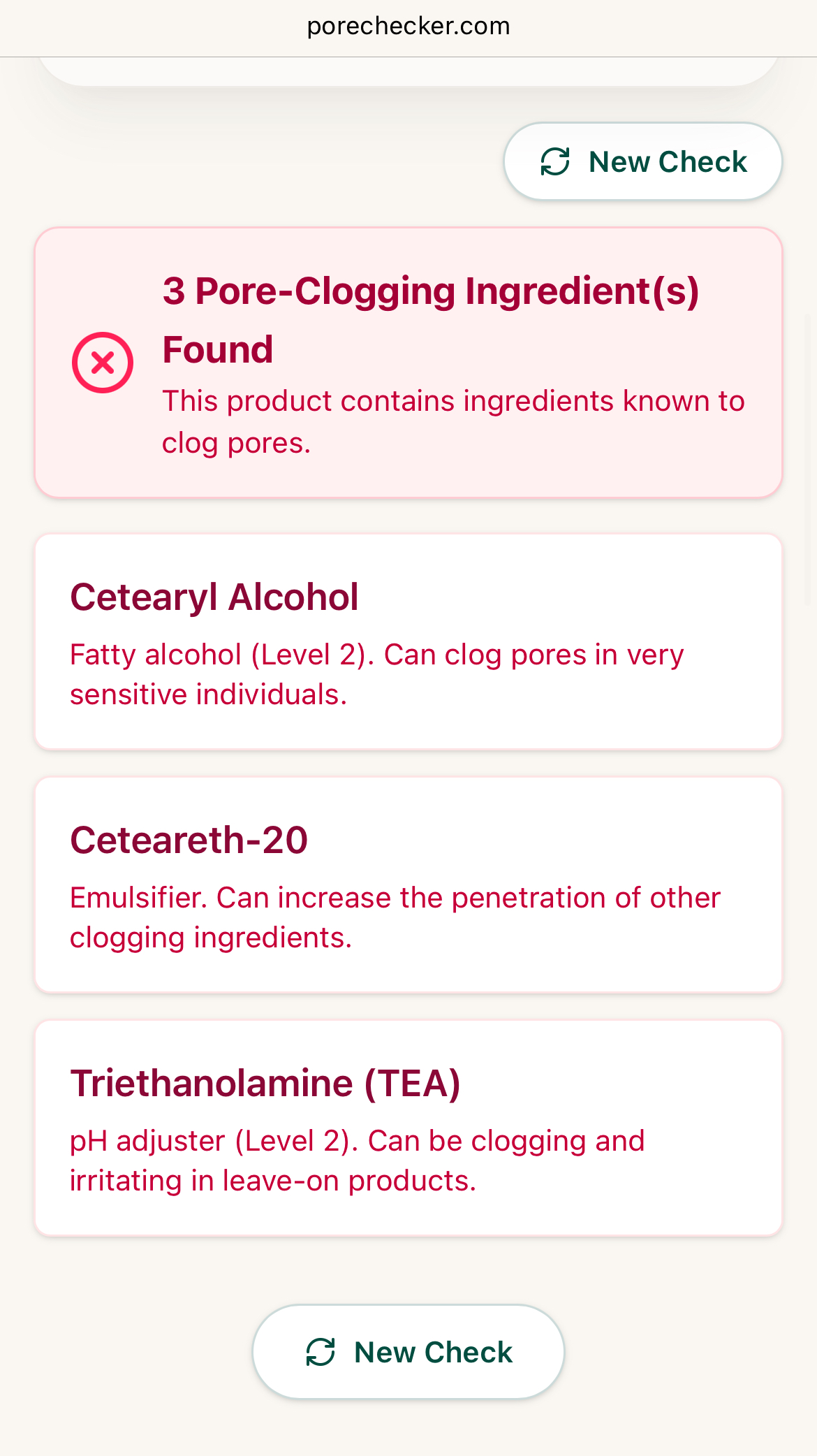
Does this product fit my skin's needs?
Check Your Products Now