What Causes Acne On Forehead: The Science Of Breakouts And How To Clear Them
Struggling with persistent bumps? Discover what causes acne on forehead, from hair products to digestive health, and reclaim your skin.

When you notice clusters of small, stubborn bumps appearing along your hairline or across your T-zone, it is natural to feel frustrated. Forehead acne is distinct from other forms of breakout because it is often directly linked to the environment your skin occupies, rather than just internal hormonal shifts. Understanding the specific mechanics behind these congestion points is the first step toward achieving a balanced, clear complexion.
To effectively manage this, we must shift our focus toward non-comedogenic care. By curating a routine that respects the skin’s barrier while avoiding ingredients that trap debris, you stop the cycle of inflammation. Healthy skin is not about stripping away oils, but about ensuring that your pores remain clear and your protective mantle stays intact.
The Role Of Hair Care And Friction
One of the most frequent culprits behind forehead breakouts is the product you apply to your hair. Pomades, waxes, and heavy conditioning treatments often contain oils and silicones that migrate onto the skin while you sleep or throughout the day. When these heavy materials meet the skin, they create a film that traps sweat and dead skin cells, leading to "pomade acne."
Beyond chemical interference, physical friction plays a significant role. Wearing hats, headbands, or having hair that constantly brushes against the forehead creates a micro-environment of heat and humidity. This friction damages the surface of the skin, making it easier for bacteria to penetrate the follicle wall, resulting in the localized inflammation we recognize as acne.
Hidden Pore-Cloggers In Your Routine
Sometimes, the products we use to treat our skin are actually perpetuating the issue. Many moisturizers and sunscreens designed for dry skin are far too occlusive for the forehead area, which naturally tends to be more oil-rich than the cheeks. If your products are not explicitly labeled as non-comedogenic, they may be contributing to the very congestion you are trying to resolve.
Internal Triggers And Lifestyle Factors
While external factors are common, we cannot ignore the internal signals our skin provides. Stress and digestive health are frequently reflected in the T-zone. During periods of high cortisol, your sebaceous glands may increase oil production, which finds a home in the forehead follicles. Maintaining a consistent sleep schedule and supporting your gut health can often manifest as a noticeable reduction in forehead-specific congestion over time.
Don't Let Your Products Ruin Your Progress
Even with the best intentions, it is incredibly easy to accidentally re-introduce pore-clogging agents into your skincare regimen. Many labels use marketing buzzwords that hide the true nature of their ingredient list, leaving you vulnerable to breakouts despite your dedication to a clean routine. Before you commit to a new serum or moisturizer, it is essential to verify that your current products aren't silently working against your skin's health. Taking a moment to cross-reference your ingredient lists with a professional-grade comedogenic database allows you to filter out these hidden irritants and finally stabilize your skin barrier.
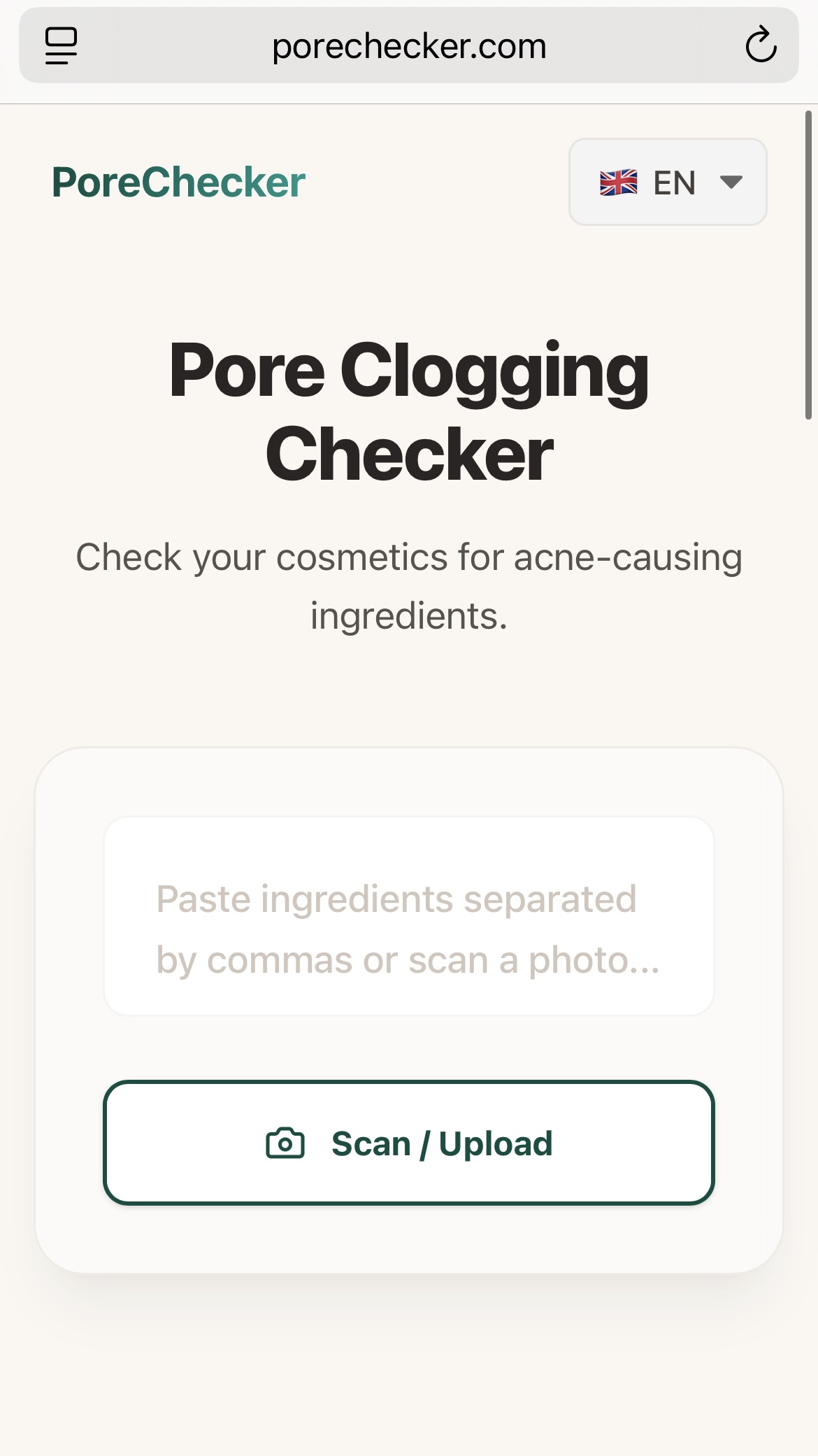
Step 1: Upload Your Product Image
Simply snap a photo of the ingredient list on the back of any bottle, jar, or box. No typing required.
Step 2: Instant AI Ingredient Analysis
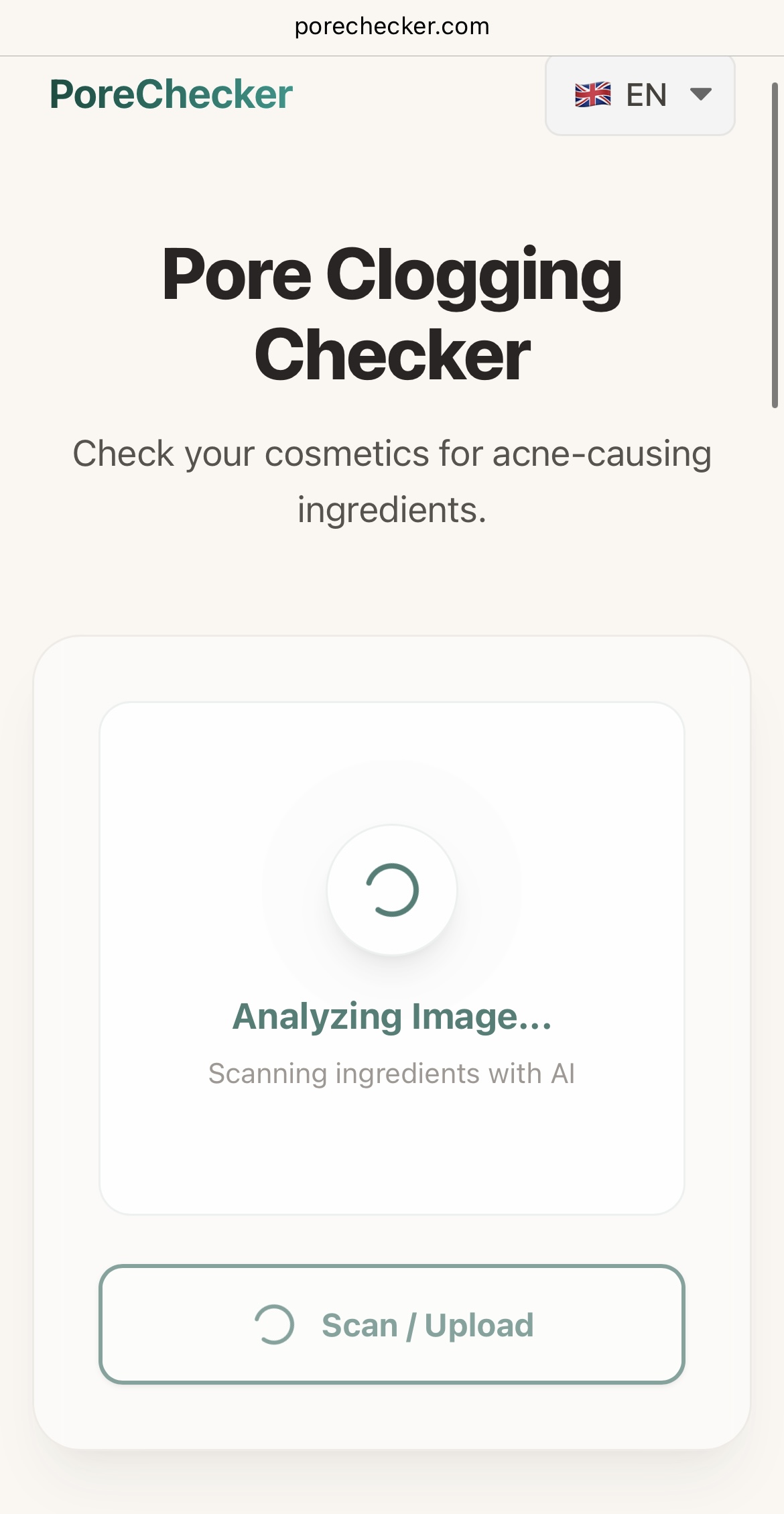
Our advanced AI scans the image, performs OCR (Optical Character Recognition), and matches every ingredient against our curated database of comedogenic substances.
Step 3: Clear Results for Clearer Skin
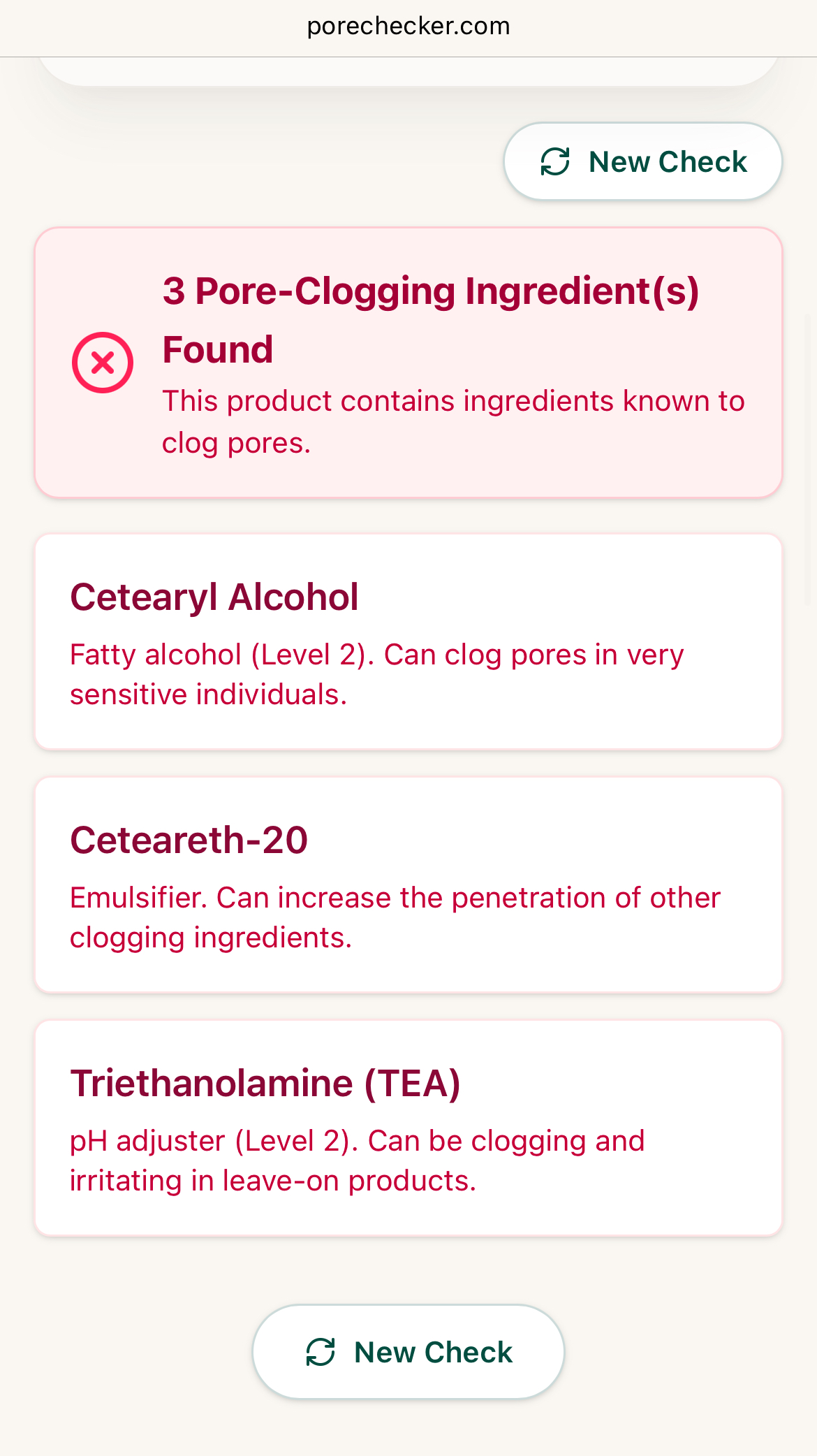
You get an immediate breakdown. If any red-flag ingredients are found, we highlight them and explain why they might be problematic for your pores.
Does this product fit my skin's needs?
Check Your Products Now