What Causes Cheek Acne? Hidden Triggers and How to Stop Them
If your forehead is clear but your cheeks are breaking out, environmental factors might be to blame. Learn exactly what causes cheek acne and how to clear it.

According to traditional Chinese face mapping, different areas of the face correspond to different internal organs. While modern dermatology doesn't strictly adhere to this, it does agree that the location of your breakouts provides massive clues about their origin. If your chin and forehead are perfectly clear but you're constantly battling pimples on the sides of your face, you need to ask: what causes cheek acne?
1. The Friction Factor (Acne Mechanica)
The cheeks are the most touched part of the face. "Acne Mechanica" is a type of acne triggered by friction, pressure, and the transfer of bacteria. The three biggest culprits are:
- Your Phone: Cell phones carry more bacteria than a public toilet seat. Pressing a warm, dirty screen against your cheek for 20 minutes creates a perfect breeding ground for *C. acnes* bacteria. Wipe your phone daily with an alcohol swab, or use headphones.
- Your Pillowcase: You press your cheek into your pillowcase for 8 hours every night. If you aren't washing your pillowcase at least twice a week, you are rubbing your face in a buildup of dead skin, old oil, and hair products.
- Your Hands: Resting your chin or cheek in your hand while sitting at a desk transfers immense amounts of dirt and bacteria directly into your pores.
2. Dirty Makeup Brushes
Cheeks are the primary area for applying foundation, blush, and bronzer. If you use brushes or sponges to apply these products and don't wash them weekly, you are aggressively buffing old, oxidized oil and bacteria deep into your cheek pores.
3. Hair Care Products
If you have long hair that touches your cheeks, the products you use in your hair can migrate to your skin. Heavy conditioners, leave-in oils, and hairsprays often contain highly comedogenic ingredients (like coconut oil or isopropyl myristate) that will instantly clog the pores on the sides of your face.
Summary
If you want to know what causes cheek acne, look at what physically touches your face. Unlike hormonal jawline acne, cheek acne is almost entirely environmental. By cleaning your phone, washing your pillowcases frequently, sanitizing your makeup brushes, and keeping hair products off your skin, you can often clear cheek acne without changing a single thing in your skincare routine.
Step 1: Upload Your Product Image
Simply snap a photo of the ingredient list on the back of any bottle, jar, or box. No typing required.

Step 2: Instant AI Ingredient Analysis
Our advanced AI scans the image, performs OCR (Optical Character Recognition), and matches every ingredient against our curated database of comedogenic substances.

Step 3: Clear Results for Clearer Skin
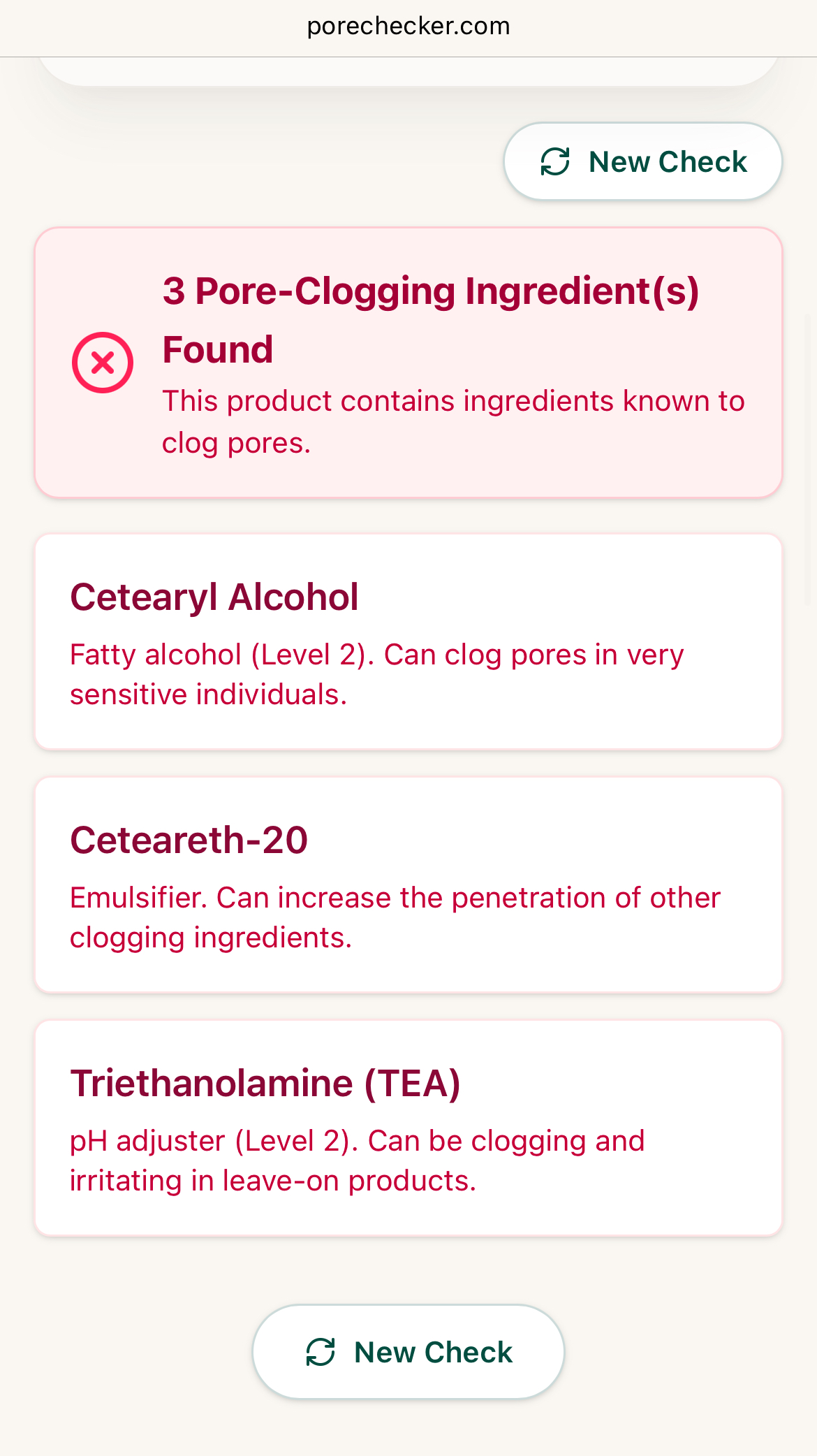
You get an immediate breakdown. If any red-flag ingredients are found, we highlight them and explain why they might be problematic for your pores.
Does this product fit my skin's needs?
Check Your Products Now