What Does Cheek Acne Mean? Causes and Treatments
Breaking out exclusively on your cheeks? Learn what cheek acne means, from environmental triggers like dirty pillowcases to broken skin barriers.
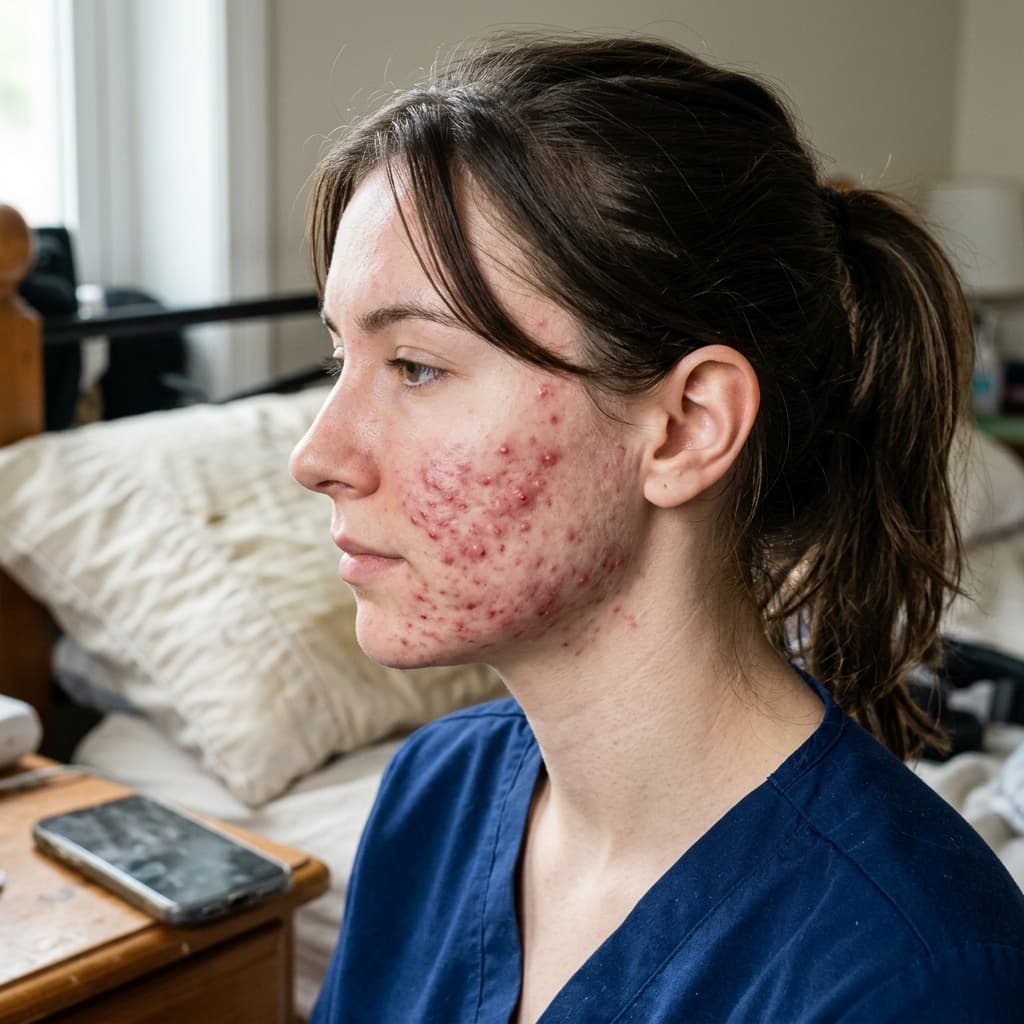
Acne mapping—the ancient practice of linking breakouts on specific areas of the face to internal organ issues—has been largely debunked by modern dermatology. If you are breaking out on your forehead, it isn't necessarily your liver. But when it comes to the cheeks, location is actually highly relevant. If you are wondering, "what does cheek acne mean?", the answer usually comes down to environmental friction and bacteria.
The Mechanical Causes (Acne Mechanica)
The cheeks are the most exposed and frequently touched area of the face. Cheek acne is very often Acne Mechanica—breakouts triggered by friction, pressure, and the transfer of external bacteria.
1. Your Cell Phone
Think about where your phone goes: on restaurant tables, bathroom counters, the bottom of your bag. It is covered in bacteria. When you press it against your cheek for a 20-minute phone call, you are creating a hot, humid seal that pushes that bacteria directly into your pores.
2. Dirty Pillowcases
As you sleep, your skin sheds dead cells, and your hair transfers natural oils (and heavy hair products) onto your pillowcase. If you sleep on your side, your cheek rubs against this buildup for 8 hours every night. This friction and oil transfer is a massive trigger for cheek breakouts.
3. Resting on Your Hands
If you sit at a desk and subconsciously rest your cheek in the palm of your hand, you are constantly transferring the dirt and oils from your hands to your face.
The Biological Cause: Compromised Barrier
Beyond environmental factors, the cheeks are also one of the driest parts of the face (compared to the oily T-zone). Because they naturally produce less sebum, the skin barrier on the cheeks is much thinner and more fragile.
If you use harsh scrubs, over-exfoliate with strong acids, or use stripping cleansers, the barrier on your cheeks will break down first. When the barrier is compromised, microscopic cracks form, allowing normal, everyday bacteria to enter and cause deep, red, inflammatory acne.
How to Clear Cheek Acne
Fixing cheek acne requires a combination of behavioral changes and gentle skincare:
- Change your pillowcase every 2 to 3 days, and consider switching to silk, which causes less friction than cotton.
- Sanitize your phone screen daily with an alcohol wipe, or use headphones for long calls.
- Stop touching your face during the day.
- Focus on barrier repair. Stop using harsh exfoliants on your cheeks. Instead, use a barrier-repairing moisturizer rich in Ceramides to heal the microscopic cracks and keep bacteria out.
Summary
What does cheek acne mean? It rarely means an internal organ issue. Usually, it means your cheeks are being subjected to excessive bacteria from phones and pillowcases, or that your skin barrier is too weak to defend itself. By improving your environmental hygiene and repairing your moisture barrier, cheek acne usually clears up rapidly.
Step 1: Upload Your Product Image
Simply snap a photo of the ingredient list on the back of any bottle, jar, or box. No typing required.

Step 2: Instant AI Ingredient Analysis
Our advanced AI scans the image, performs OCR (Optical Character Recognition), and matches every ingredient against our curated database of comedogenic substances.

Step 3: Clear Results for Clearer Skin
You get an immediate breakdown. If any red-flag ingredients are found, we highlight them and explain why they might be problematic for your pores.
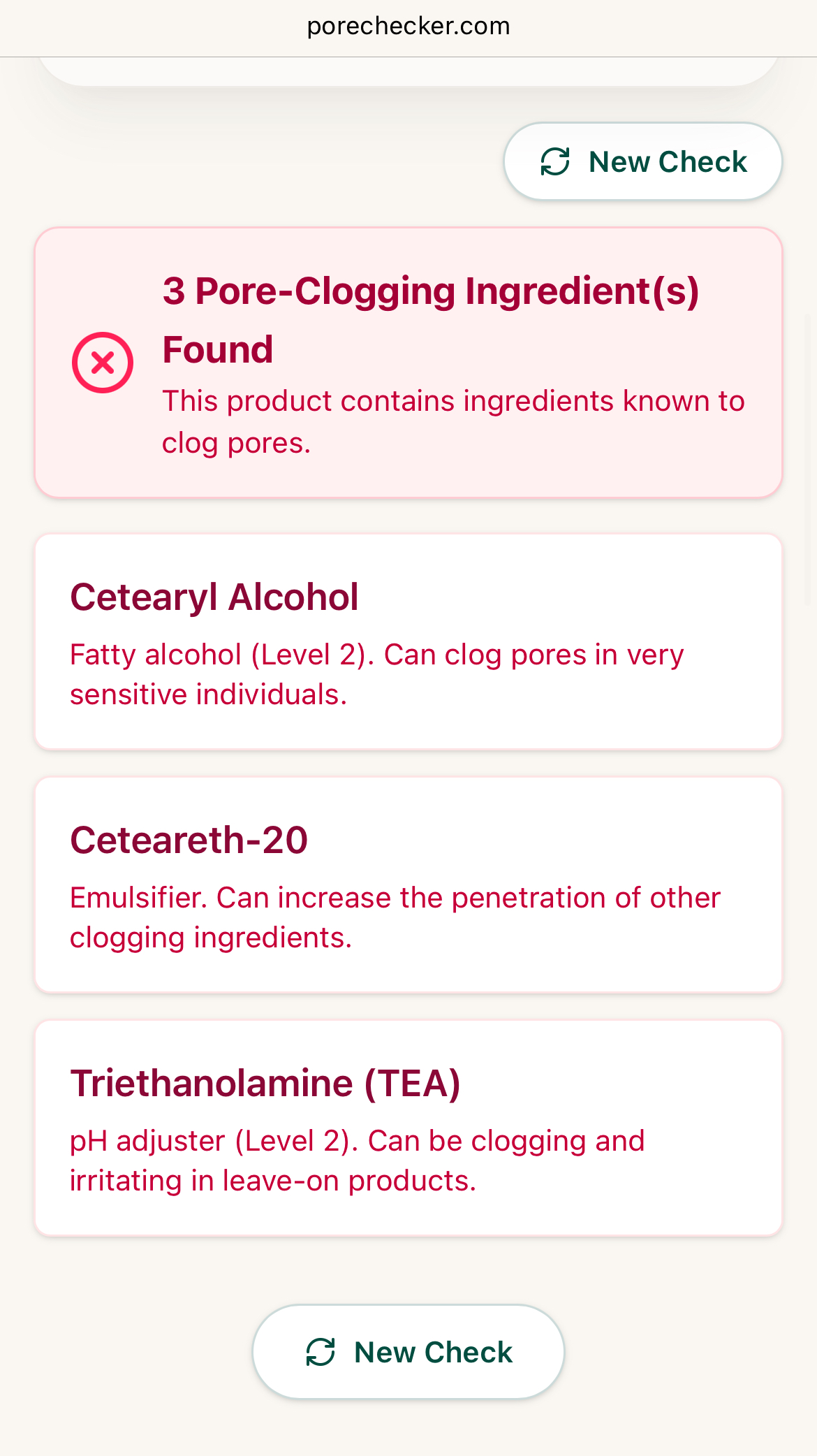
Does this product fit my skin's needs?
Check Your Products Now