What Does Sugar Acne Look Like? Identifying Dietary Breakouts
Is your sweet tooth causing your skin issues? Learn what does sugar acne look like, how glycation ages your skin, and how to heal the damage.
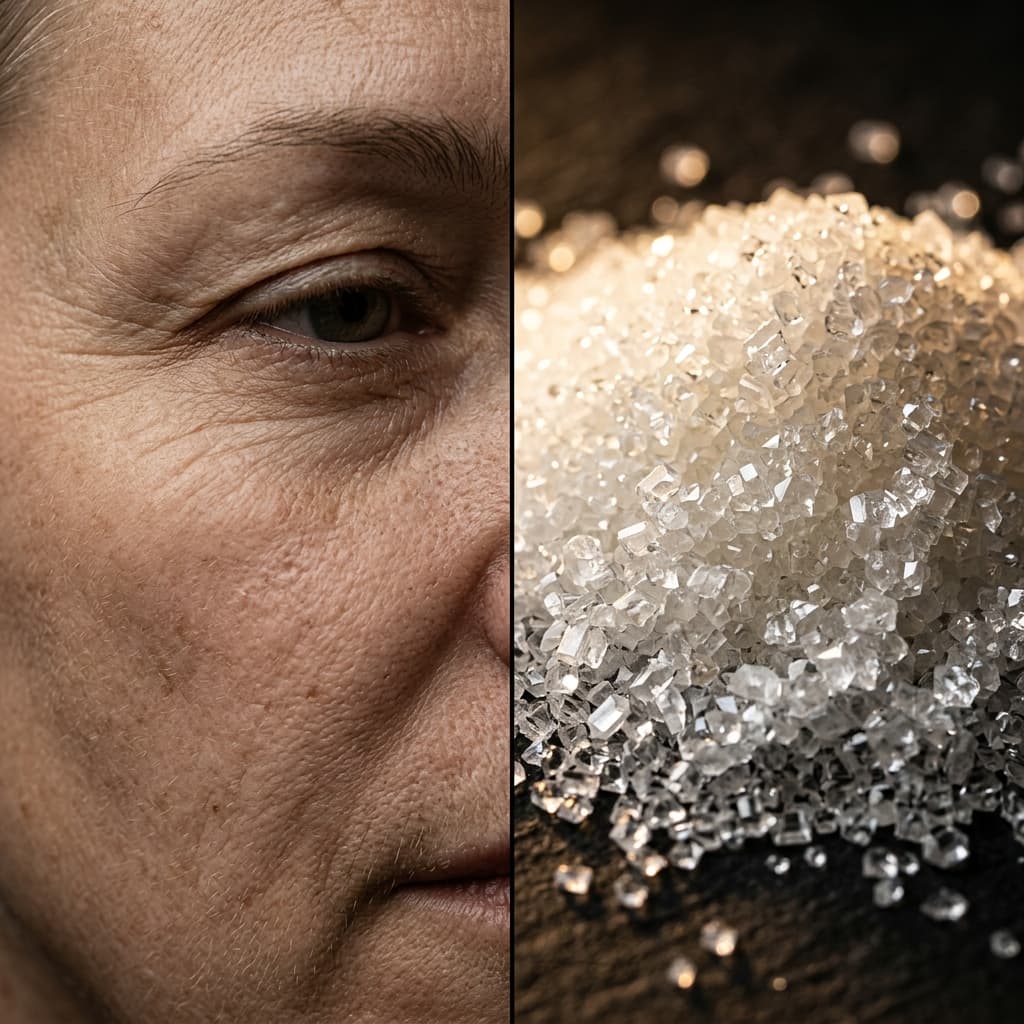
We all know that consuming excess refined sugar isn't great for our waistlines, but its impact on the skin is often vastly underestimated. Dermatologists and estheticians sometimes refer to the specific visible damage caused by high-sugar diets as "sugar face." If you find yourself breaking out after a weekend of heavy desserts or sweet cocktails, you might be wondering, "what does sugar acne look like?" Let's break down the specific symptoms of a sugar-induced breakout.
The Hallmarks of Sugar Acne
Unlike bacterial acne (which can be random) or fungal acne (which looks like tiny uniform bumps), sugar acne is driven by systemic inflammation and insulin spikes. Here's what to look for:
- Cystic and Painful: Sugar spikes insulin, which triggers androgen hormones, leading to an overproduction of thick sebum. This results in deep, painful, under-the-skin cysts rather than small, superficial whiteheads.
- Location, Location, Location: While it can appear anywhere, dietary acne often presents heavily along the upper cheeks, the forehead, and sometimes the jawline.
- Overall Dullness and Redness: Sugar causes widespread inflammation. Even without active pimples, a high-sugar diet often leaves the skin looking flushed, puffy, and lacking a healthy glow.
The Hidden Danger: Glycation
Acne isn't the only concern. The most insidious effect of sugar on the skin is a process called glycation. When you consume excess sugar, the glucose molecules attach themselves to proteins in your body, forming advanced glycation end products (AGEs). The proteins most vulnerable to this attack? Collagen and elastin—the exact proteins that keep your skin firm and youthful.
Glycation makes your collagen stiff and brittle, leading to premature sagging, fine lines, and a cross-hatched wrinkling pattern that makes the skin look older than its biological age.
How to Reverse the Damage
You can't treat sugar acne effectively with just topical creams because the trigger is internal. The only true fix is dietary modification:
- Switch to Low-Glycemic: Focus on foods that don't spike your blood sugar rapidly (complex carbs, fiber, protein).
- Read Labels: Hidden sugars in sauces, breads, and "healthy" protein bars are often the culprits.
- Antioxidants: Topically, apply Vitamin C and Niacinamide to combat the free radical damage caused by glycation.
Summary
If you're asking what does sugar acne look like, look for deep, inflammatory cysts accompanied by overall redness and a dull complexion. By managing your blood sugar spikes, you can drastically reduce these breakouts and protect your collagen from long-term glycation damage.
Step 1: Upload Your Product Image
Simply snap a photo of the ingredient list on the back of any bottle, jar, or box. No typing required.

Step 2: Instant AI Ingredient Analysis
Our advanced AI scans the image, performs OCR (Optical Character Recognition), and matches every ingredient against our curated database of comedogenic substances.

Step 3: Clear Results for Clearer Skin
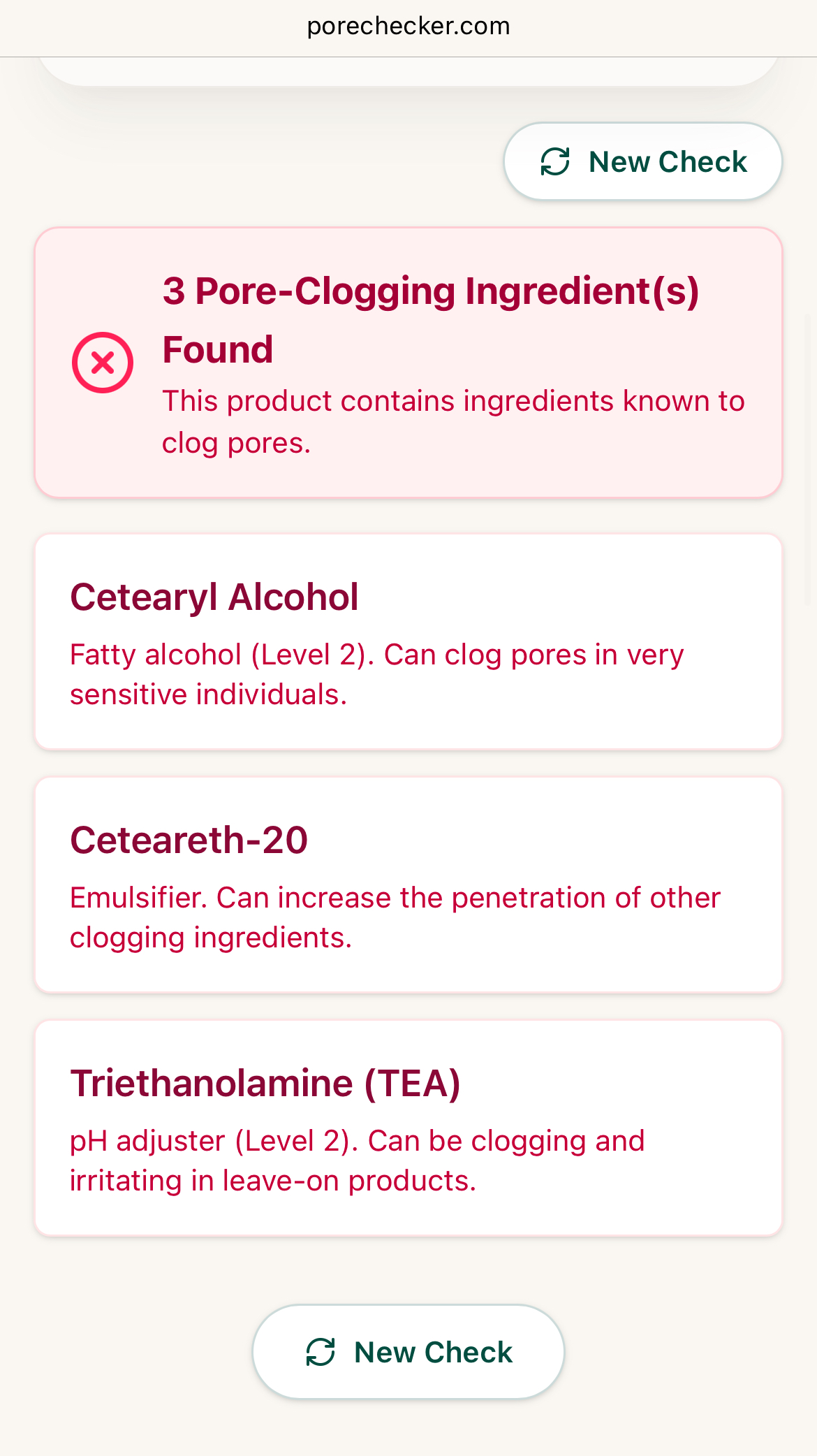
You get an immediate breakdown. If any red-flag ingredients are found, we highlight them and explain why they might be problematic for your pores.
Does this product fit my skin's needs?
Check Your Products Now