What Is Pores Anatomy and How to Keep Yours Clear
Understanding what is pores anatomy is the first step toward clear skin. Learn how to manage sebum and prevent congestion today.

If you have ever peered closely into a magnifying mirror, you have likely found yourself wondering, "what is pores anatomy, and why do they seem so visible?" At the most fundamental level, pores are the small openings in the skin that house hair follicles and sebaceous glands. These structures are not flaws; they are essential biological portals that allow your skin to breathe, release sweat, and distribute sebum—a natural oil—to maintain your protective barrier.
The frustration arises when these passages become overwhelmed by excess oil, environmental debris, or dead skin cells. While you cannot physically "close" a pore, you can maintain their integrity by adopting a strictly non-comedogenic skincare routine. By focusing on products that respect your skin’s natural rhythm rather than clogging its exit routes, you ensure that your complexion remains balanced, healthy, and refined.
The Science Behind Pore Appearance
Pore size is largely determined by genetics, age, and oil production. When a sebaceous gland overproduces oil, the pore must dilate to accommodate the flow. Over time, this constant stretching—combined with the loss of collagen that provides structural support to the surrounding skin—makes pores appear larger and more prominent. Think of it like a tunnel: when it is clear, traffic moves smoothly, but when debris begins to accumulate, the tunnel appears to widen and darken.
The Role of Exfoliation
Consistent, gentle exfoliation is the gold standard for keeping the follicular lining clear. Ingredients like salicylic acid are particularly effective because they are oil-soluble, allowing them to penetrate deep into the pore to dissolve hardened sebum. However, over-exfoliation can strip the skin of its natural moisture, triggering an inflammatory response that leads to increased oil production, effectively negating your progress. Balance is the key to pore maintenance.
Hidden Culprits in Your Routine
Not all congestion is caused by poor hygiene. Often, the very products marketed to nourish the skin are the ones causing the most damage. Common ingredients like isopropyl myristate, cocoa butter, and certain synthetic dyes can act as silent instigators, trapping oil beneath the surface and causing microscopic congestion that eventually erupts into breakouts or visible textural changes.
Don't Let Your Products Ruin Your Progress
Understanding the anatomy of your skin is only half the battle; the other half is policing what you apply to it daily. Even a regimen designed for clarity can be sabotaged by a single heavy moisturizer or a forgotten hair product that drifts onto the forehead. Because the beauty industry does not always prioritize non-comedogenic integrity, you must take an active role in scrutinizing every label in your bathroom. Before you apply your next serum or cream, it is essential to verify that its chemical composition will not interfere with your skin's natural detoxification process, as preventing congestion is far more effective than trying to clear it after the damage is already done.
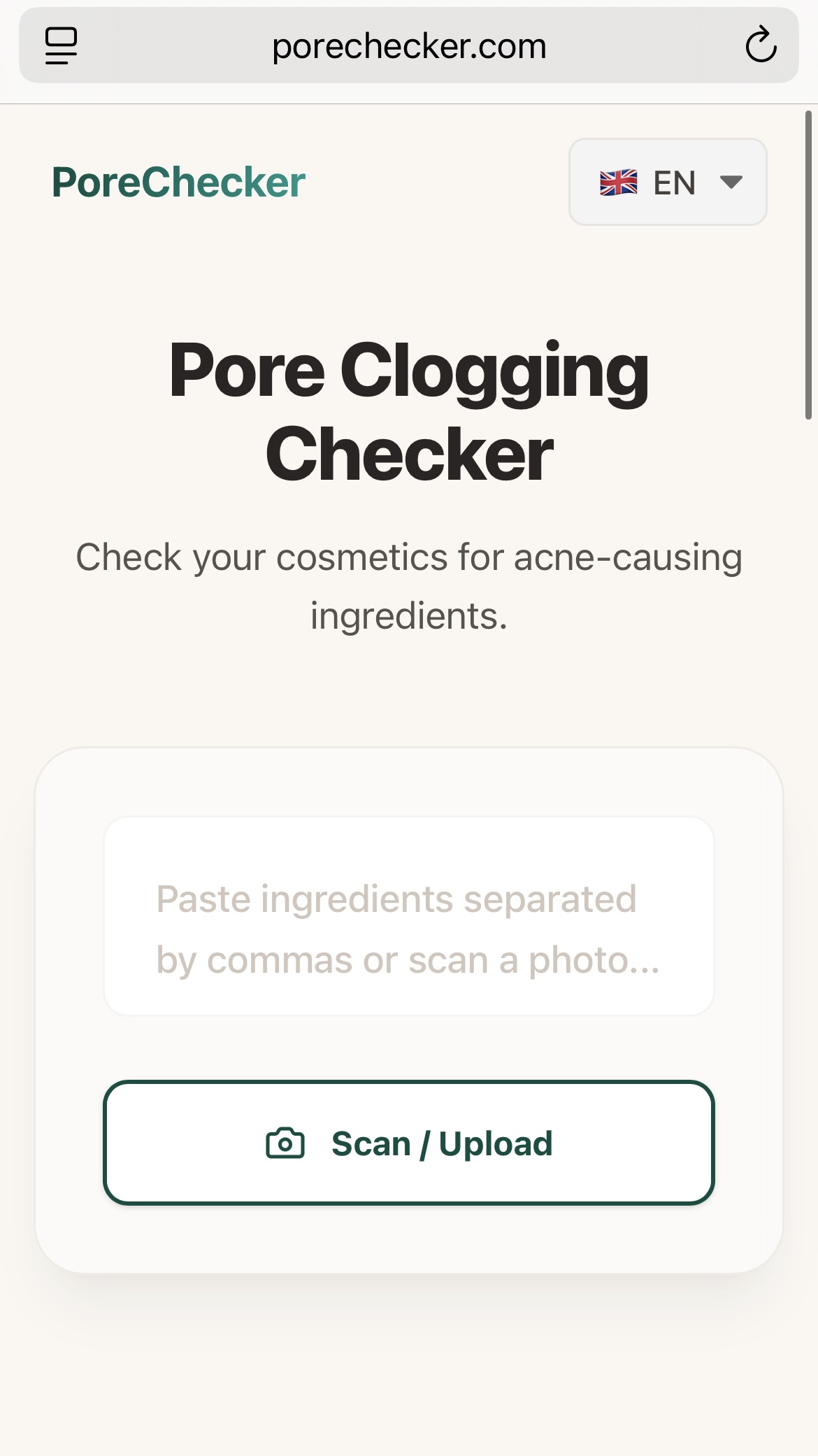
Step 1: Upload Your Product Image
Simply snap a photo of the ingredient list on the back of any bottle, jar, or box. No typing required.
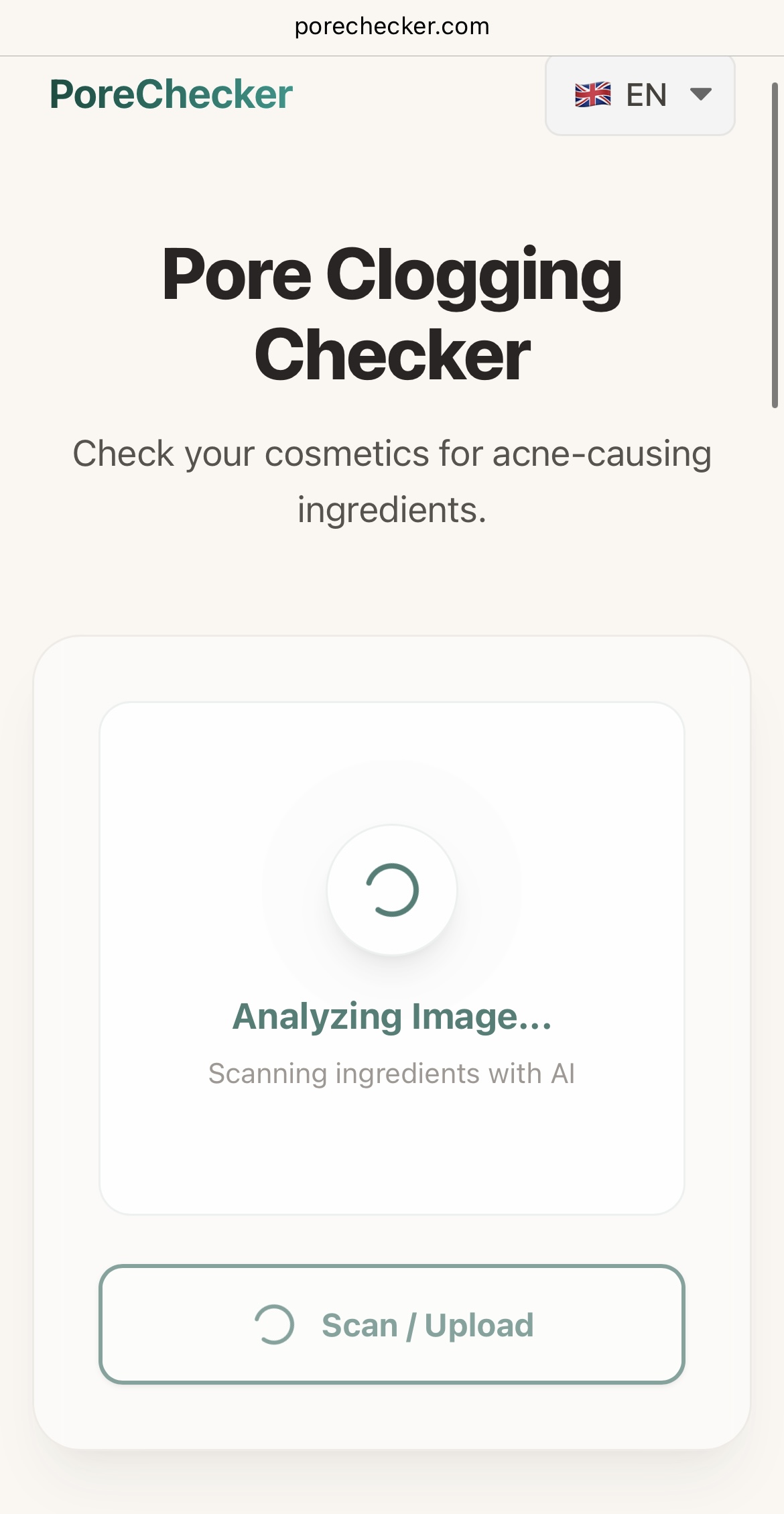
Step 2: Instant AI Ingredient Analysis
Our advanced AI scans the image, performs OCR (Optical Character Recognition), and matches every ingredient against our curated database of comedogenic substances.
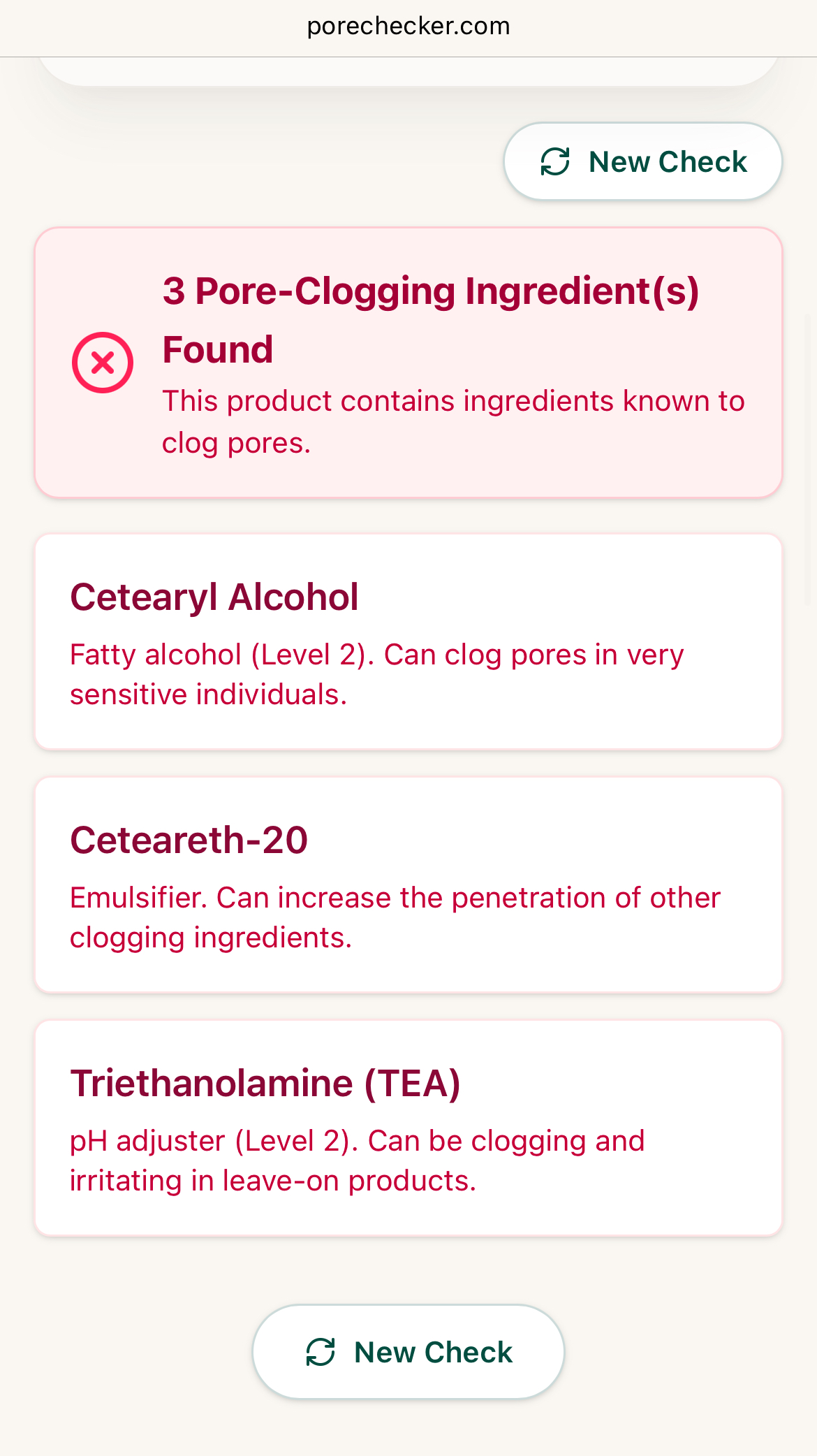
Step 3: Clear Results for Clearer Skin
You get an immediate breakdown. If any red-flag ingredients are found, we highlight them and explain why they might be problematic for your pores.
Does this product fit my skin's needs?
Check Your Products Now