Why Are My Pores So Visible? The Science of Skin Texture
Frustrated by skin texture? Explore the biological reasons why are my pores so visible and learn how to refine them effectively.

We often scrutinize our reflection in high-definition mirrors, fixating on the tiny openings that dot our skin. When you find yourself wondering why are my pores so visible, it is important to remember that pores are not flaws; they are essential follicular openings that allow sebum to reach the surface of the skin. They are a structural necessity, not a design defect, though their appearance is heavily influenced by genetics, age, and your daily environment.
The primary objective in managing pore visibility is maintaining internal cleanliness and skin structural integrity. While you cannot physically shrink the size of your pores, you can minimize their appearance by ensuring they remain free of debris. Prioritizing non-comedogenic skincare is the foundational step in preventing the congestion that stretches the pore lining over time, leading to that enlarged, pitted texture many of us strive to smooth out.
The Biological Drivers Behind Pore Size
Visibility is largely a matter of volume. When a pore is chronically filled with sebum and dead skin cells, the follicle distends. Over time, this constant stretching can compromise the elasticity of the surrounding skin, making the pore opening appear permanently larger. This is frequently observed in individuals with naturally oilier skin types, as the constant production of lipids requires a wider exit path.
Sun Damage and Collagen Loss
Your skin’s structural support system, comprised of collagen and elastin, acts as the "walls" that keep your pores tight. As we age or incur UV damage, these support fibers degrade. Think of it like a drawstring bag: when the fabric loses its tension, the opening relaxes and sags. This lack of structural integrity makes pores appear much more prominent across the cheeks and nose.
Managing Texture Through Strategic Care
To refine the look of your skin, focus on chemical exfoliation rather than physical scrubbing. Ingredients like salicylic acid are lipid-soluble, meaning they can dive deep into the pore lining to dissolve the internal "plug" of oil and debris. When the pore is empty, it naturally retracts to its tightest possible state.
Hydration plays an equally vital role. Dehydrated skin loses its plumpness, which causes the surface texture to look uneven and highlights every minor pore. Using lightweight, humectant-rich serums—such as those containing hyaluronic acid or niacinamide—can help smooth the stratum corneum, creating a more diffused light reflection that masks the appearance of enlarged pores.
Don't Let Your Products Ruin Your Progress
It is a cruel irony that the very products we apply to fix our skin are often the culprits behind its congestion. Many luxury creams and heavy sunscreens contain occlusive agents or fatty acids that can silently clog pores, undoing the work of your active serums. If you are struggling with visible texture, you must audit your regimen for hidden pore-cloggers that could be triggering inflammation and congestion. Ensuring every product you use is verified for its comedogenicity is the most effective way to protect your barrier and finally see a refined, smoother complexion.
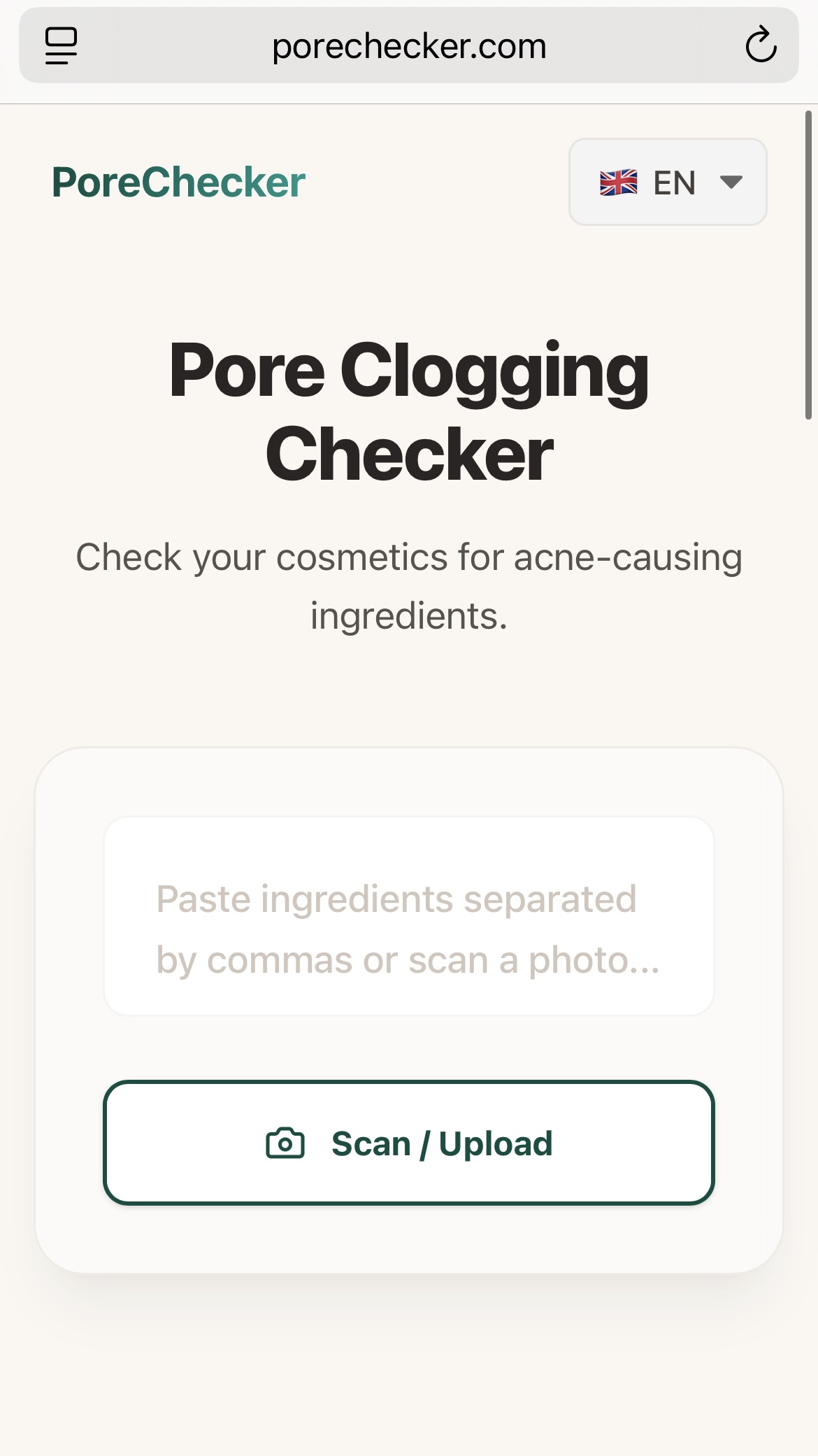
Step 1: Upload Your Product Image
Simply snap a photo of the ingredient list on the back of any bottle, jar, or box. No typing required.
Step 2: Instant AI Ingredient Analysis
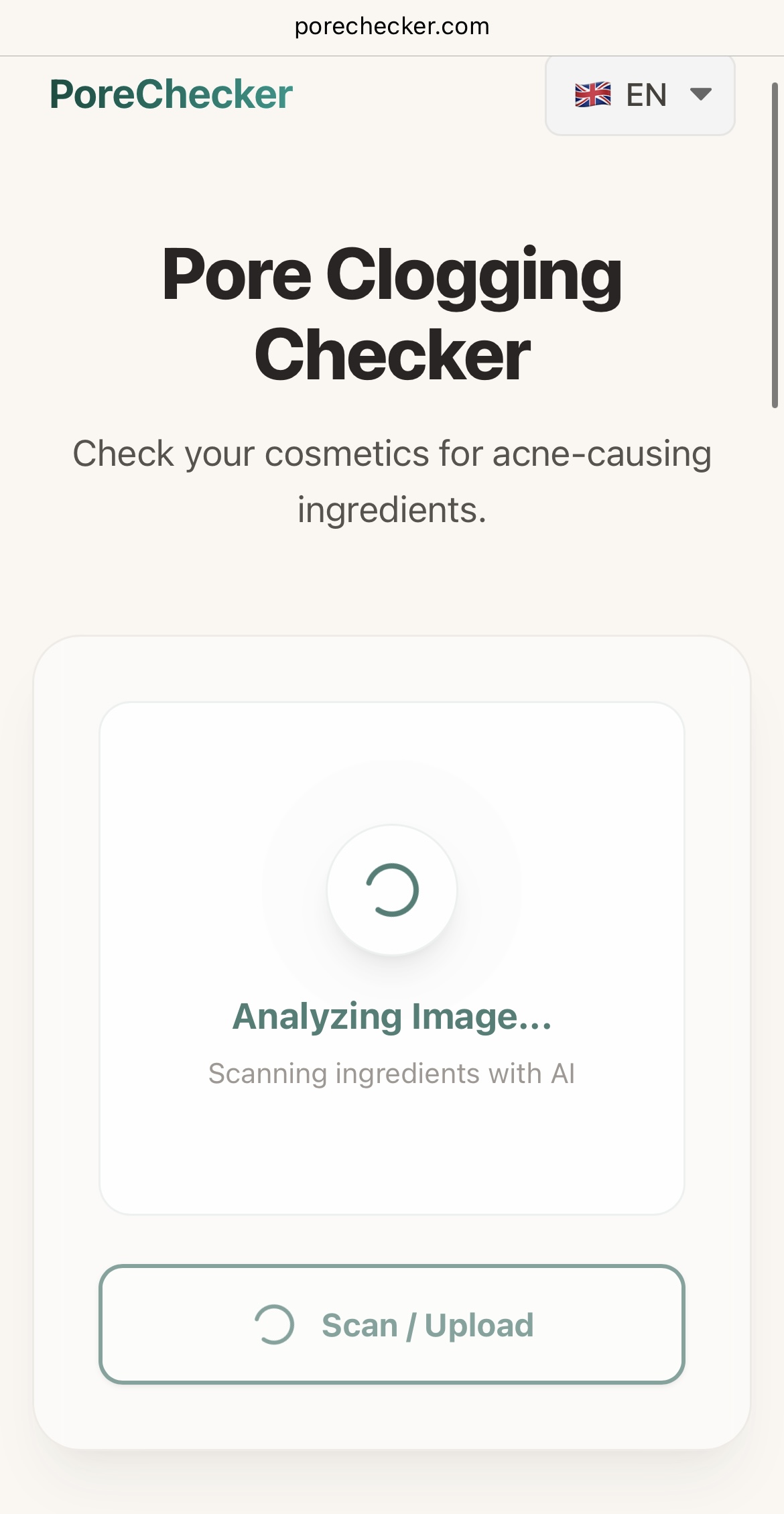
Our advanced AI scans the image, performs OCR (Optical Character Recognition), and matches every ingredient against our curated database of comedogenic substances.
Step 3: Clear Results for Clearer Skin
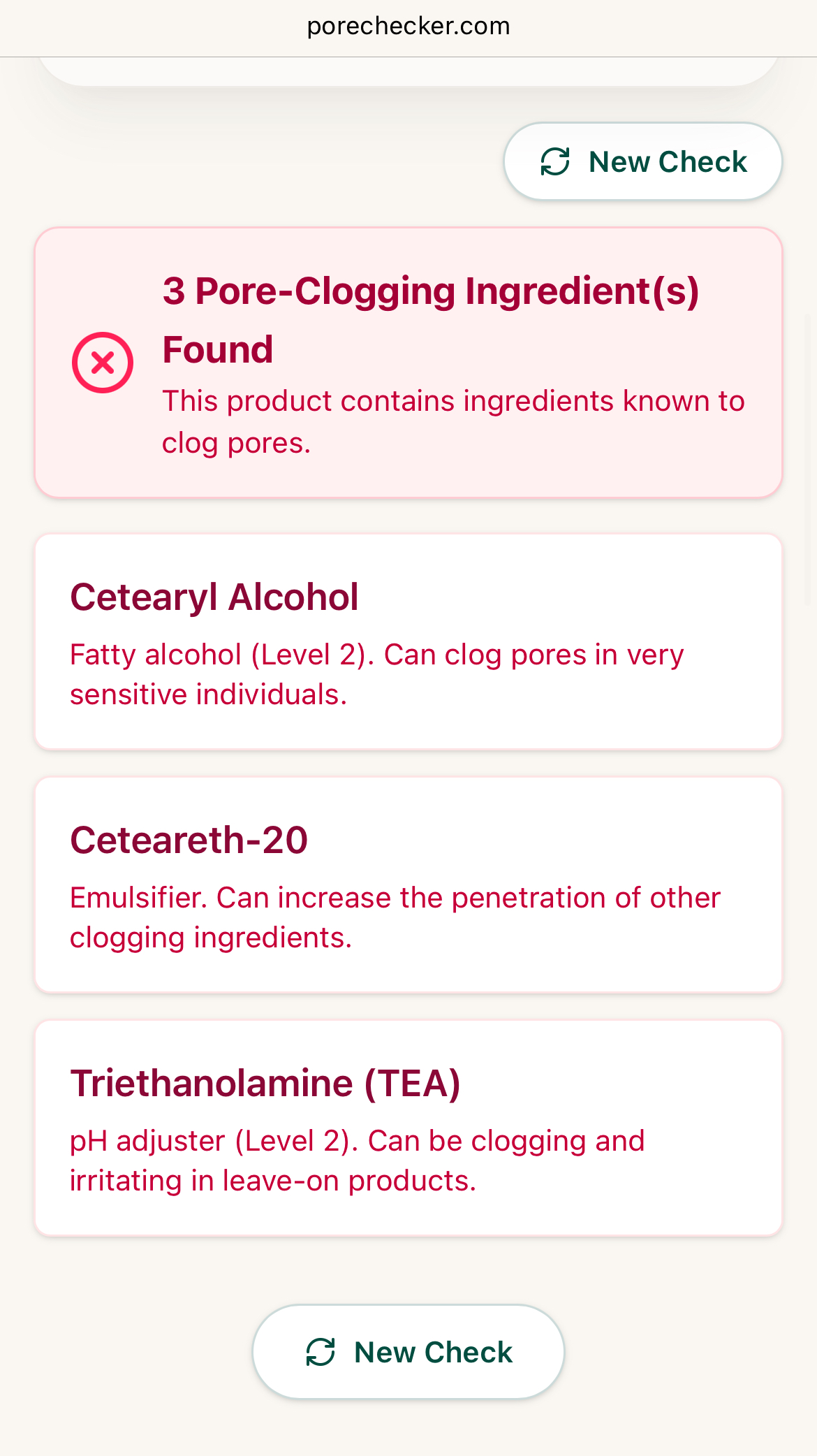
You get an immediate breakdown. If any red-flag ingredients are found, we highlight them and explain why they might be problematic for your pores.
Does this product fit my skin's needs?
Check Your Products Now