Why Do I Have Acne on My Chest and How Can I Clear It?
Frustrated by breakouts on your torso? Learn why you have acne on your chest, from sweat-induced clogging to hidden ingredients.
Finding unexpected breakouts on your chest can be just as frustrating—and often more stubborn—than acne on the face. Because the skin on your chest is thicker and contains a high density of oil glands, it is uniquely susceptible to the same hormonal and environmental factors that affect your complexion. When these pores become trapped under layers of dead skin, sweat, or heavy emollients, inflammation follows.
Achieving clear, resilient skin in this area requires a shift toward non-comedogenic care. Treating body acne is not simply about harsh scrubbing; it is about balancing the skin’s microbiome while ensuring that the products you use—from body washes to laundry detergents—are not actively working against your recovery.
The Science Behind Chest Breakouts
Acne vulgaris is fundamentally a disorder of the pilosebaceous unit. On the chest, these units are often larger and more active. When sebum production accelerates due to hormonal shifts or external stressors, the pore lining can become keratinized, effectively creating a plug. This is the perfect breeding ground for C. acnes bacteria, leading to the red, painful papules or pustules you might be experiencing.
Environmental Triggers and Friction
Beyond biology, mechanical factors play a massive role. Friction from synthetic fabrics, tight workout gear, or backpack straps can lead to a condition known as acne mechanica. When combined with sweat, these materials trap heat and moisture against the skin, forcing oils and bacteria deeper into the follicle. If you notice your breakouts are worse after a gym session or a long day in restrictive clothing, this is a likely culprit.
Strategic Management for Torso Skin
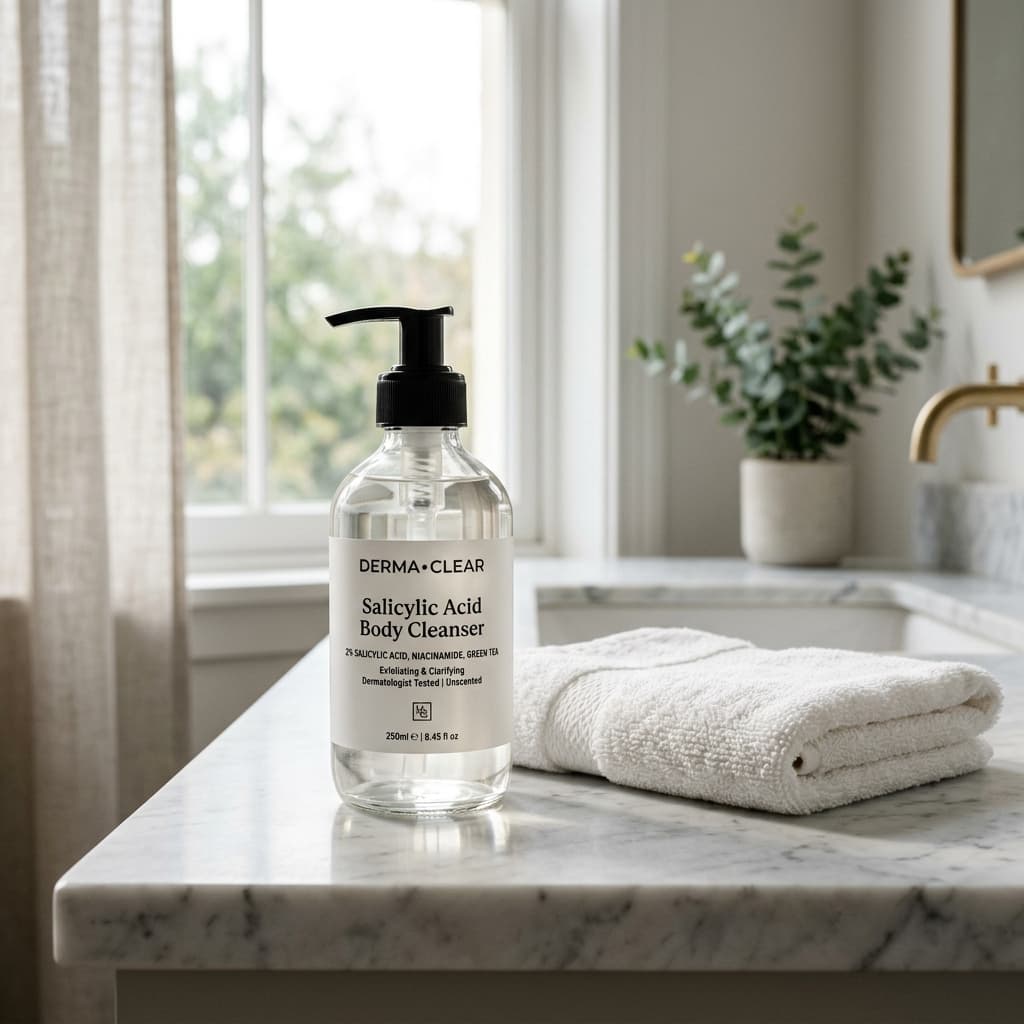
Clearing the chest requires a gentle but consistent approach. Incorporating a mild salicylic acid cleanser can help dissolve the "glue" holding dead cells together within the pore. However, keep in mind that the skin on your chest can be sensitive; using an aggressive physical scrub can disrupt your skin barrier, leading to more inflammation rather than less.
It is also vital to manage your post-shower routine. Often, hair conditioners rinsed down the back and chest leave behind waxy residues that are highly comedogenic. Always wash your body after your hair conditioner has been thoroughly rinsed to ensure no pore-clogging film remains on the skin.
Don't Let Your Products Ruin Your Progress
Even with a perfect cleansing routine, you may still see persistent bumps if your daily lotions, sunscreens, or even laundry softeners contain hidden comedogenic triggers. Products that feel luxurious on the hands can be deeply problematic for the chest area, where pores are easily congested by silicones, certain oils, and heavy waxes. Transitioning to a routine free of these pore-clogging agents is often the missing link in finally silencing chest acne. Before you invest in new skincare or body care, it is essential to verify that every item in your cabinet is truly non-comedogenic and supportive of your skin’s health.
Step 1: Upload Your Product Image
Simply snap a photo of the ingredient list on the back of any bottle, jar, or box. No typing required.
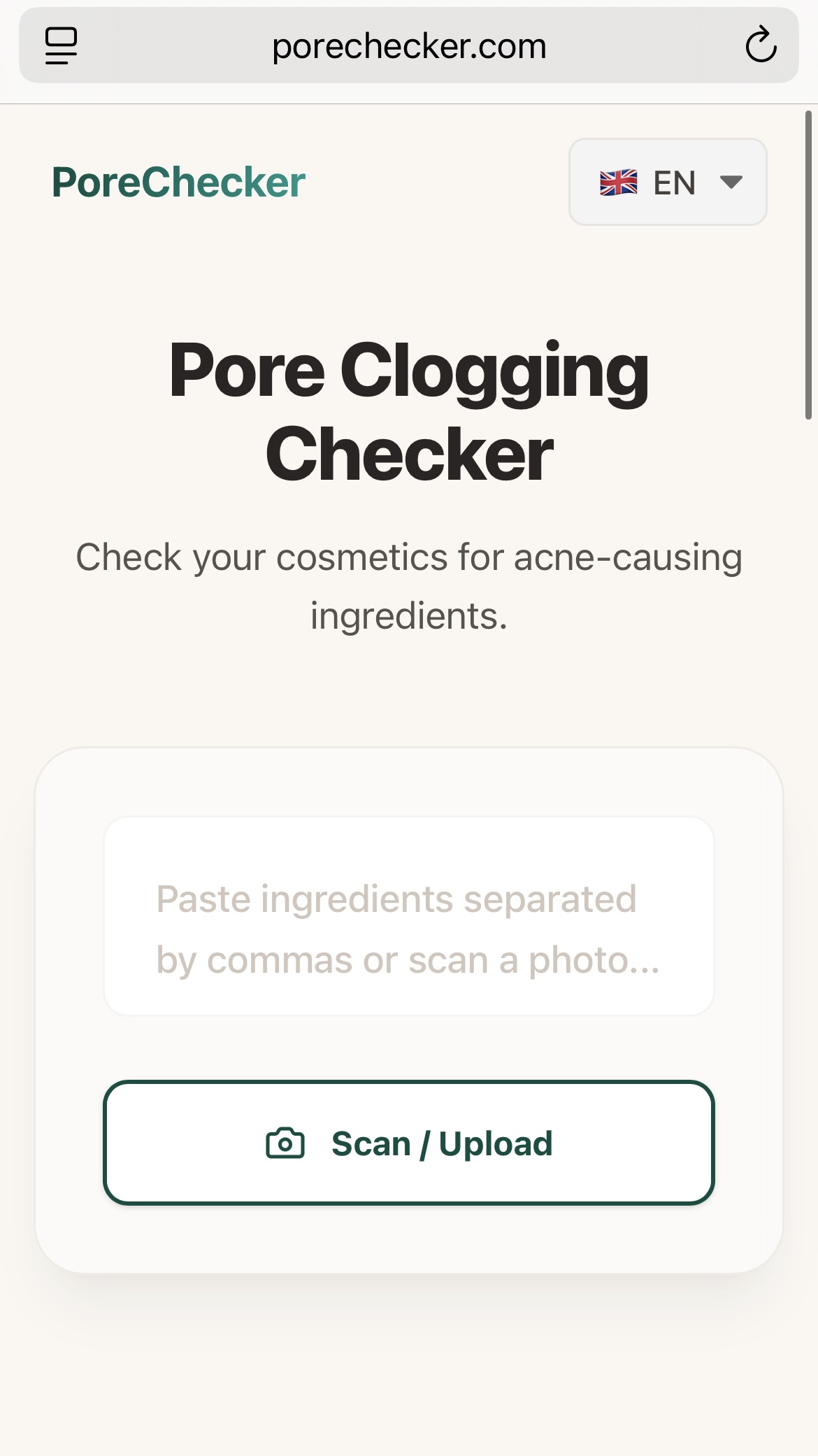
Step 2: Instant AI Ingredient Analysis
Our advanced AI scans the image, performs OCR (Optical Character Recognition), and matches every ingredient against our curated database of comedogenic substances.

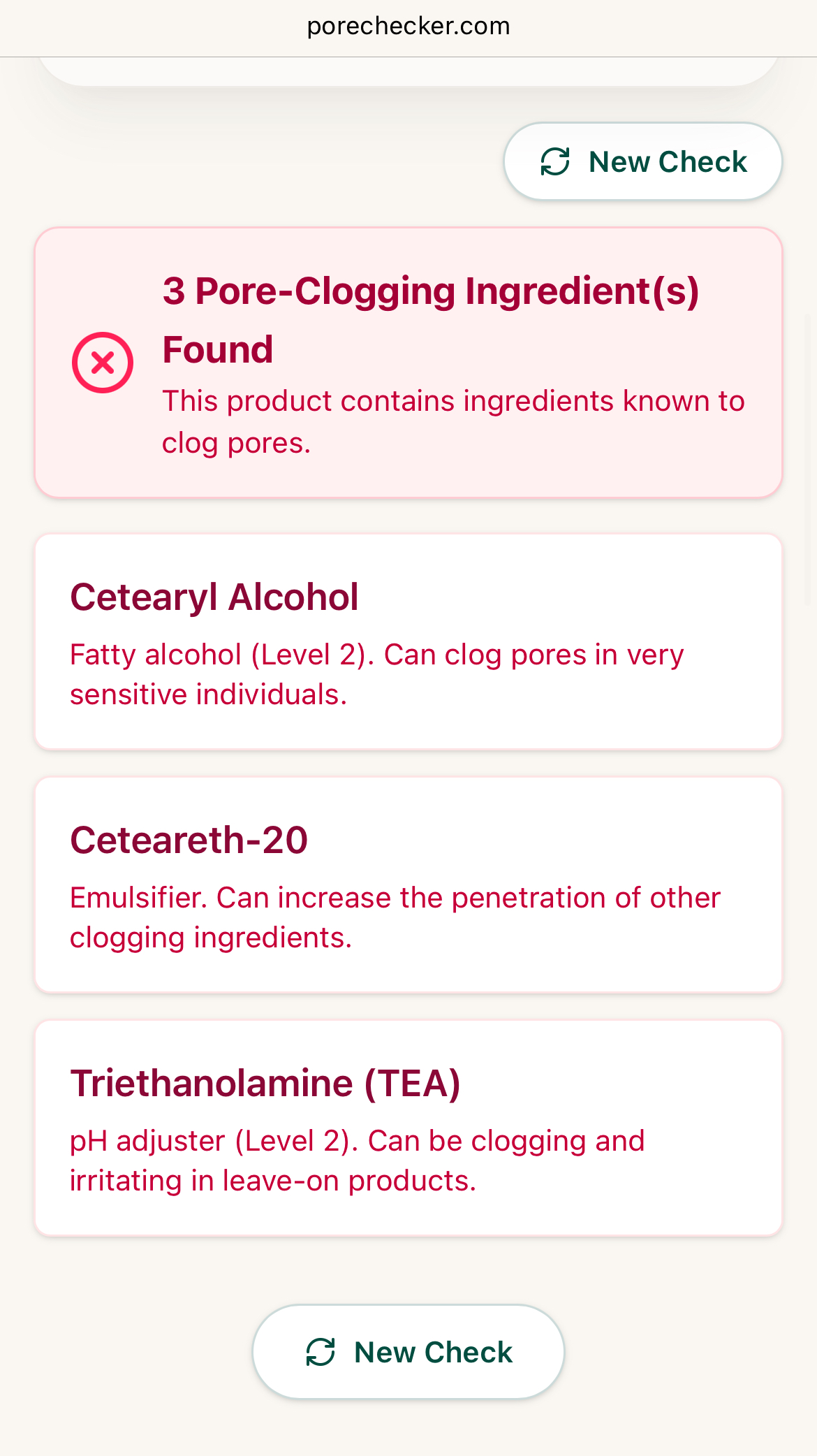
Step 3: Clear Results for Clearer Skin
You get an immediate breakdown. If any red-flag ingredients are found, we highlight them and explain why they might be problematic for your pores.
Does this product fit my skin's needs?
Check Your Products Now